
curator: Joanna Sokołowska
exhibition duration: 16 Nov–13 Jan 2024
Arm and Protect is an exhibition about the exploitation and reclaiming of the body by persons forced into women’s social roles. However, in Ala Savashevich’s series of new works, no bodies are directly visible. The artist confronts the traces of forces that seemingly operate “beyond the periphery of the skin”[1]: in global and local markets, in offices and fields, at the assembly line, in services, families, schools, churches. Dispersed and omnipresent for generations, they break backs and bend necks. They suck out vital forces and take away life itself. They enforce repetitive gestures or unnatural stillness. They prohibit the expression of emotions and the pursuit of one’s needs, teaching instead how to conform to the needs of others. But up to a point.
The objects prepared for the exhibition have been inspired by the tools and materials used daily by women trained for hard work, serving and obedience – in exchange for social acceptance. Some of them hide echoes of the artist’s personal story, connected with her education in a Belarusian school. In the classes called Труд (toil) in Russian, schoolgirls were taught to do housework, including sewing, making handicraft ornaments and gifts. As in many other schools in authoritarian and patriarchal societies, they were taught a double lesson: the gender division of labour and gender as a role to be played. The decorative, floral costume worn for the women’s performance was meant to mask real hardship and make life more pleasant for others.
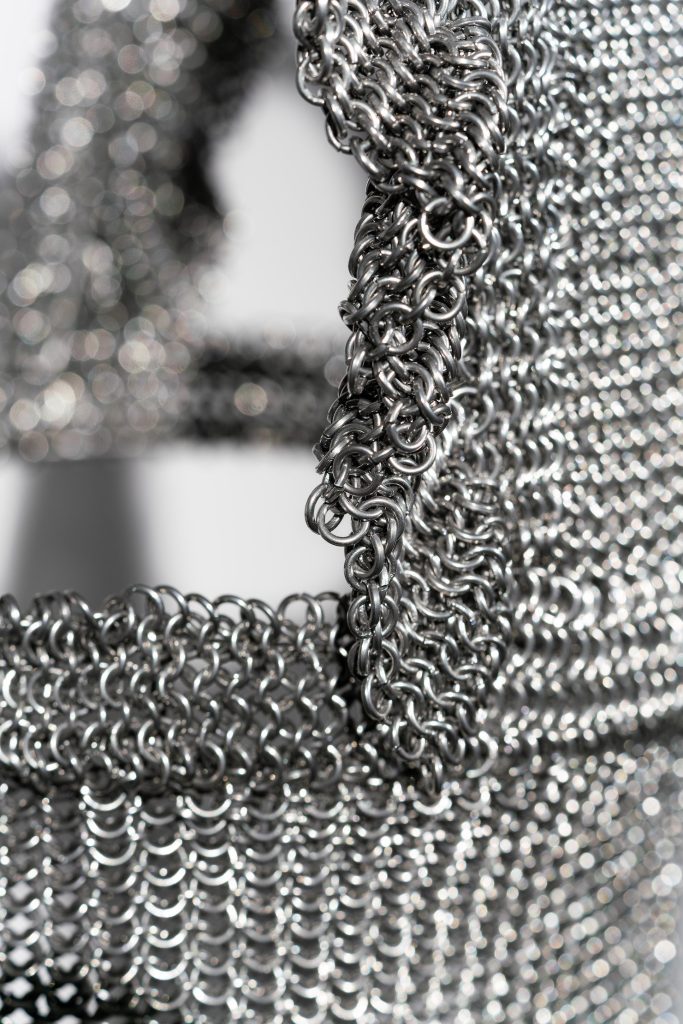
Sew on your own, Ala Savashevich, exhbition view, When The Sun Is Low – The Shadows Are Long, 2022, photo by Jan Szewczyk, courtesy of Arsenal Gallery, Białystok
The artist worked through the memory of her school assignments in the object Sew It Yourselves. Using hundreds of small metal rings, she “wove” a heavy form resembling an apron-cum-armour. She used the same method to make the chainmail sashes (Miss Worker, Miss Best Worker, Miss Home Worker), which touch on deeply rooted sexist patterns by alluding to female shock workers’ decoration in Soviet countries and the sashes worn by winners of beauty pageants. Created as a result of strenuous, long-lasting labour, the objects emphatically show the real burden carried by the body in connection with fulfilling the role of a woman. On the other hand, as their form suggests, they can be transformed from tools of oppression into arms or armour.
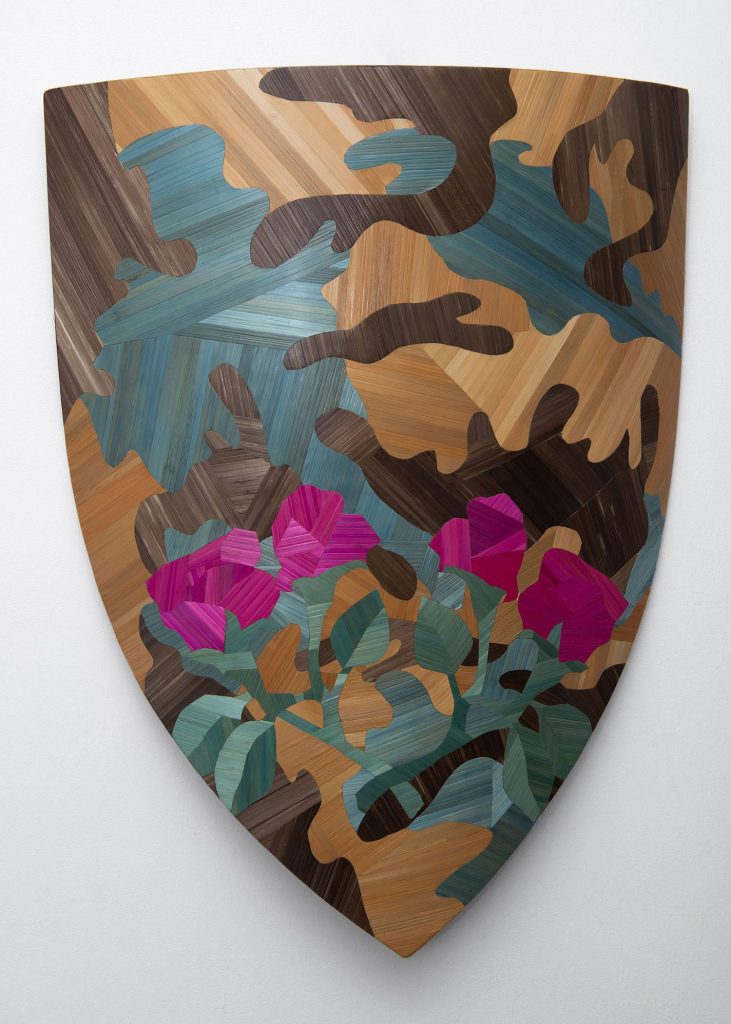
Art and Protect, work in progres, Ala Savashevich, Wrocław, 2023
A similar dynamic of associations is set in motion by a series of objects resembling shields, which the artist made using the decorative technique of straw marquetry. The “shields” combine military camouflage patterns with the floral imagery. This “feminine” symbol of many revolutions acquired a topical significance during the 2020 uprising in Belarus, when women took to the streets en masse with flowers, forming chains of solidarity and calling on the uniformed services to stop the violence. Although the revolution was suppressed, the women’s peaceful protest demonstrated the existence of a great collective force, hitherto ignored.
In the intergenerational memory of women’s capacity to confront the burden of patriarchy, exploitation and violence, Ala Savashevich brings out the mighty power and will to live. She experienced it through performative, embodied work, in which she transformed a traumatic story into a herstory of female solidarity, self-defence and struggle.
[1] Silvia Federici, Beyond the Periphery of the Skin: Rethinking, Remaking, and Reclaiming the Body in Contemporary Capitalism, PM Press/Kairos, 2020.
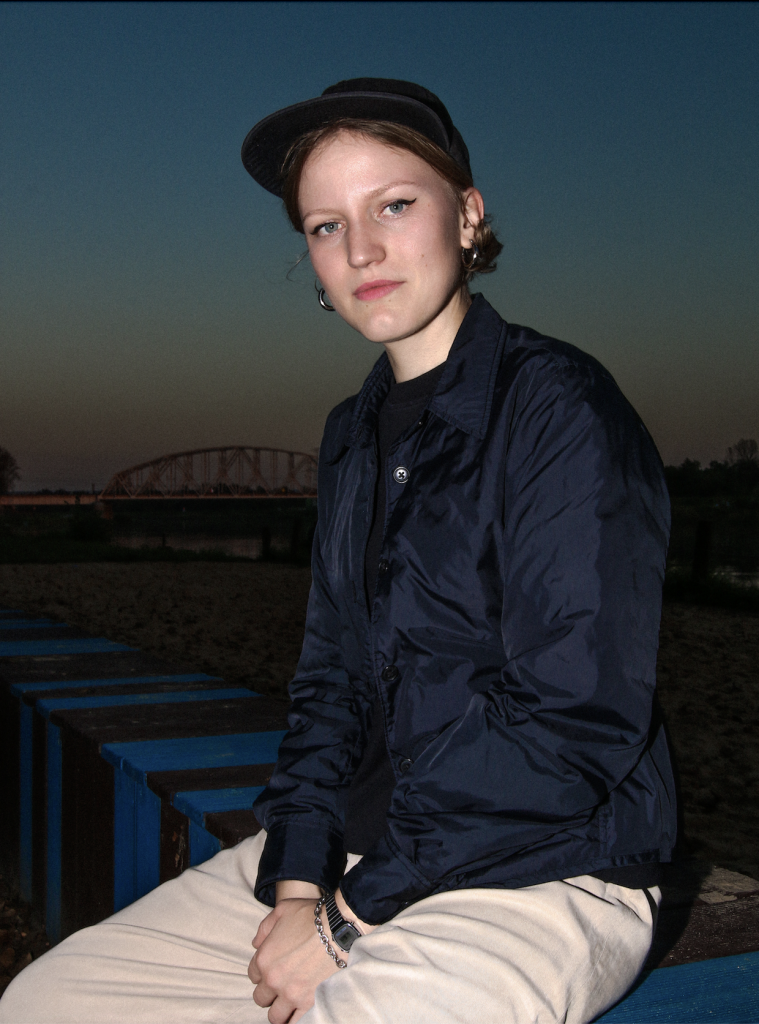
Ala Savashevich (b. 1989, lives in Wrocław) studied sculpture at the Belarusian State Academy of Arts in Minsk and at the Eugeniusz Geppert Academy of Art and Design in Wrocław; she is currently a doctoral student at the Academy of Fine Arts in Kraków. She creates sculptures, installations and video works. Her work explores themes of collective memory and identity formation in societies with experience of authoritarianism and patriarchy. She is particularly interested in the mechanisms of socialisation into the role of women in family systems, education and through the gendered division of labour. By working through histories of exploitation and violence, she also visualises the prospects of reclaiming agency, solidarity and freedom.
fot. Mateusz Lipiński
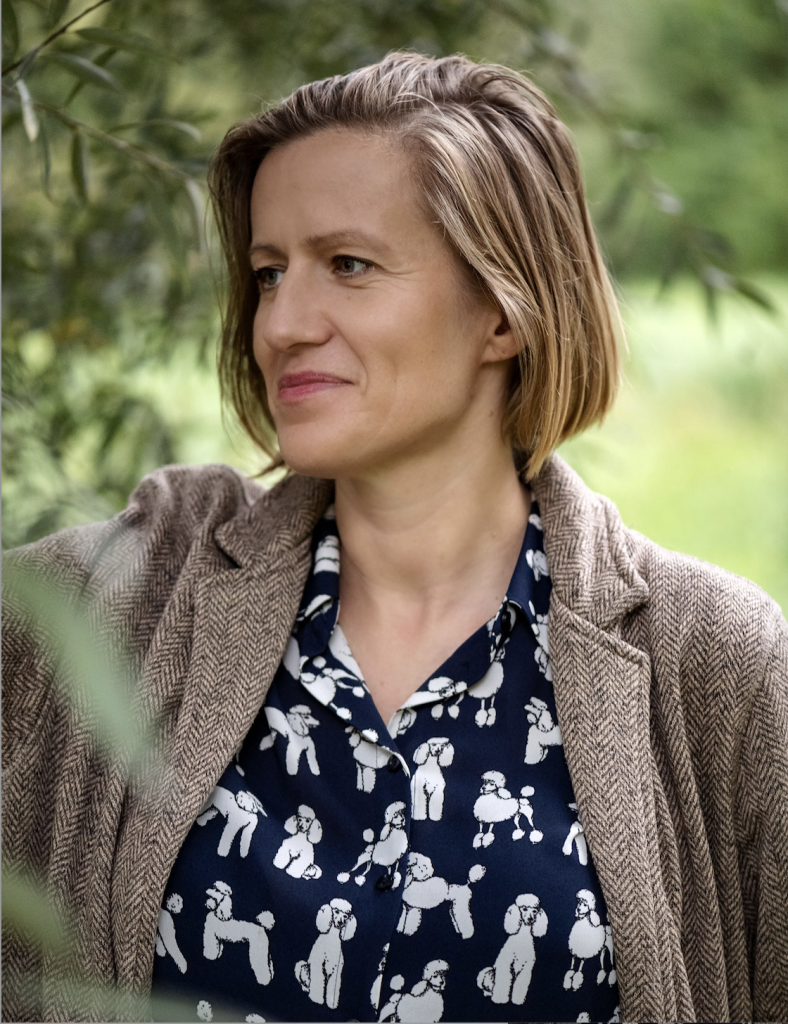
Joanna Sokołowska is a curator, author and editor of publications on contemporary art. She worked as a curator at the Museum of Art in Łódź from 2010 to 2021; currently, she teaches at the Department of Art Mediation at the Academy of Art and Design in Wrocław and prepares the Konrad and Paweł Jarodzki Art Residency Programme at the Krzyżowa Foundation for Mutual Understanding in Europe. In her exhibitions and texts, she has explored topics such as the future of work, sisterhood, the ecological imagination, and the contemporary potential of avant-garde utopias.
fot. Małgorzata Kujda
Exhibition guide
66P team and collaborators
Organisation, production and implementation: Renata Jarodzka, Rafał Jarodzki, Anna Krukowska, Piotr Lisowski, Mirek Łuckoś, Mirek Chudy, Marta Strzępek, Tomek Serediuk, Marcin Caliński, Danuta Krzywicka, Teresa Hajłasz-Golonka, Bartosz Gierczak, Michał Czapliński, Patrycja Ucieklak
Promotion: Magda Kotowska
Graphic identification: Iwona Jarosz
Translation: Iuliia Litsevych, Karol Waniek