
This text is an account of the Meeting on Abortion in the Circle of Women Artists, held in November 2022 as part of the programme accompanying the exhibition Yesterday’s Dreams Weave the Ruins of Tomorrow’s Temples by Beata Rojek and Sonia Sobiech (curator: Zofia Reznik).
Event documentation, by Agata Kalinowska:
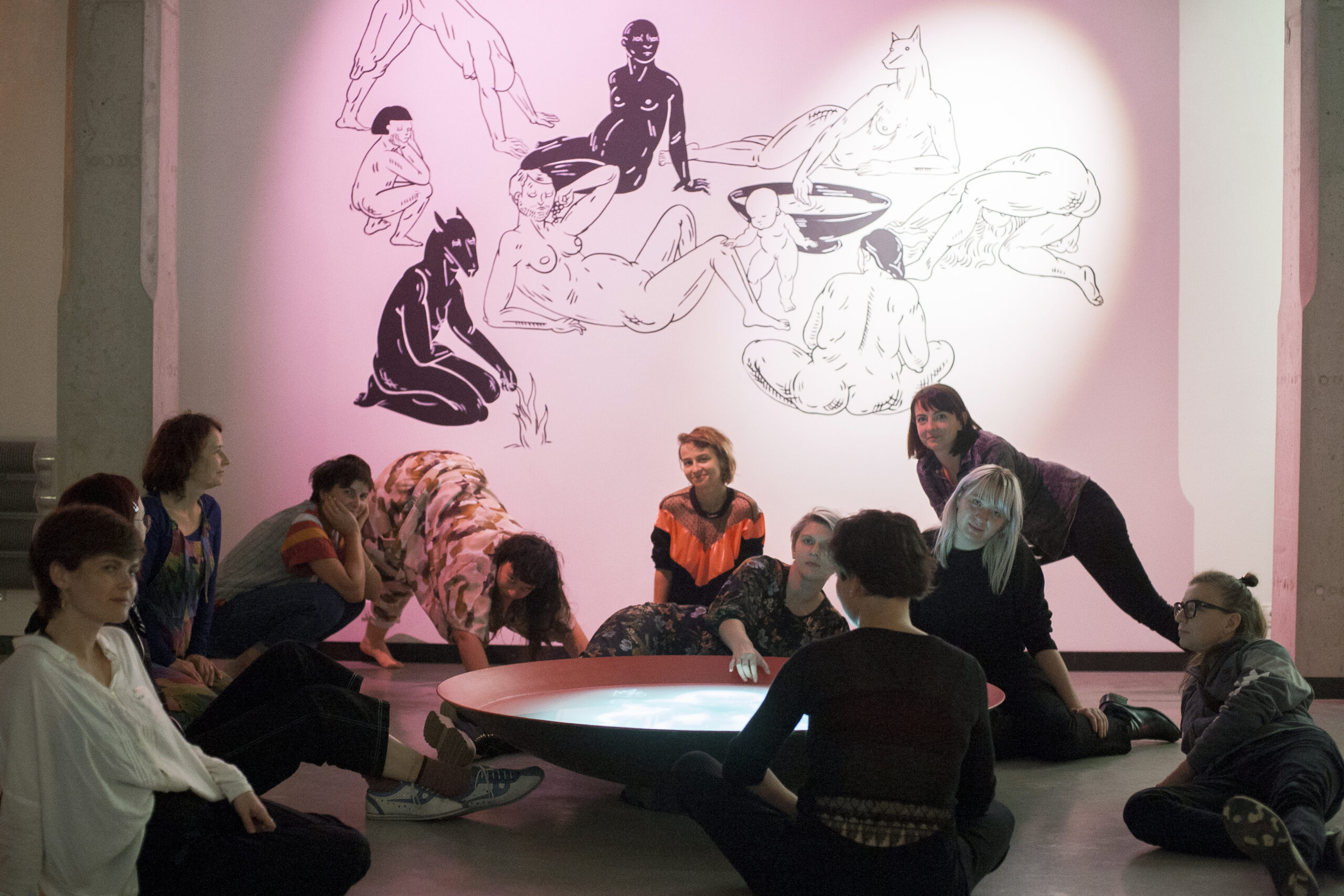
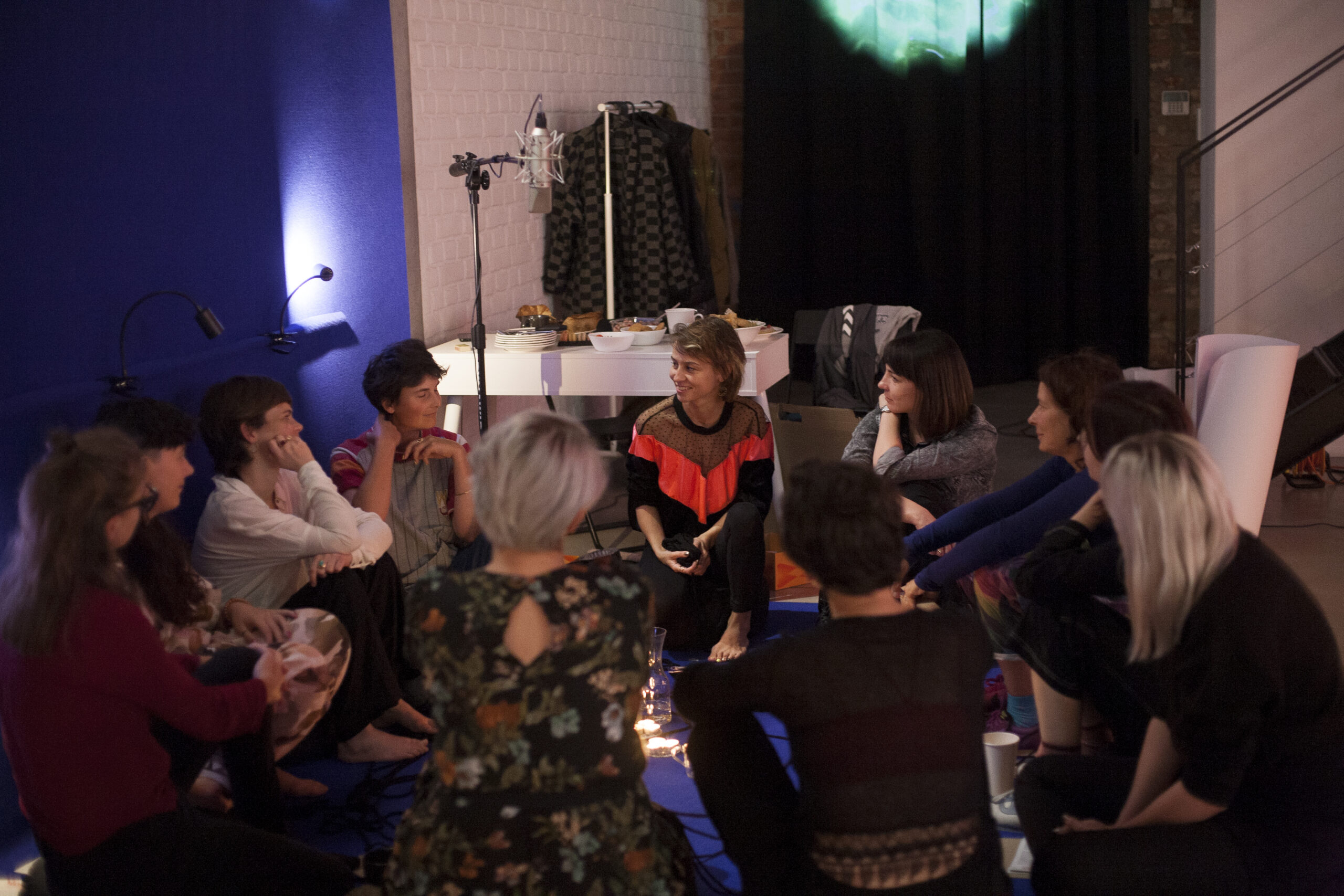
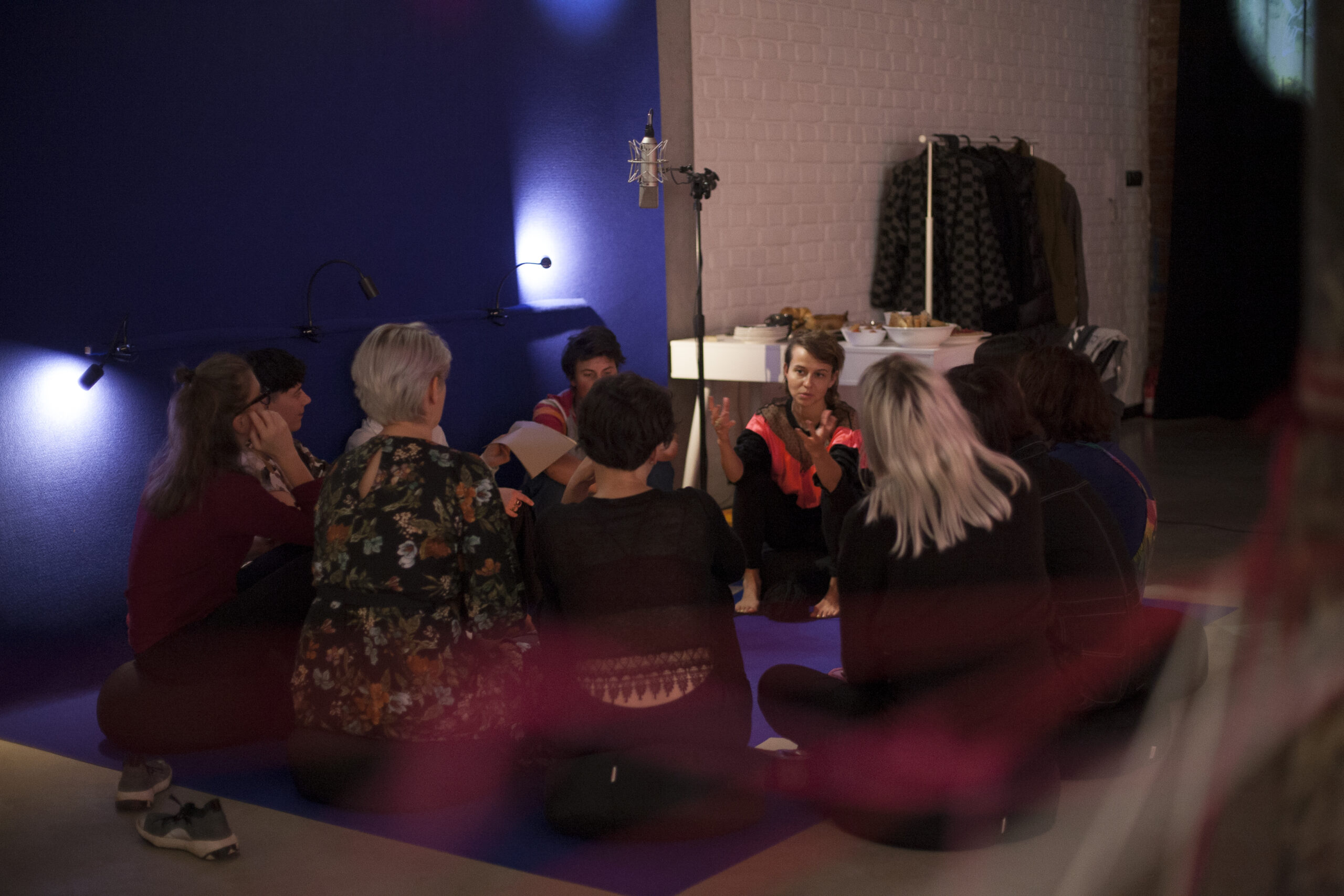
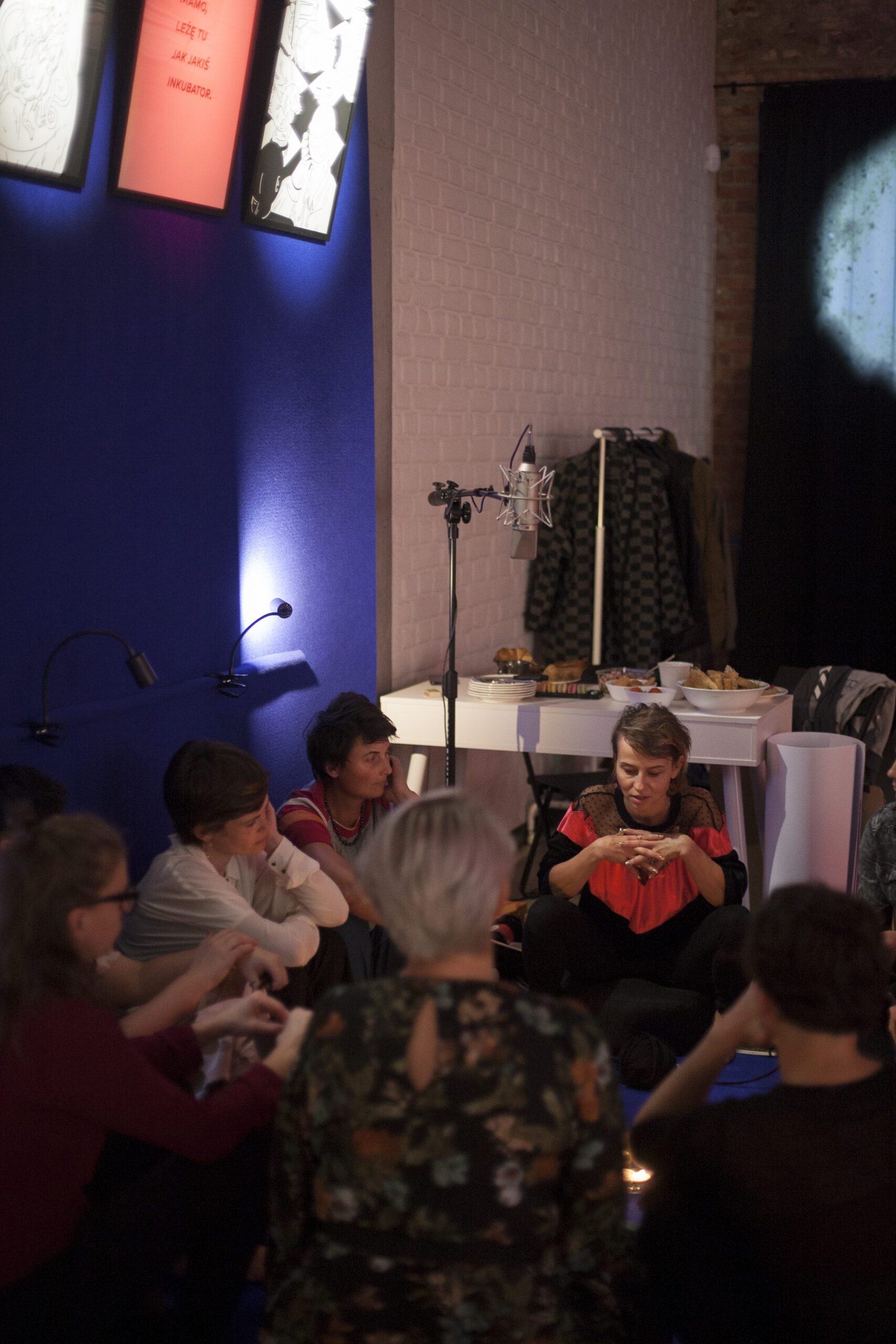
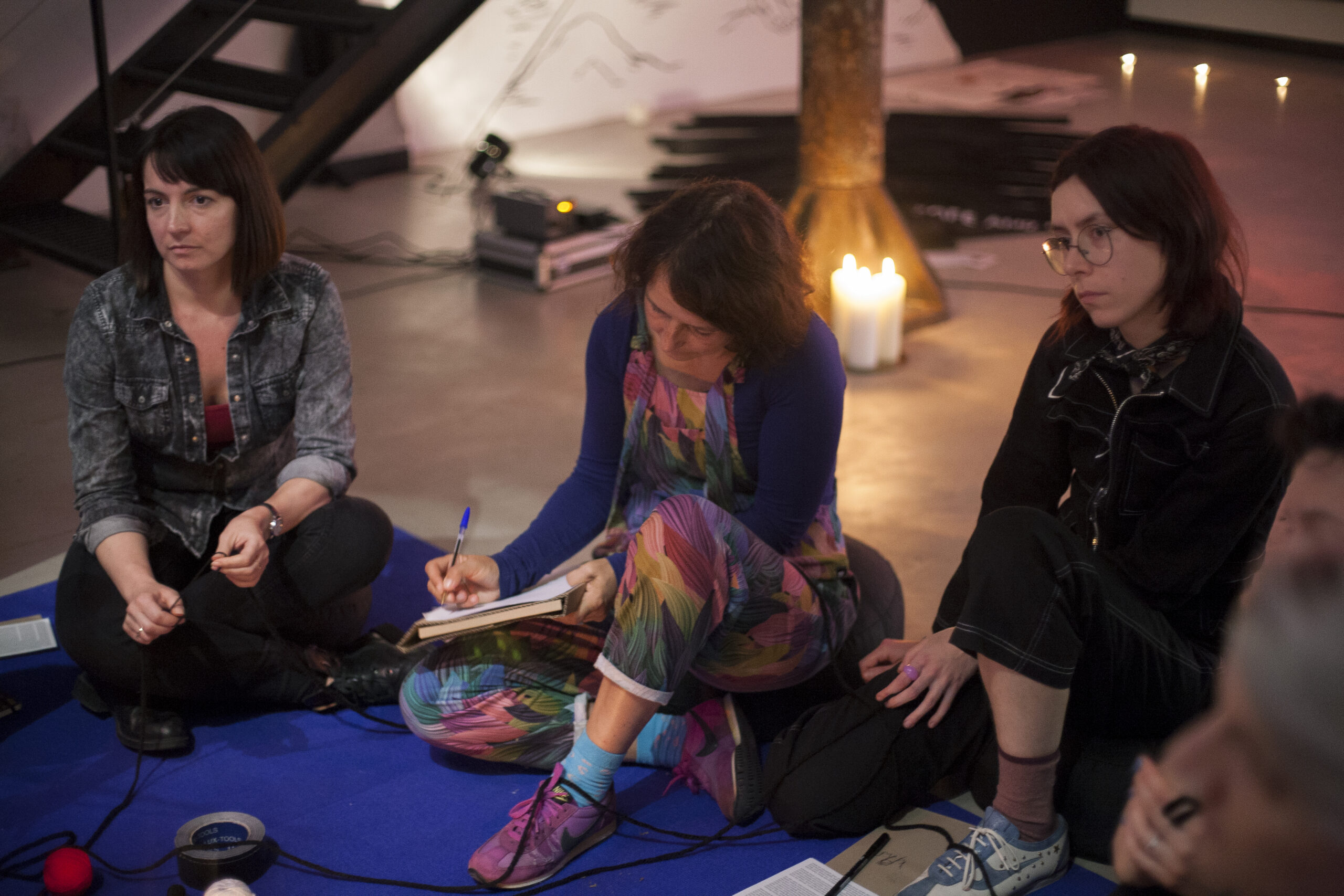
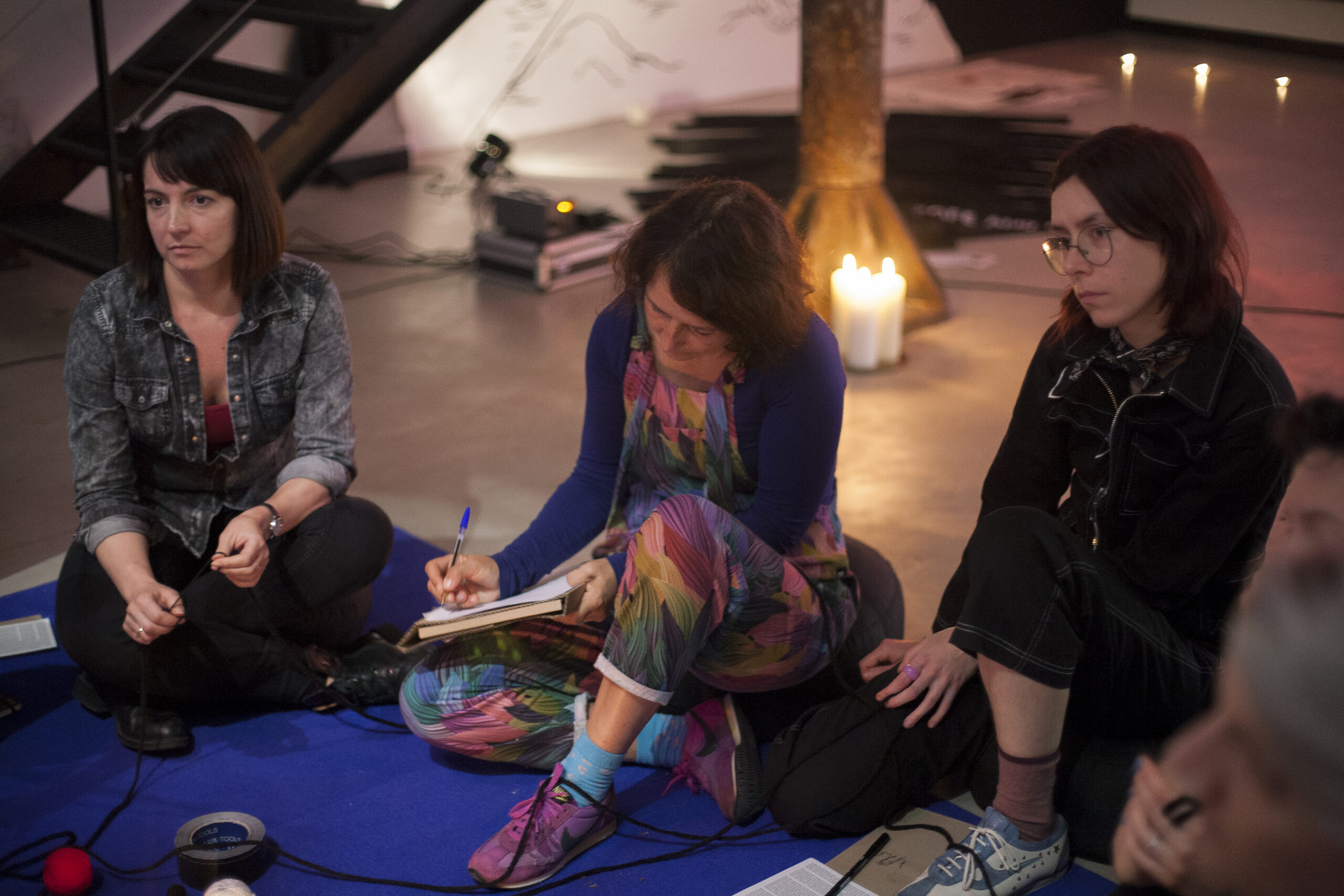
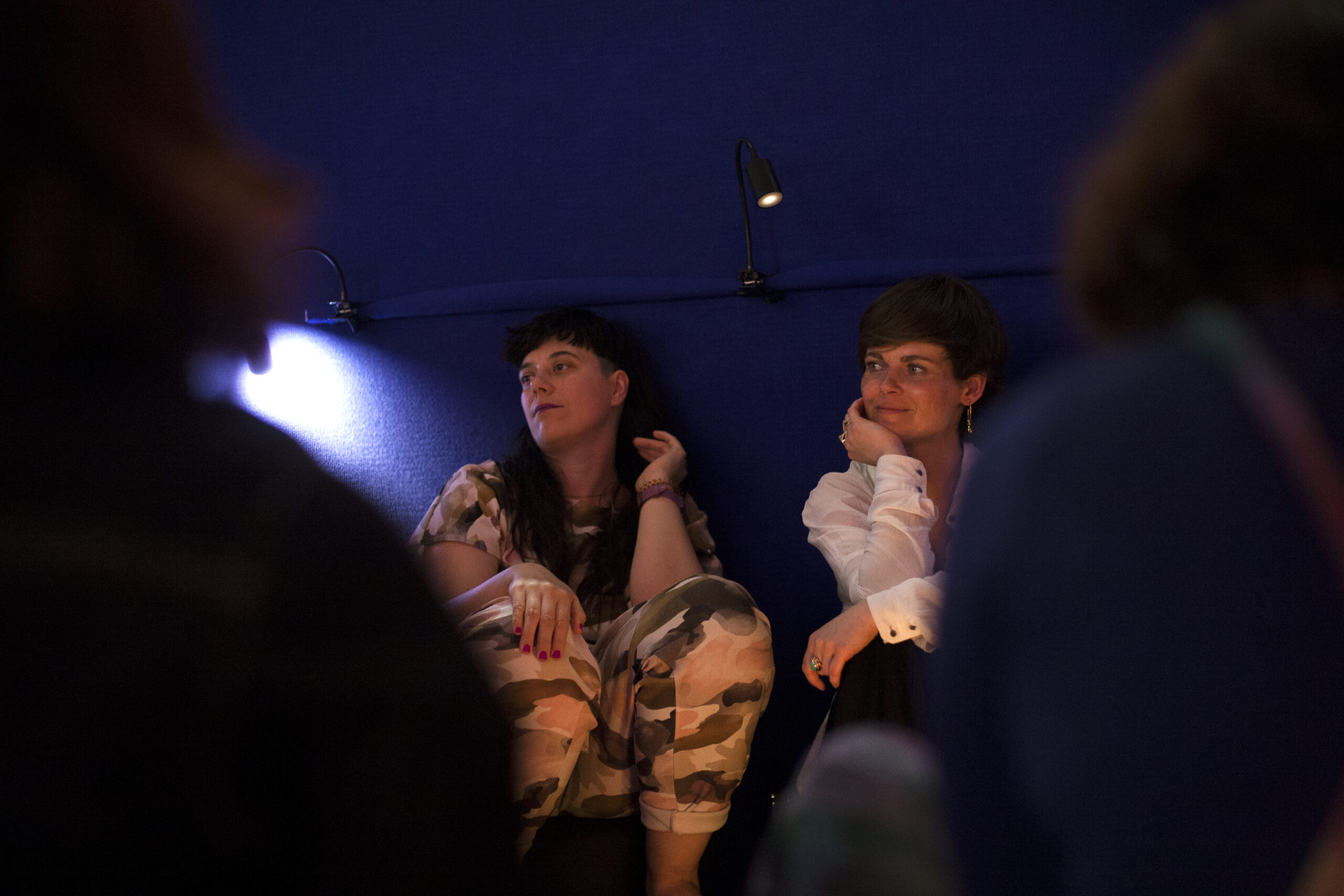
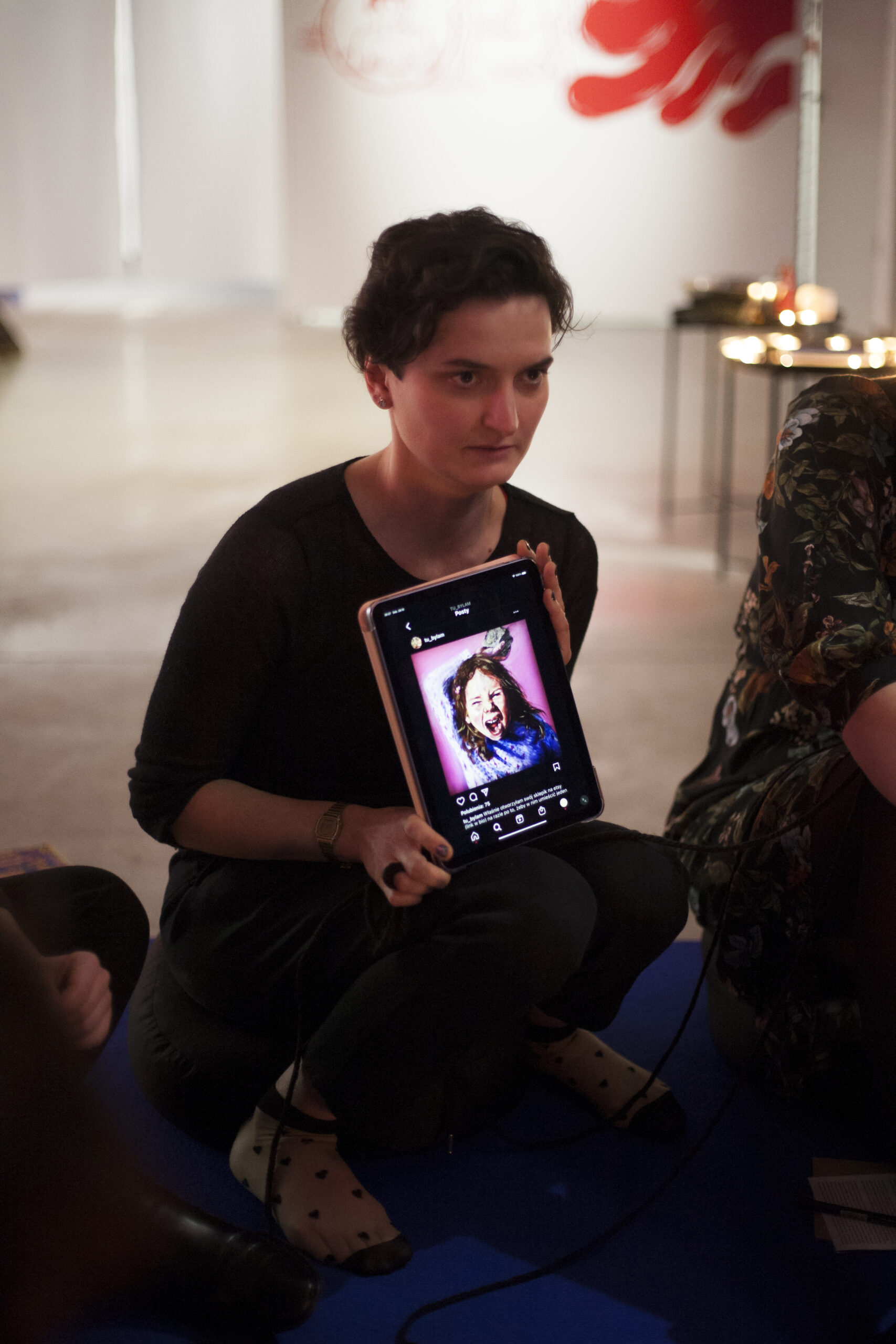
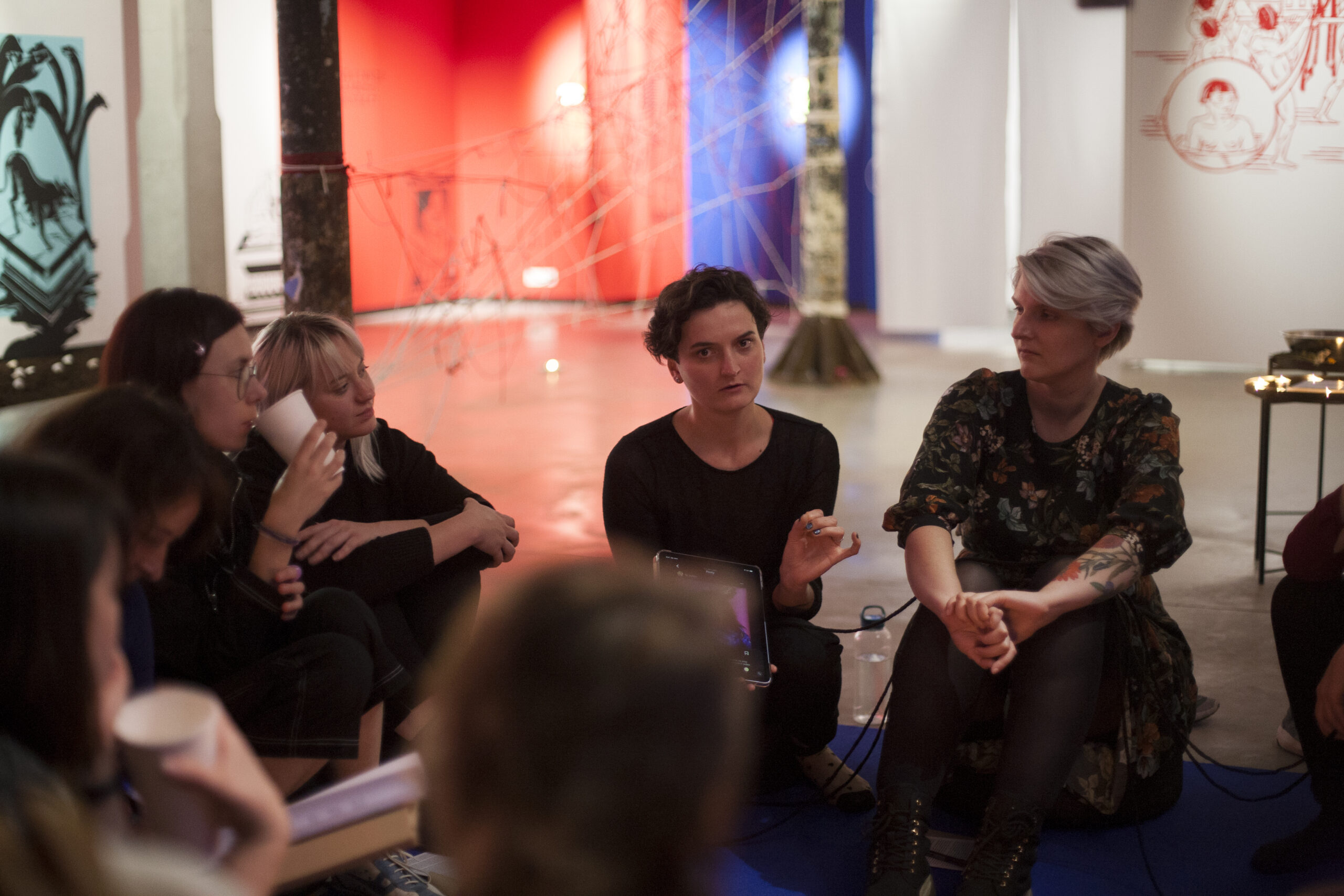
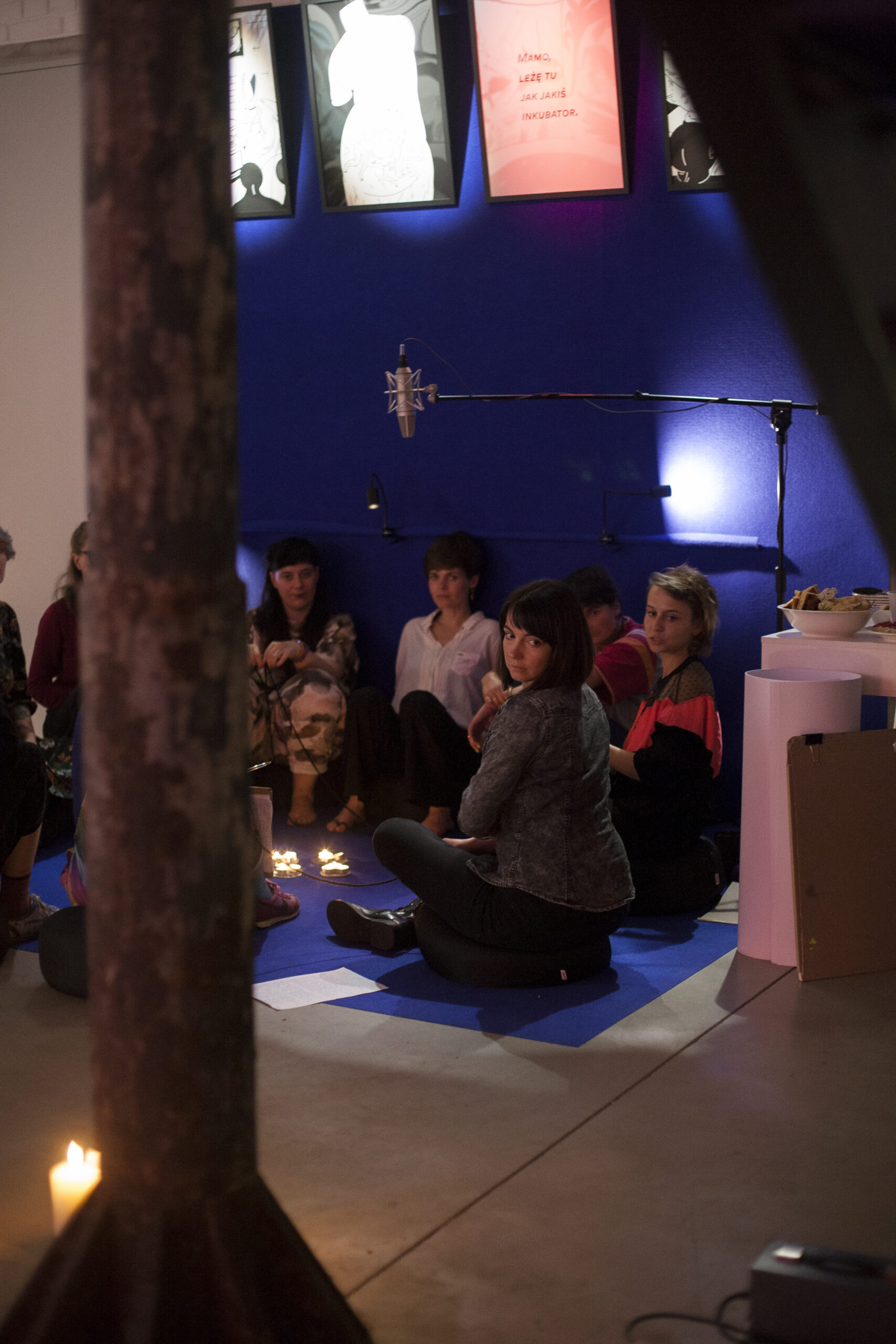
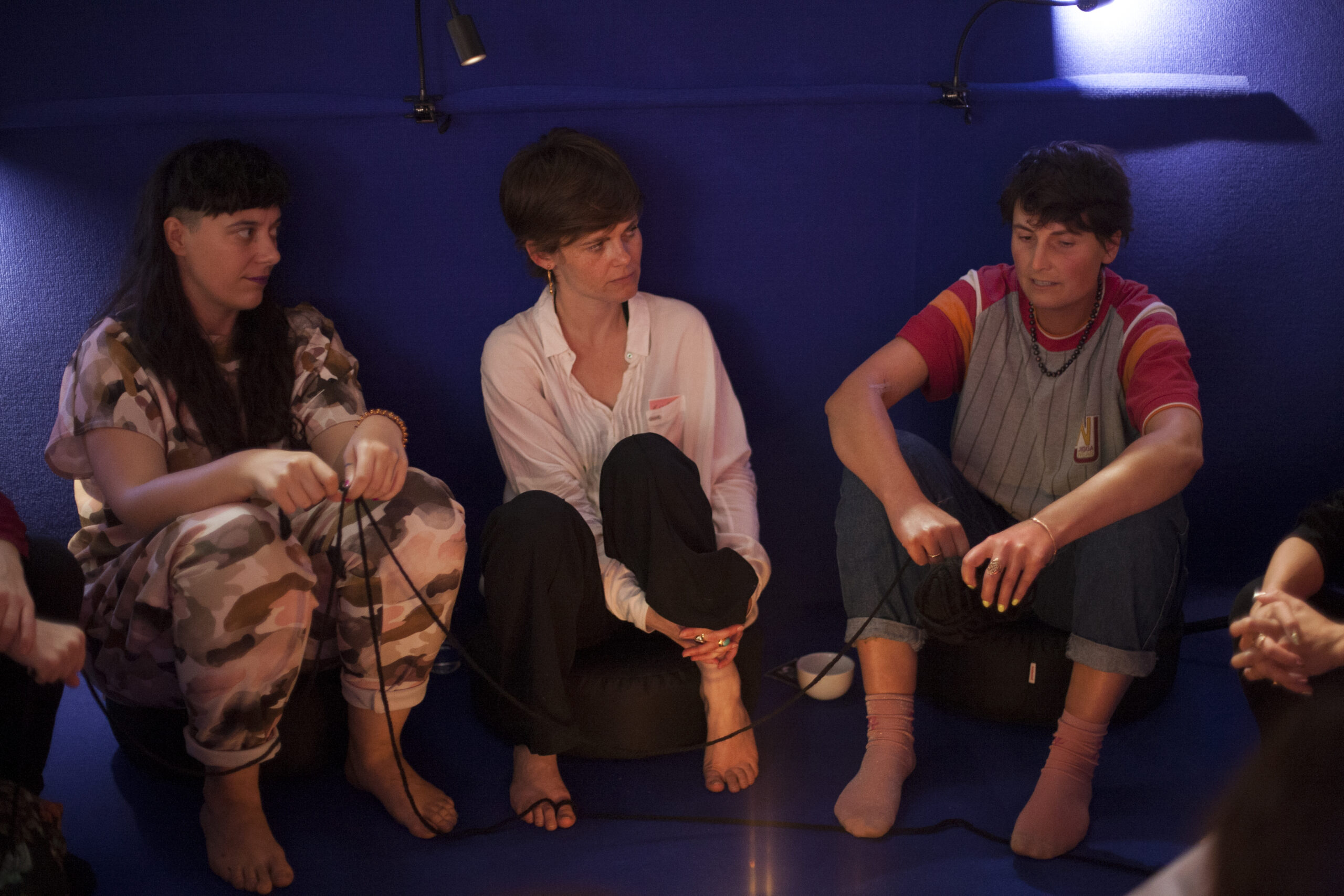
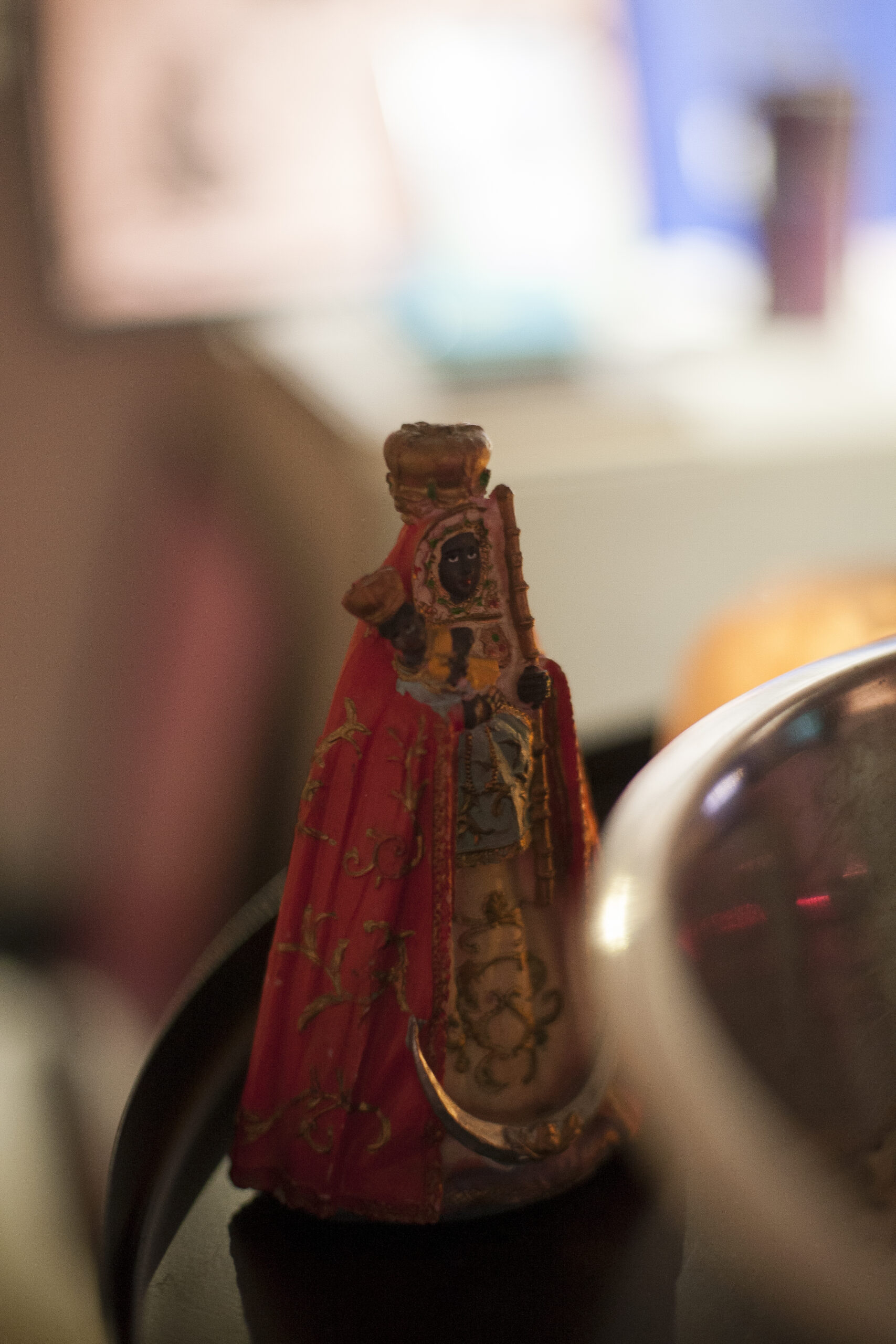
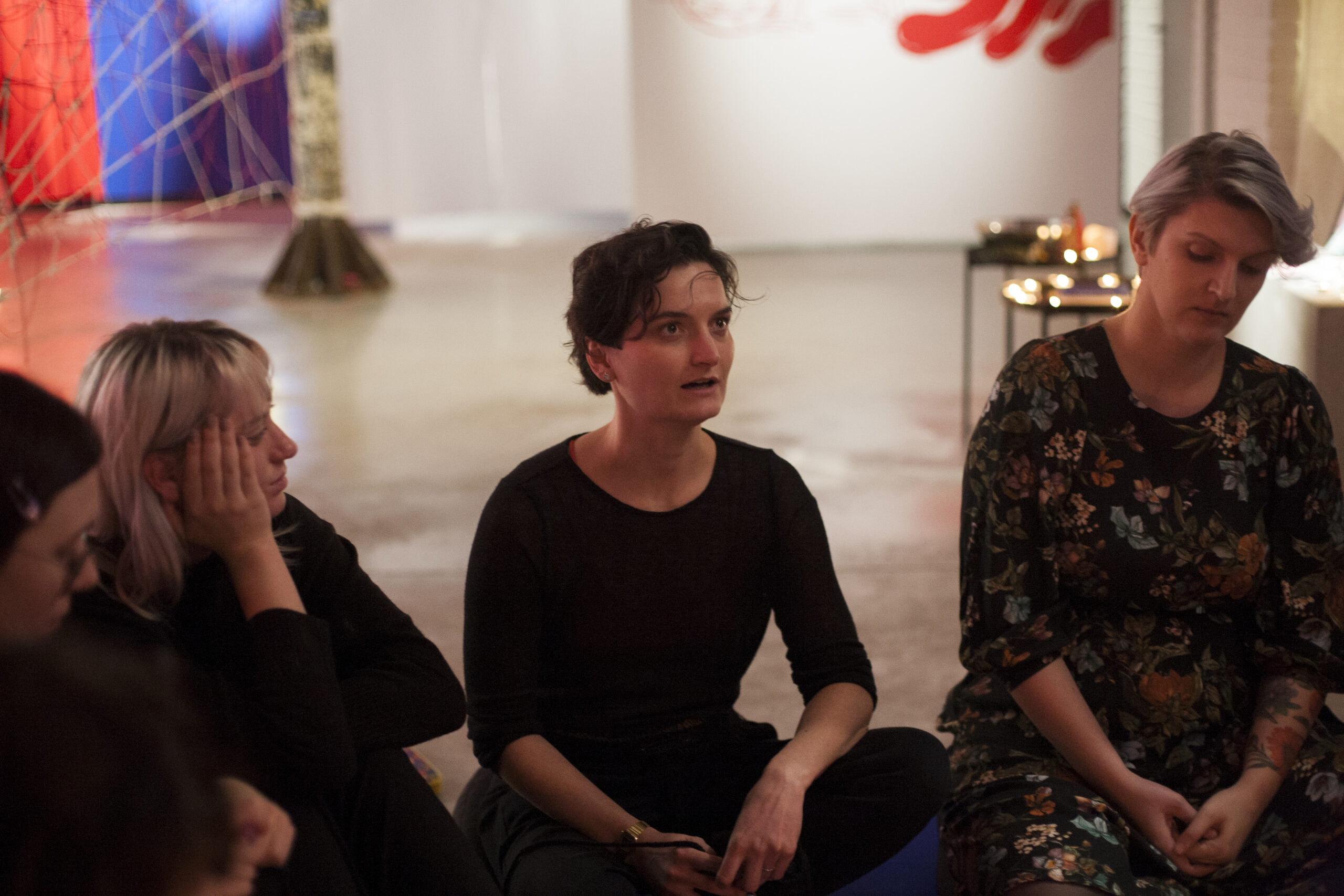
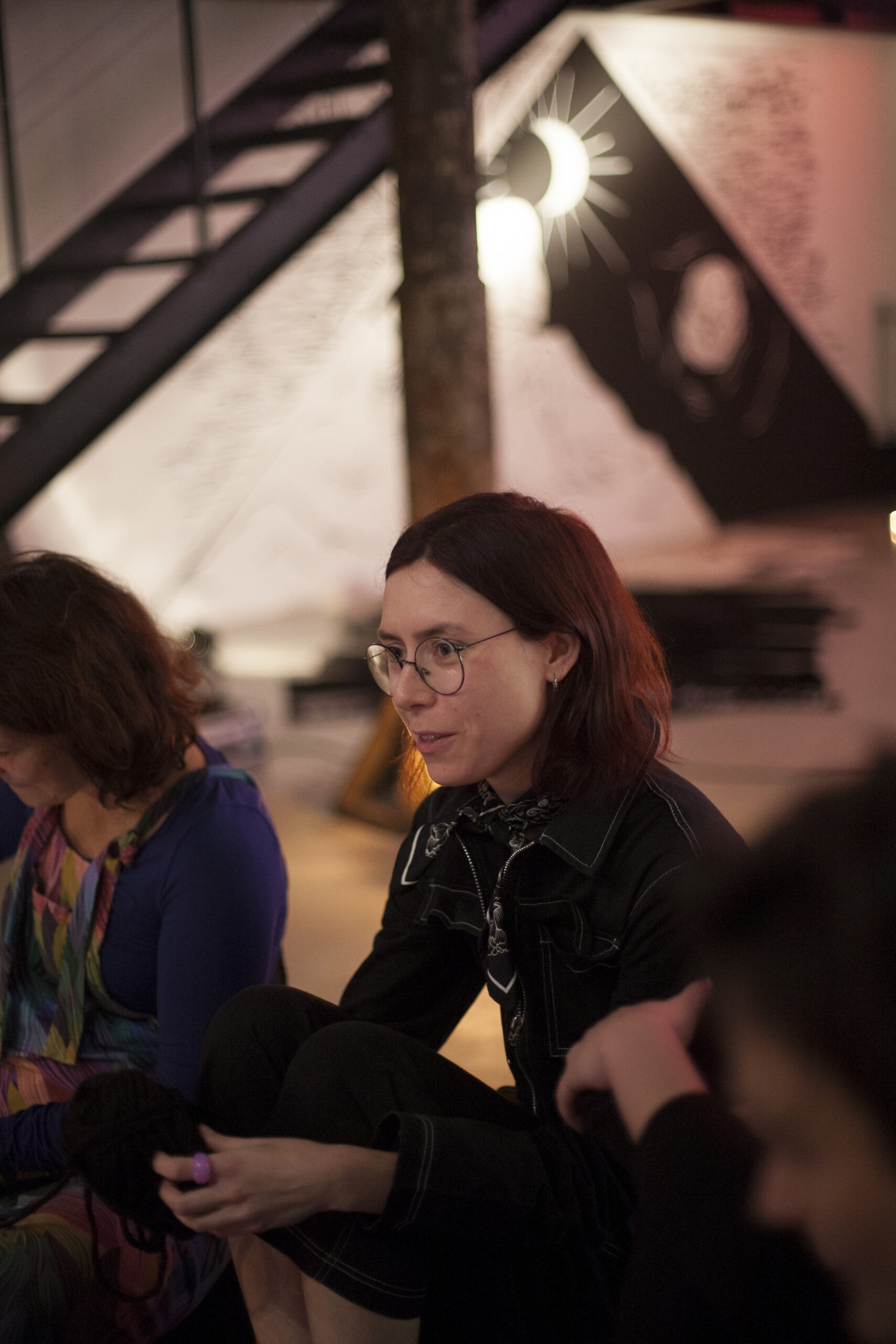
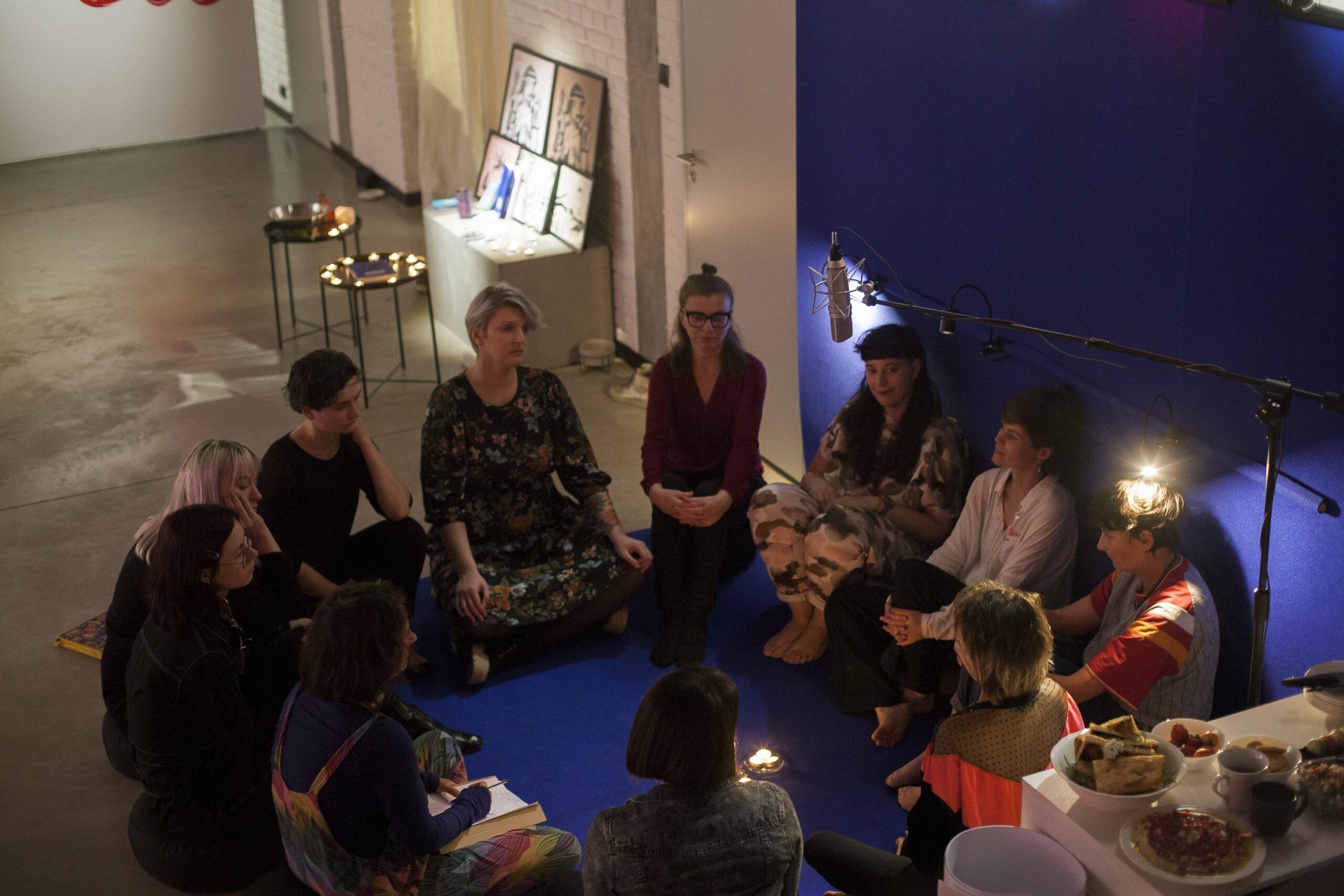
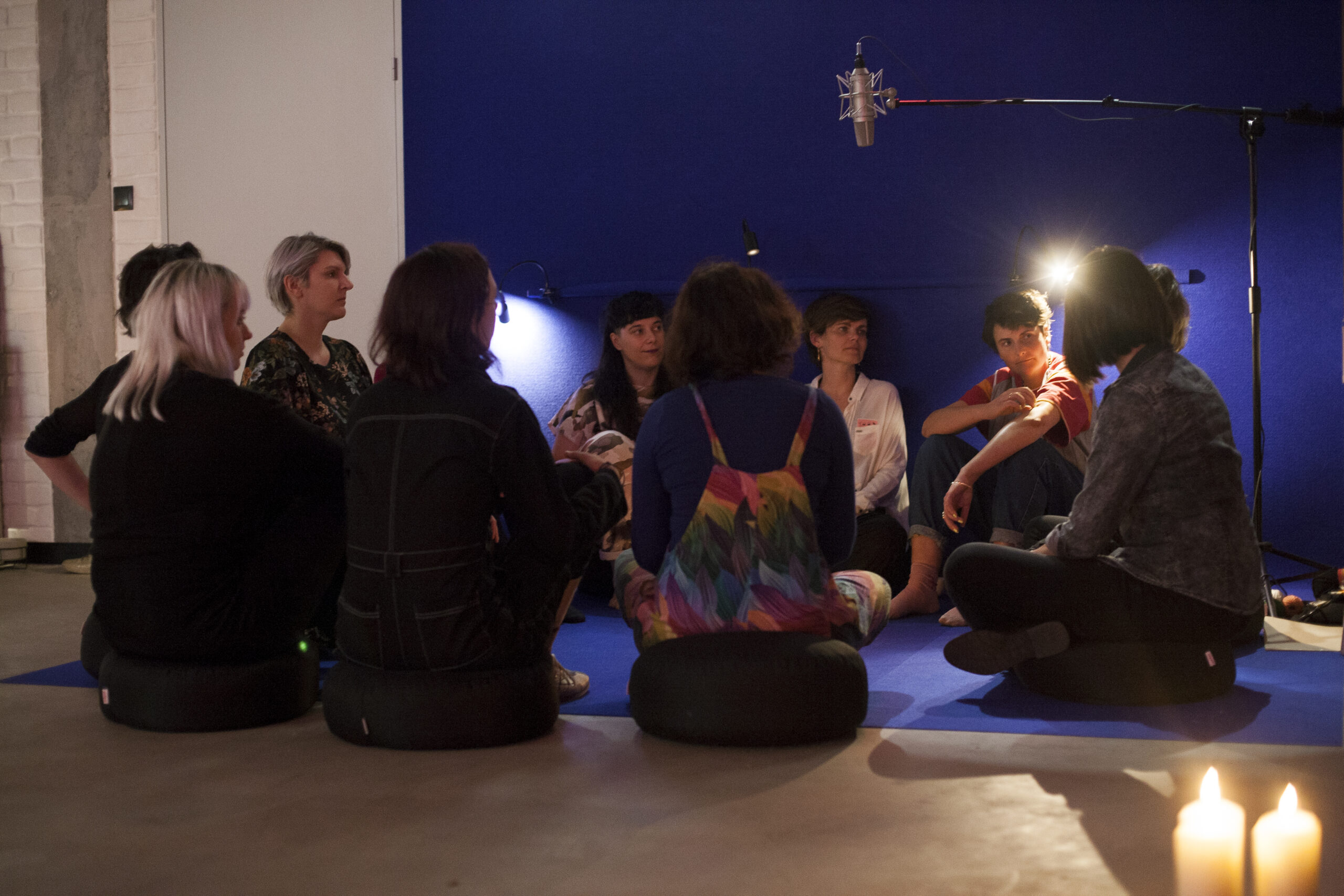
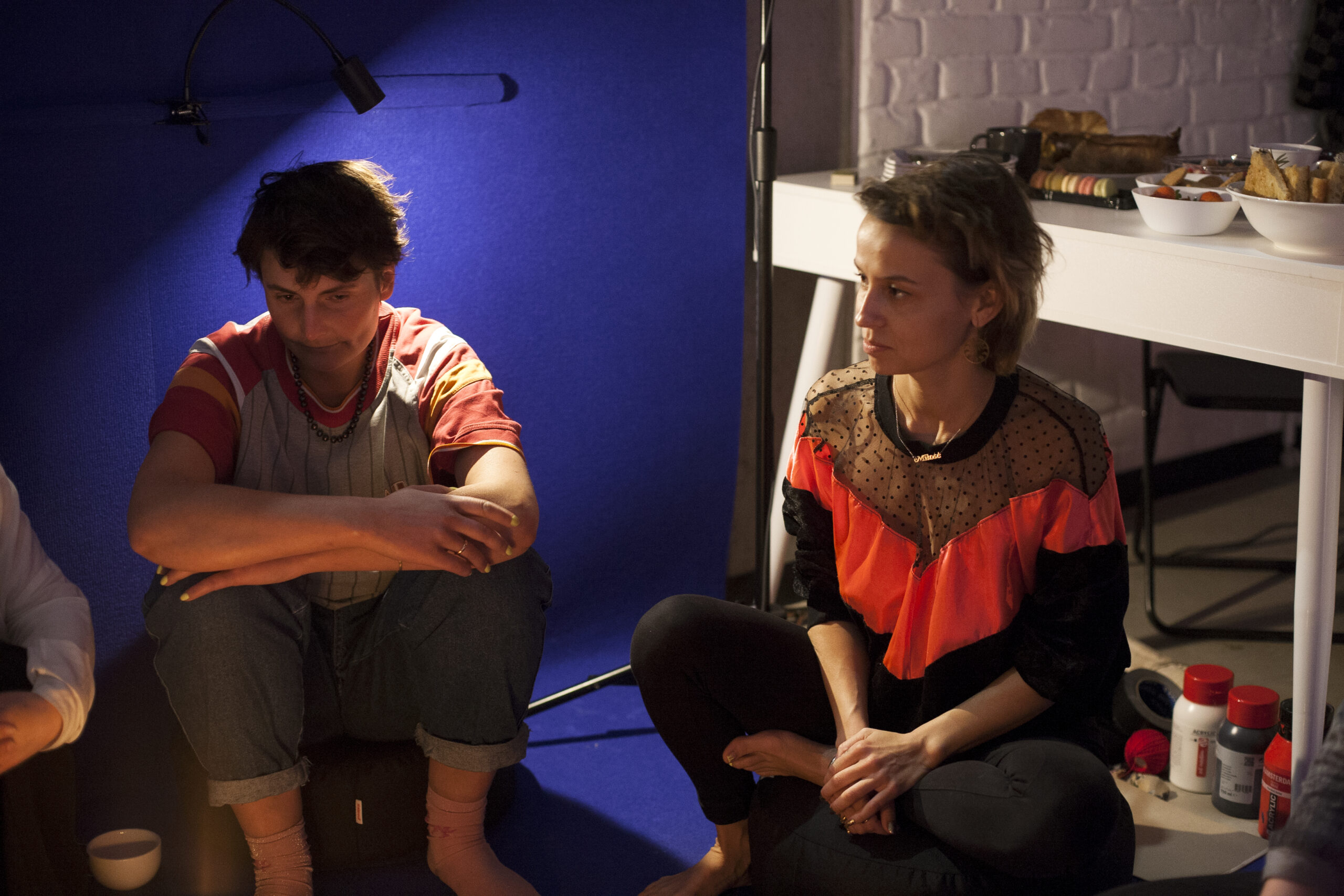
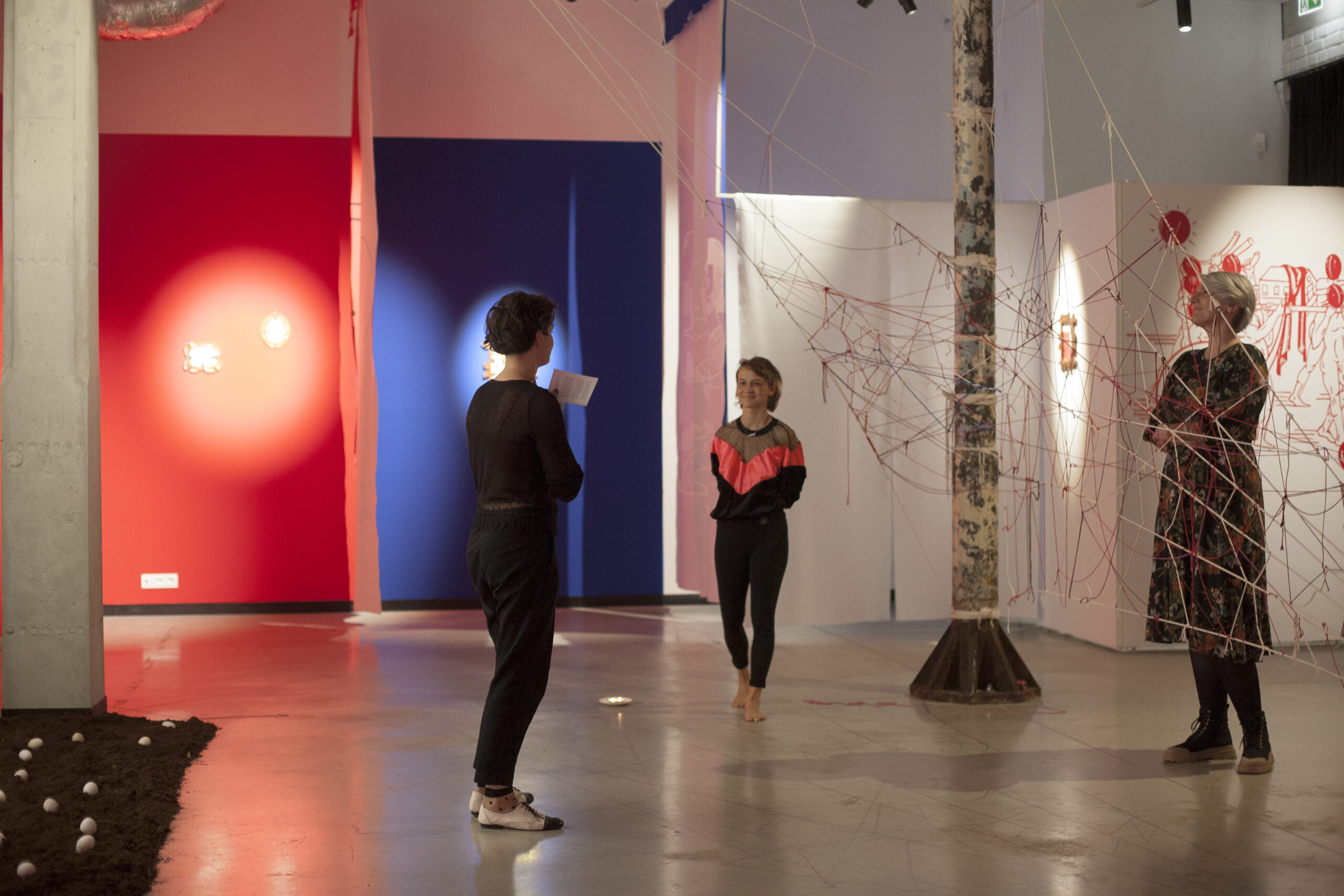
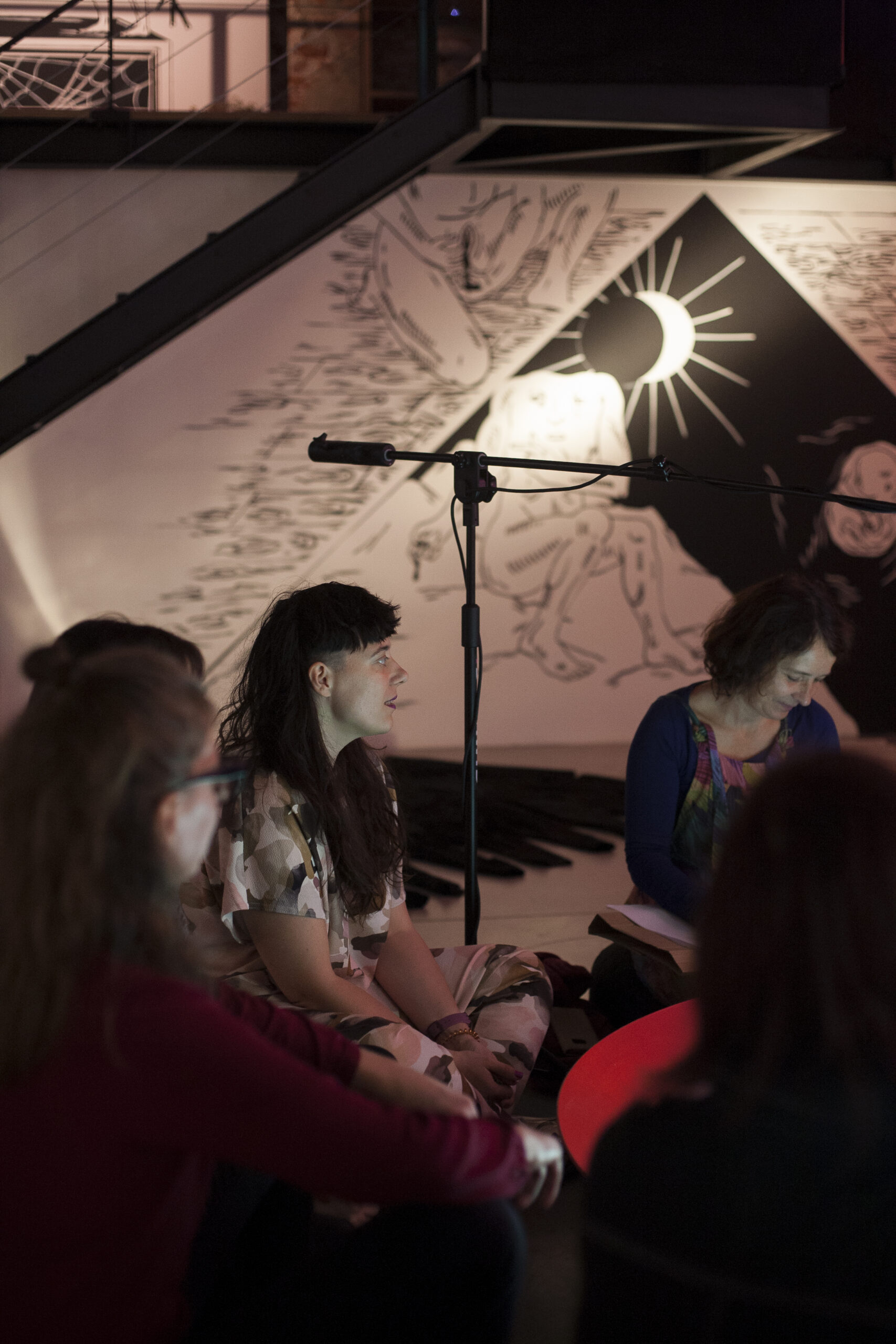
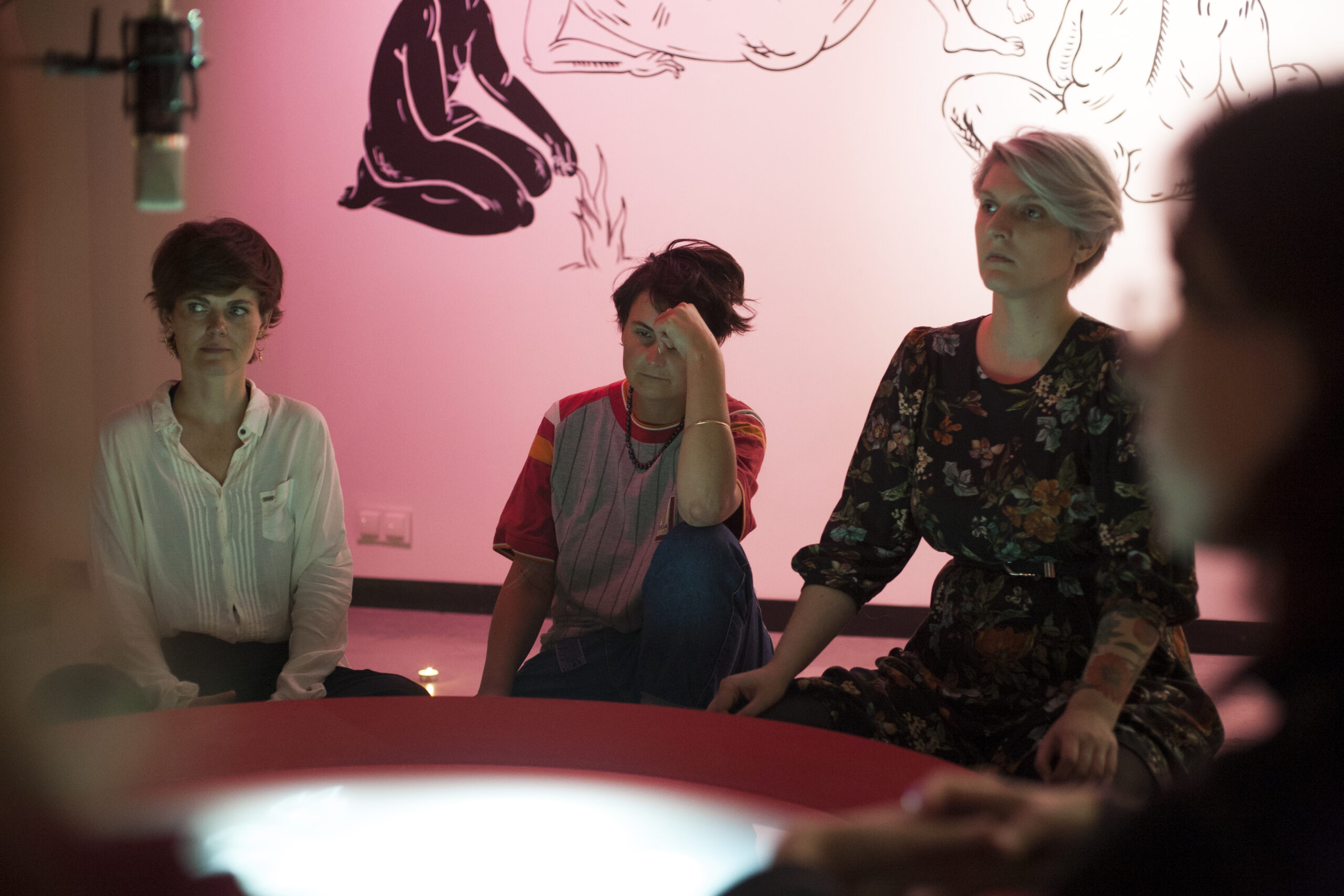
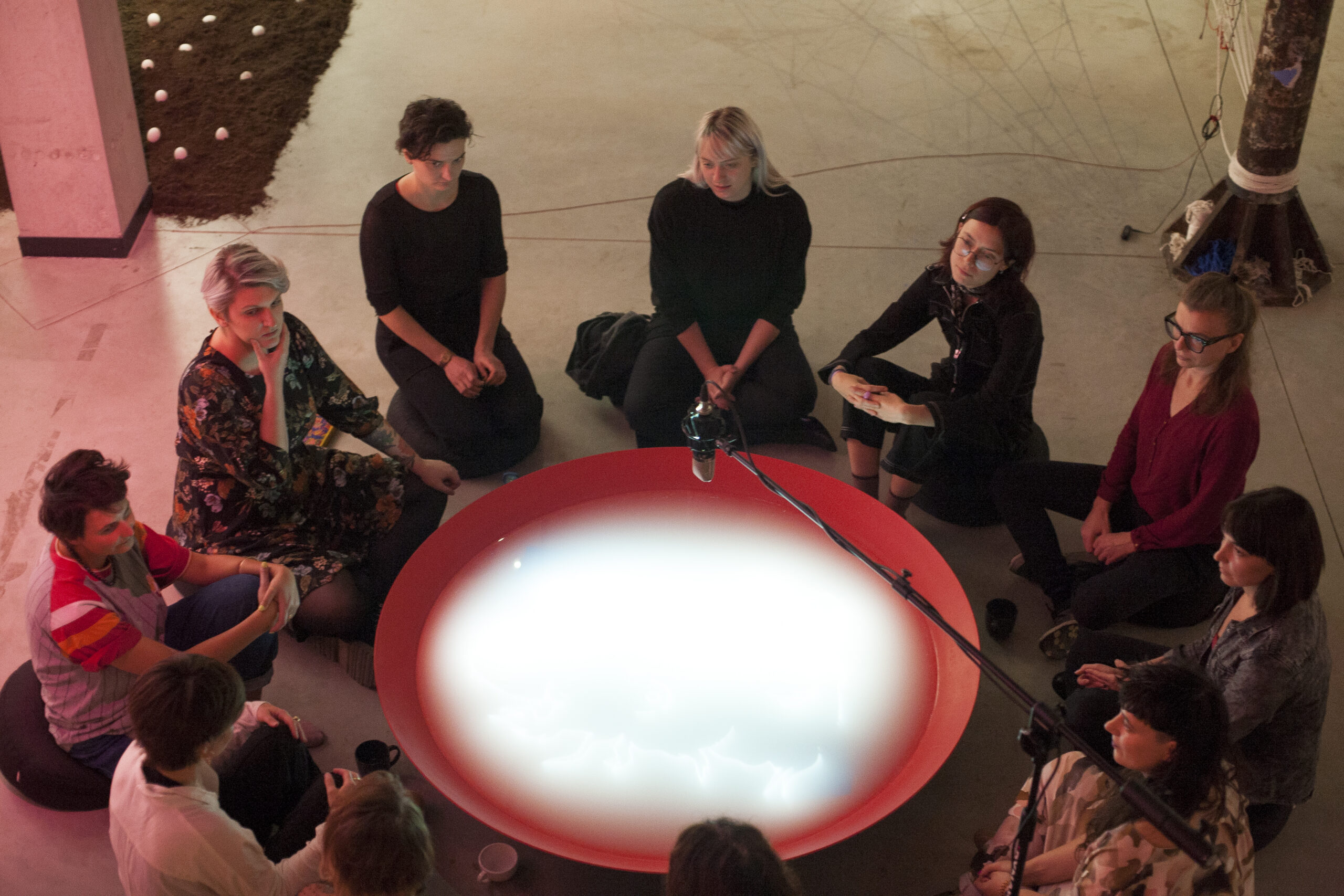
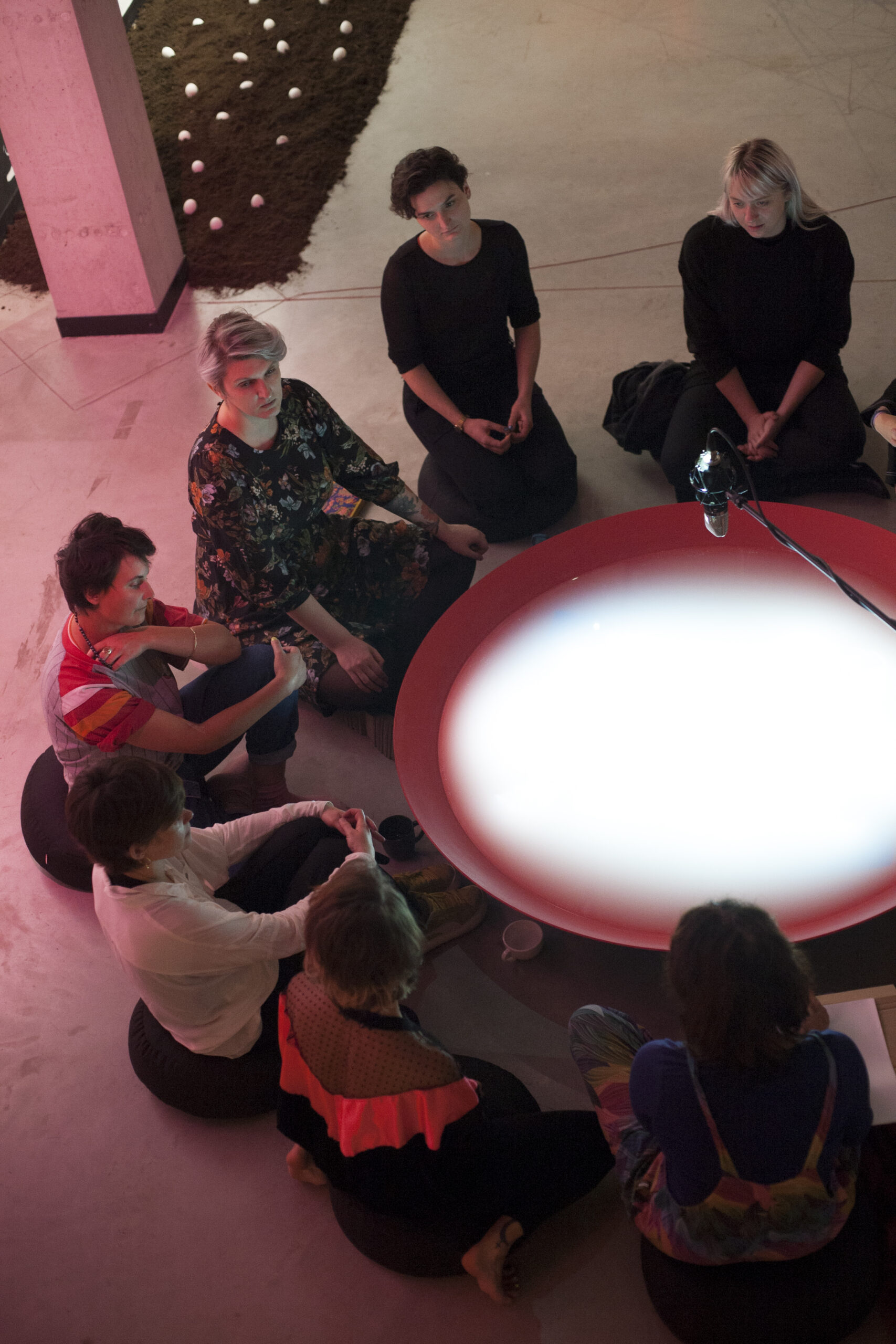
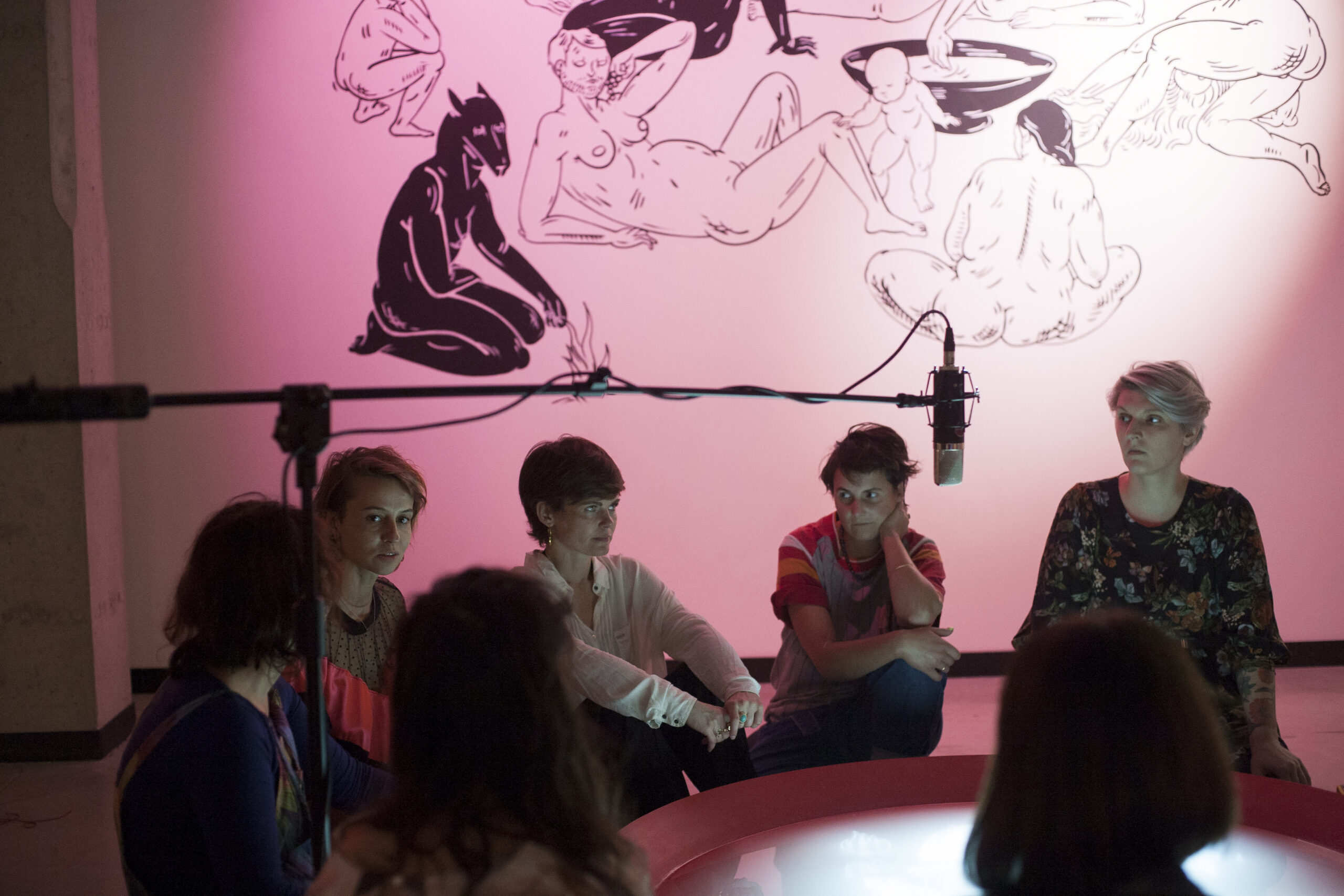
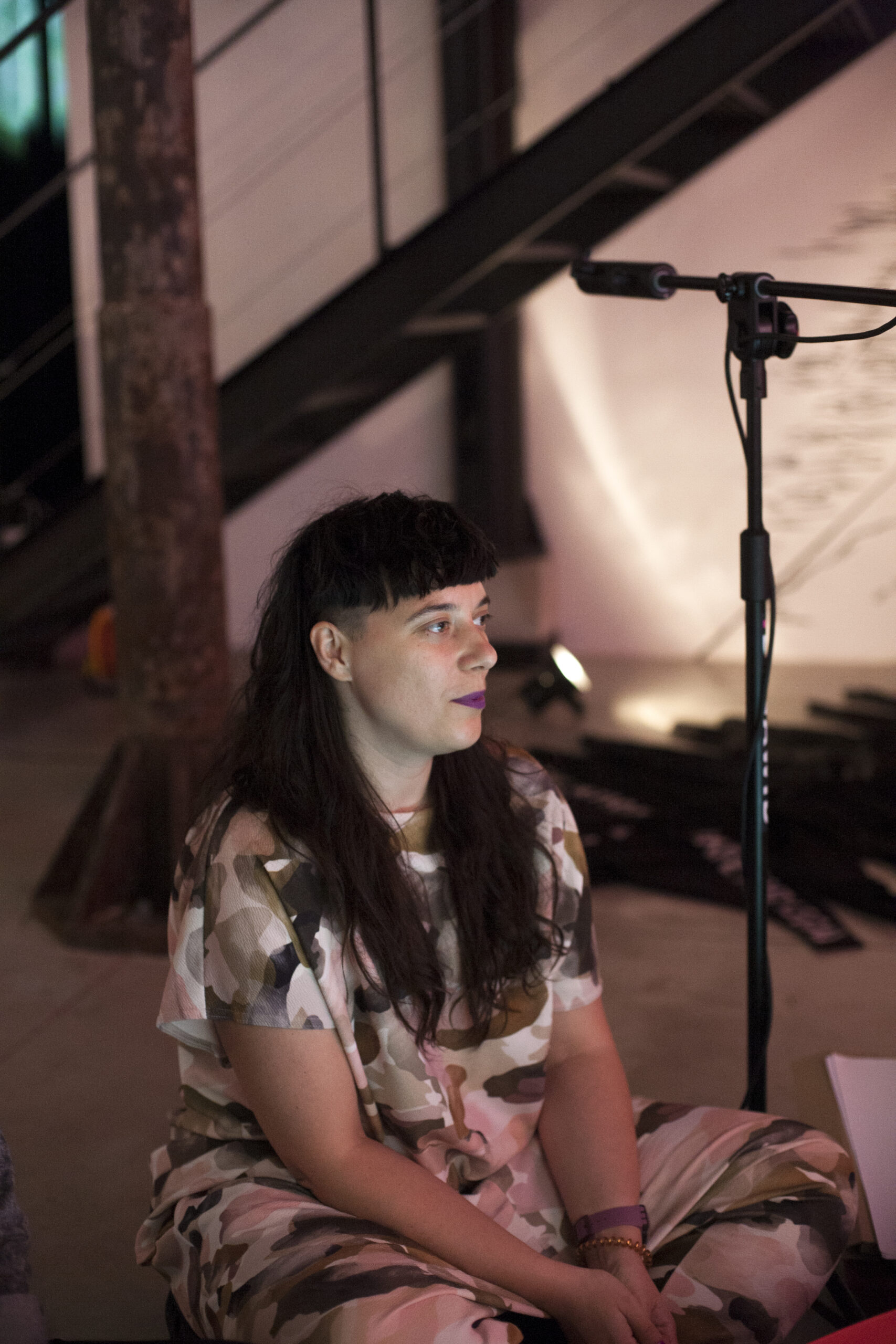
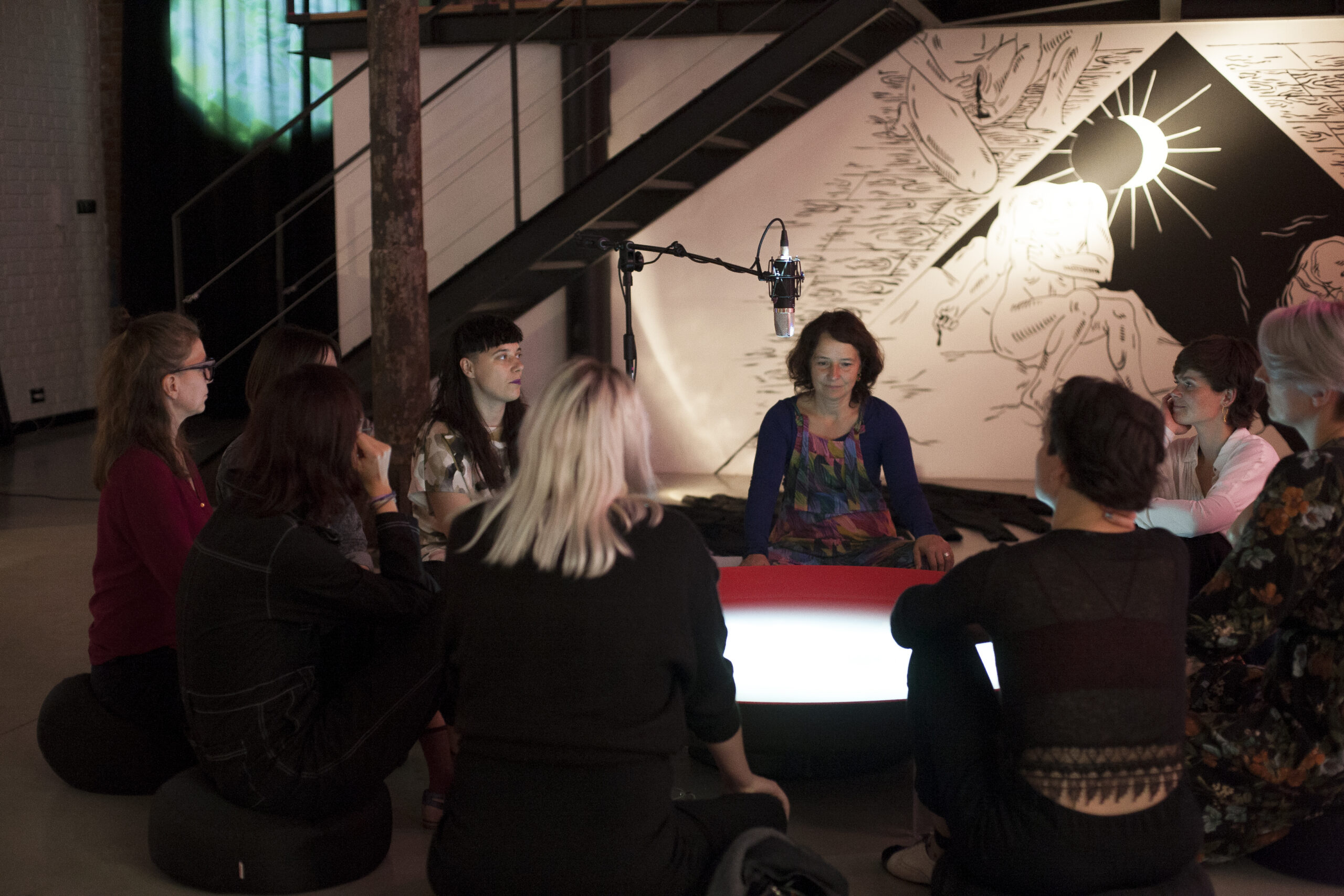
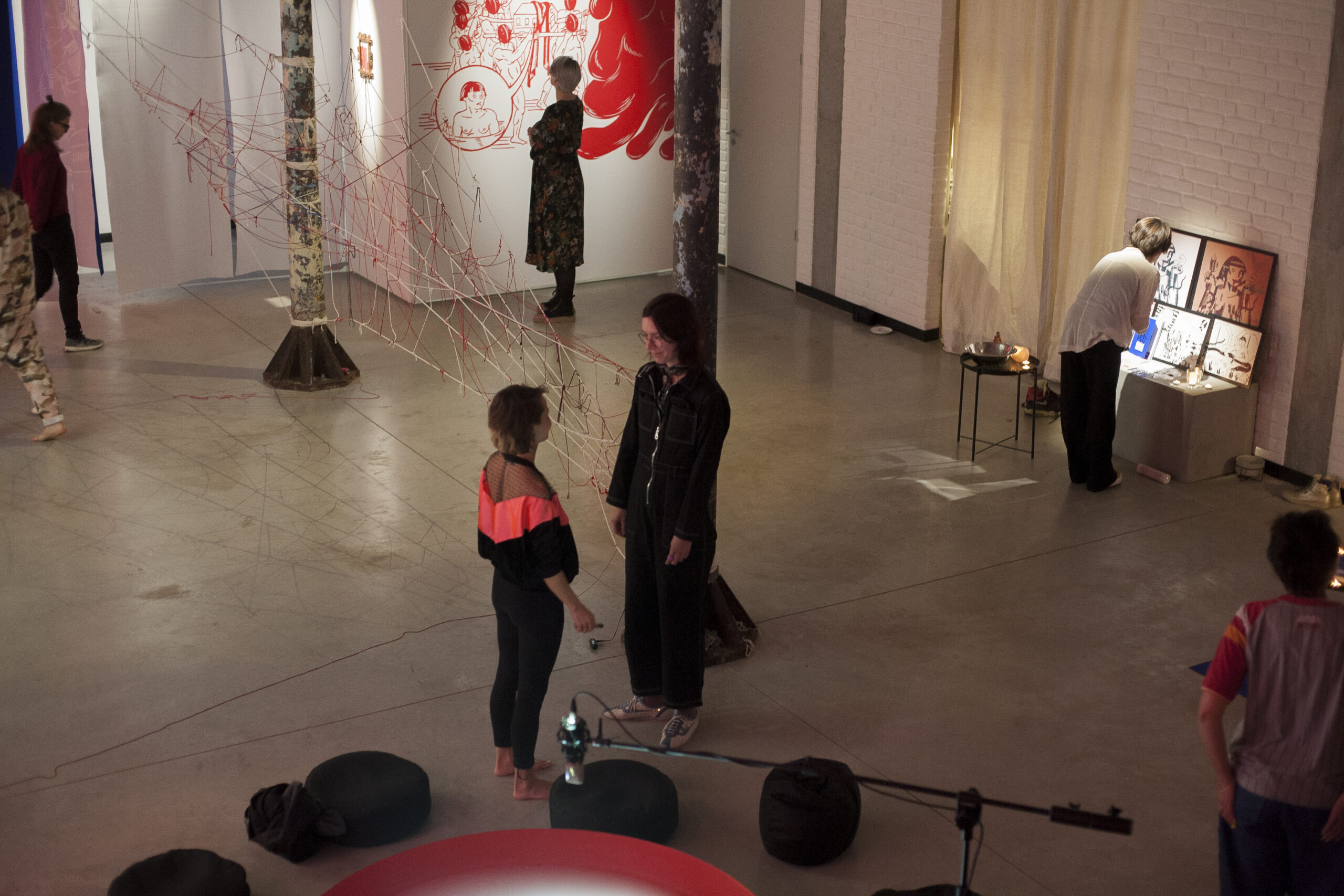
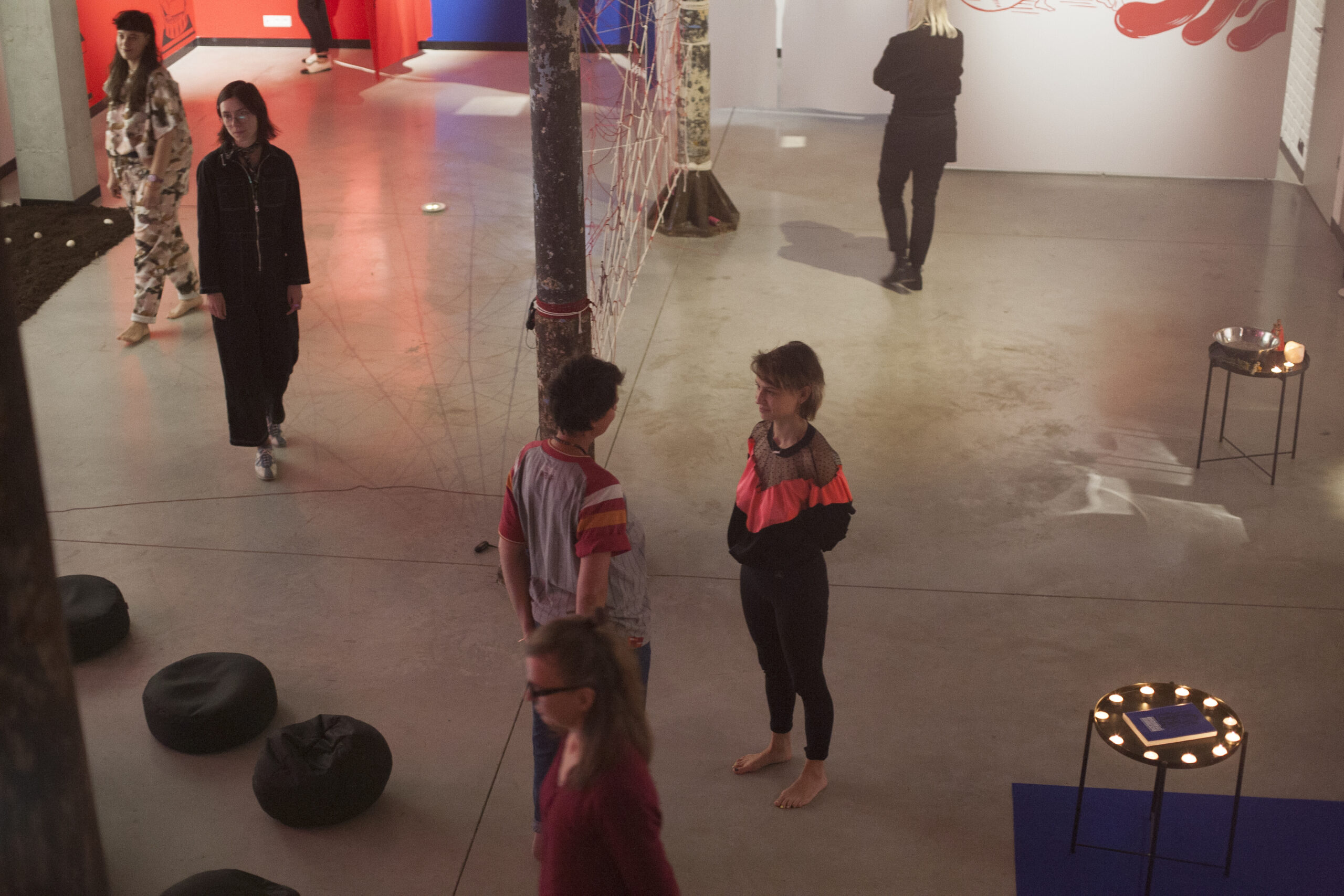
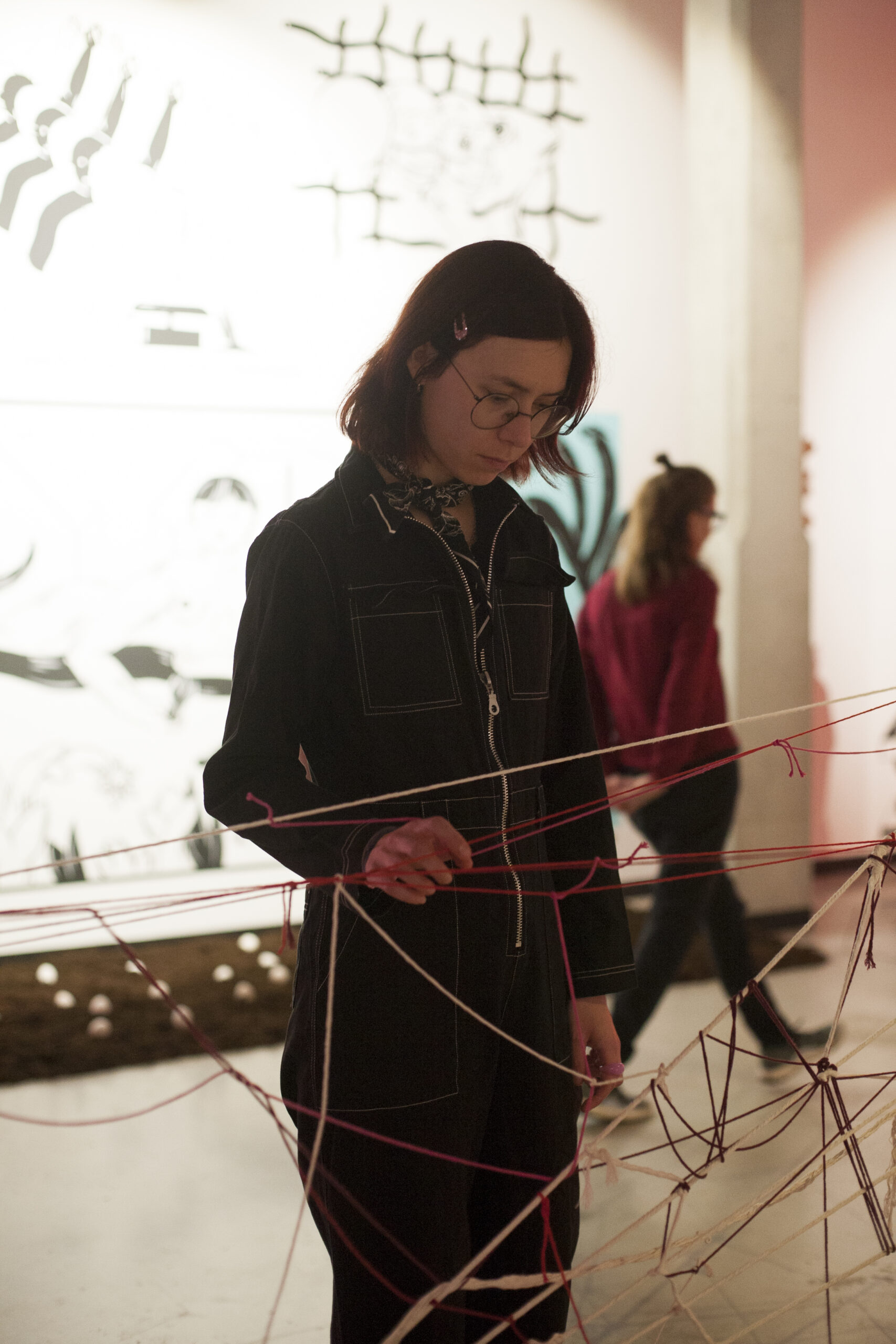
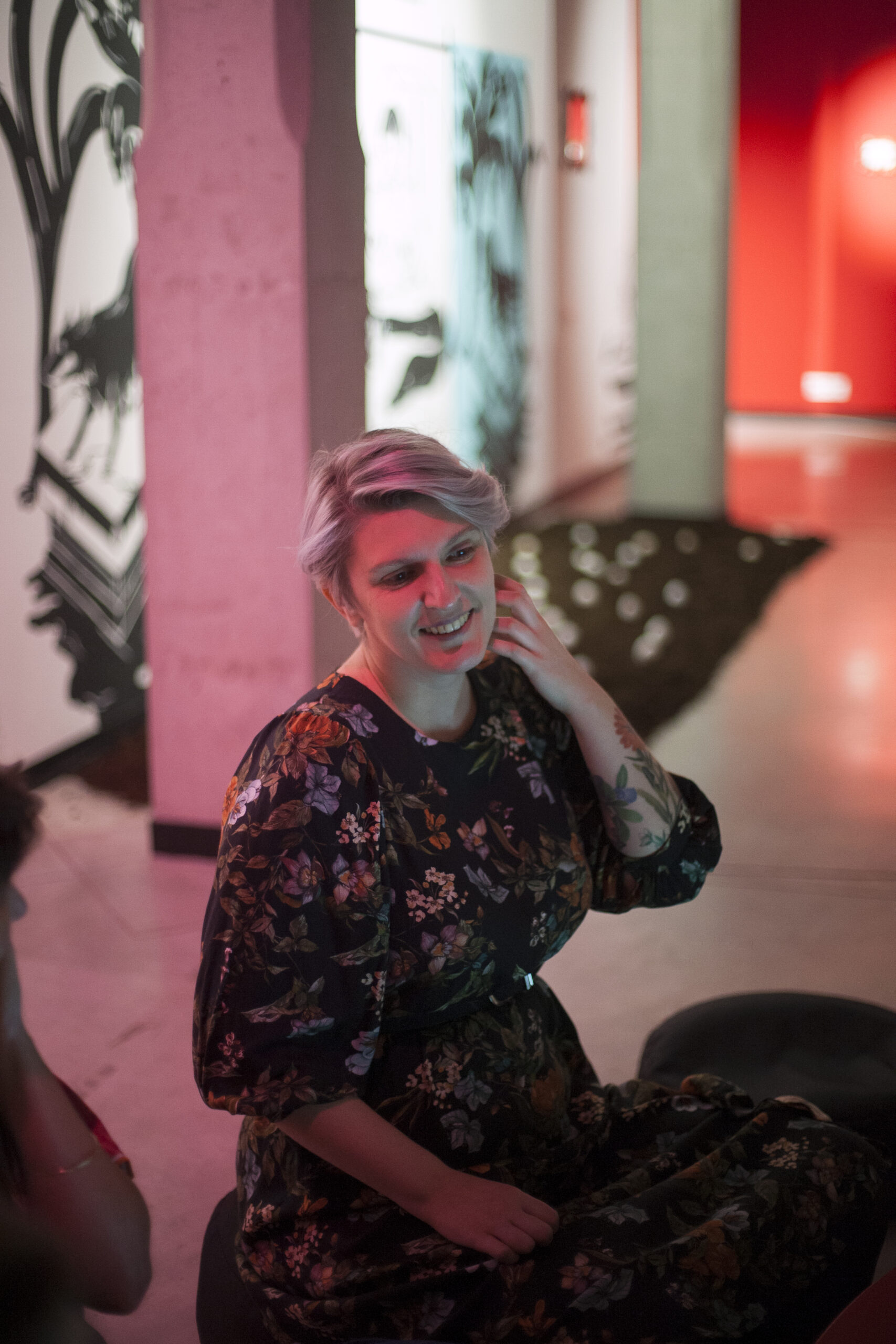
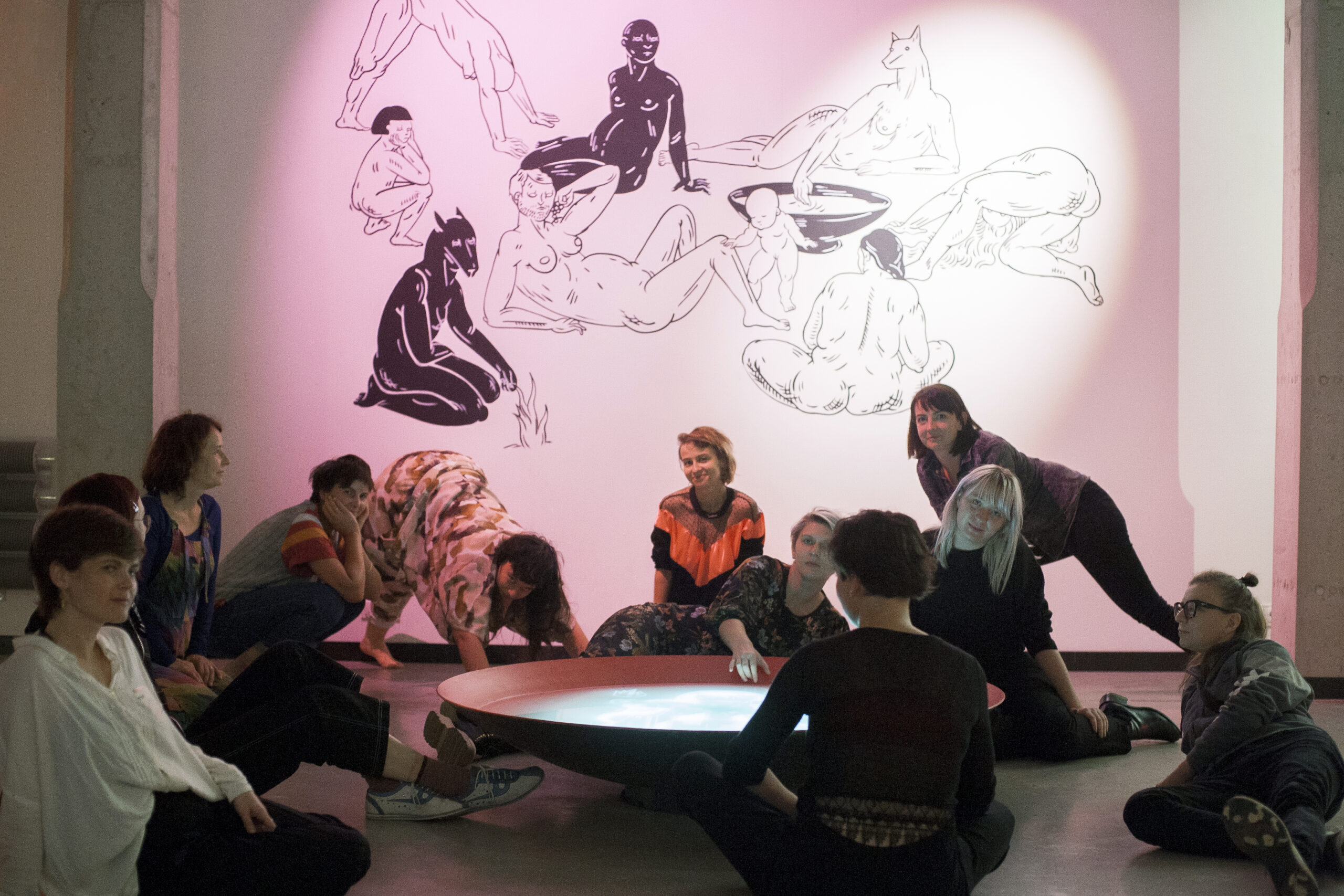
There are eleven of us and we are sitting in a circle. We have come in different roles – as women, artists, empathetic and sensitive persons, partners. Mothers, daughters, wives. Moved, excited, but when it comes to the subject that brought us here – simply furious.
We have come as hostesses – Beata Rojek has co-created (with Sonia Sobiech) the works featured at the exhibition Yesterday’s Dreams Weave the Ruins of Tomorrow’s Temples at the 66P gallery in Wrocław, which is the setting for our circle; Zofia Reznik is the curator of this project on the abortion support network; and Marta Irena Stoces, who organises and holds the Alchemy of Decisions circle together with Zofia, but who also appears in it as a returning artist. We have come as guests – artist from all over Poland who address the subject of abortion in their practice. They do so because they have realised that it is no longer possible to remain silent on this issue.
“We sit side by side so as not to be silent when someone needs help,” says Anna Kuśpiel. And because we are interested in loss (Jagoda Dobecka). Or we feel anger and the need to protest, as Marta Falkowska does.
Sometimes we sit down cautiously, as I did at the beginning. At other times, in a slightly savage way, like Aleka Polis. Or with reservation, expressing our uncertainty about the whole thing. “I haven’t left one church just to join another,” says Anna Karolina Kaczmarczyk. “I’m rather sceptical about esoteric subjects. But at the same time, I feel that my role as an artist is my armour in this situation.”
In the circle of female support
Marta Stoces entered the world of women’s circles in 2014, when she was looking for holistic support and education during her pregnancy. She wanted to experience childbirth in her own way, on her own terms. “Before that, I wasn’t interested in women’s groups, but then for the first time I felt a lot of good, fear-taming energy coming from those who supported me. After Lila was born, I wanted to pass this knowledge and support to others. I started to arrange meetings focusing on childbirth and female sexuality. Then, during the MAMA Global Healing Festival, which I organise, workshops with elements of the circle appeared. And now I’m organising another circle, an abortion circle – I treat this meeting as a polar opposite of the first one, but also as a kind of complement, a closure. Unlike in typical circles, we are in a gallery, our meeting is recorded, documented, so there is an element of an unknown. And we have two options – either we want to move quickly from conversation to practice, we form a pact of trust using the safe space for some spiritual or emotional truth to emerge, or we avoid the prospect of being too exposed .“I’m always happy when women allow themselves to trust each other. All the more so when this happens in an artistic environment, where the urge to keep up appearances for fear of falling into banality is very strong, so much so that it cancels being in truth. Meanwhile, being able to say things in a group, to be seen in the experience by supportive people, can have a healing long-term effect. Not in the sense of therapy – rather, by making us feel less alone in the experience, allowing ourselves to shatter shame, to give and receive support. And to not lock important things in the closet just because part of the world has decided they shouldn’t be talked about.”
Tell me your herstory
So Aleka Polis says, “I was lucky enough to have a legal abortion. In 2017, in Warsaw, in a hospital, in comfortable conditions and with doctors’ assistance. Without being judged. A few weeks later, I wrote the manifesto Yes, I Had a Legal Abortion, which I printed on blood-stained sheets. I used them to wash the pavement outside a hospital in Rzeszów, where most gynaecologists opted for the conscience clause, did not perform abortions and did not refer to places where pregnant women with lethal foetal defects could safely undergo the procedure. Although the law in Poland at the time permitted abortion due to foetal defects, it was not universally respected. Women were left on their own, without any support. From this perspective, I feel lucky. When my manifesto was published in Newsweek, I felt it was important that I spoke out for myself. The many comments written by people gave me strength, but also made me feel anxious.”
And Beata Rojek says, “A key figure in my work is my grandmother Ewa. She was close by when I was drawing the comic. She didn’t live to see the book launch or the exhibition. After I drew it and after trying in vain to have a child for two years, I became pregnant and lost my pregnancy – today I can say of this experience that it was a beautiful miscarriage, that working with matter, with drawing, took me through those depths, unlocked me in some way. This process is still ongoing – the comic is just the tip of the iceberg. As I was drawing it, I felt how common this experience was.”
This personal touch has also made the role of curator different. “When Beata invited me to support the creative process, I realised that this time my task would not be purely curatorial, that it would be more than just another instalment of my work, which I would describe as the construction of a feminist identity,” emphasises Zofia Reznik. “This awareness started to awaken in me after my studies, because I had not previously identified with femininity. So I read texts, watched feminist art, did Gender Studies, gradually got rid of internalised misogyny through intellectual work. And one day I decided that instead of Zosia I’d rather be Zo, that this neutrality of form suited me. Then came a point when I felt that I needed to put my body behind me, behind what I was feeling. The Black Protest was a breakthrough in this respect – it was then that I strongly felt that I wanted to bear witness and be with my body. Here, on the occasion of this exhibition, the decision was also strong – I decided that I would be with my body next to my friend. I saw our relationship as sisterhood rather than curating. I am killing my mind-attached self, I am launching a person who creates from the body and feeling.”
Seen from a different perspective, abortion also turns out to be part of the creative process. “I have the impression that, as an artist, I am constantly aborting the ideas that are born in my head, I slaughter them every day,” confesses Marta Stoces. “Every day at least a few are born and I am physically unable to realise them due to lack of time.”
Anger written in the body
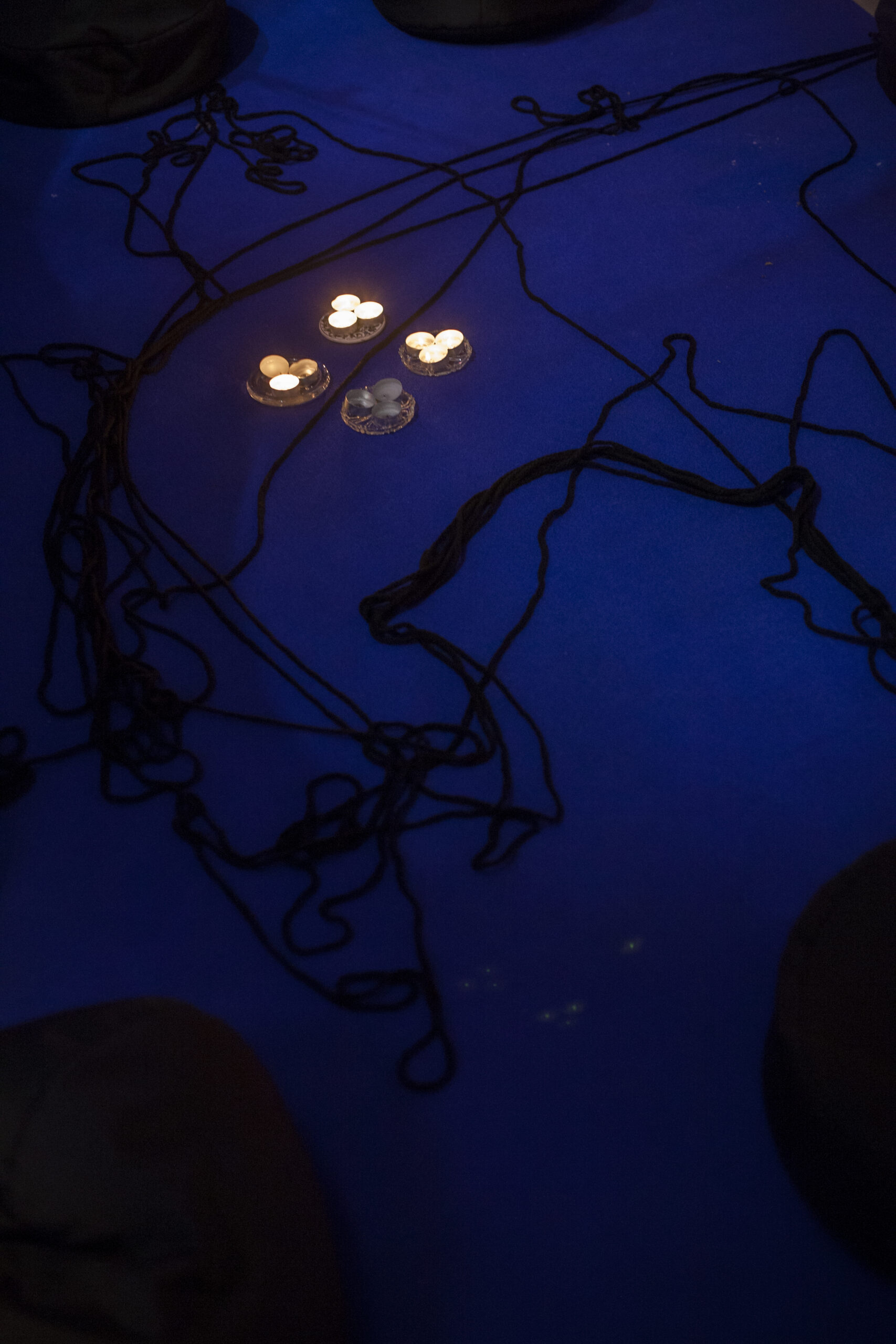
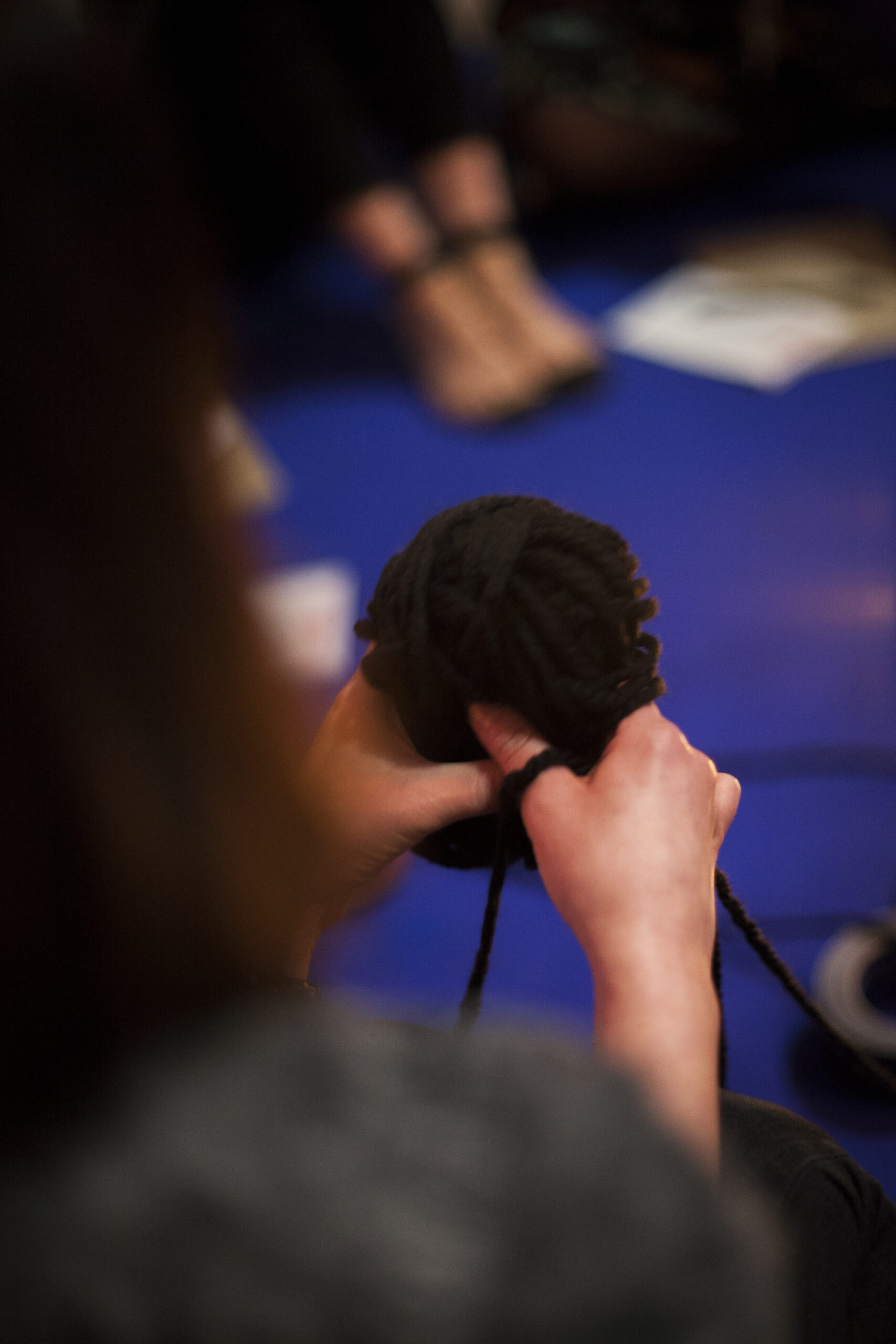
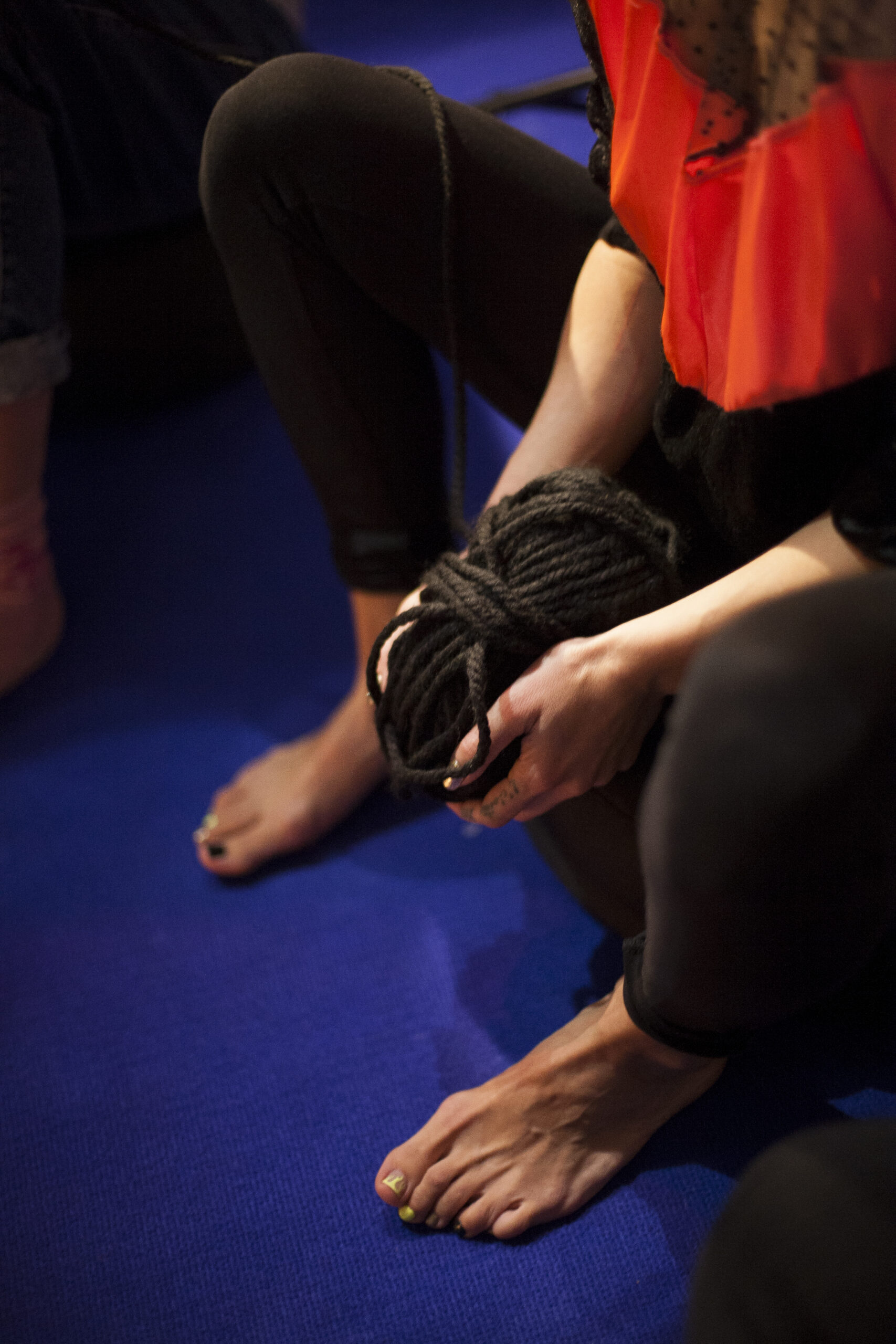
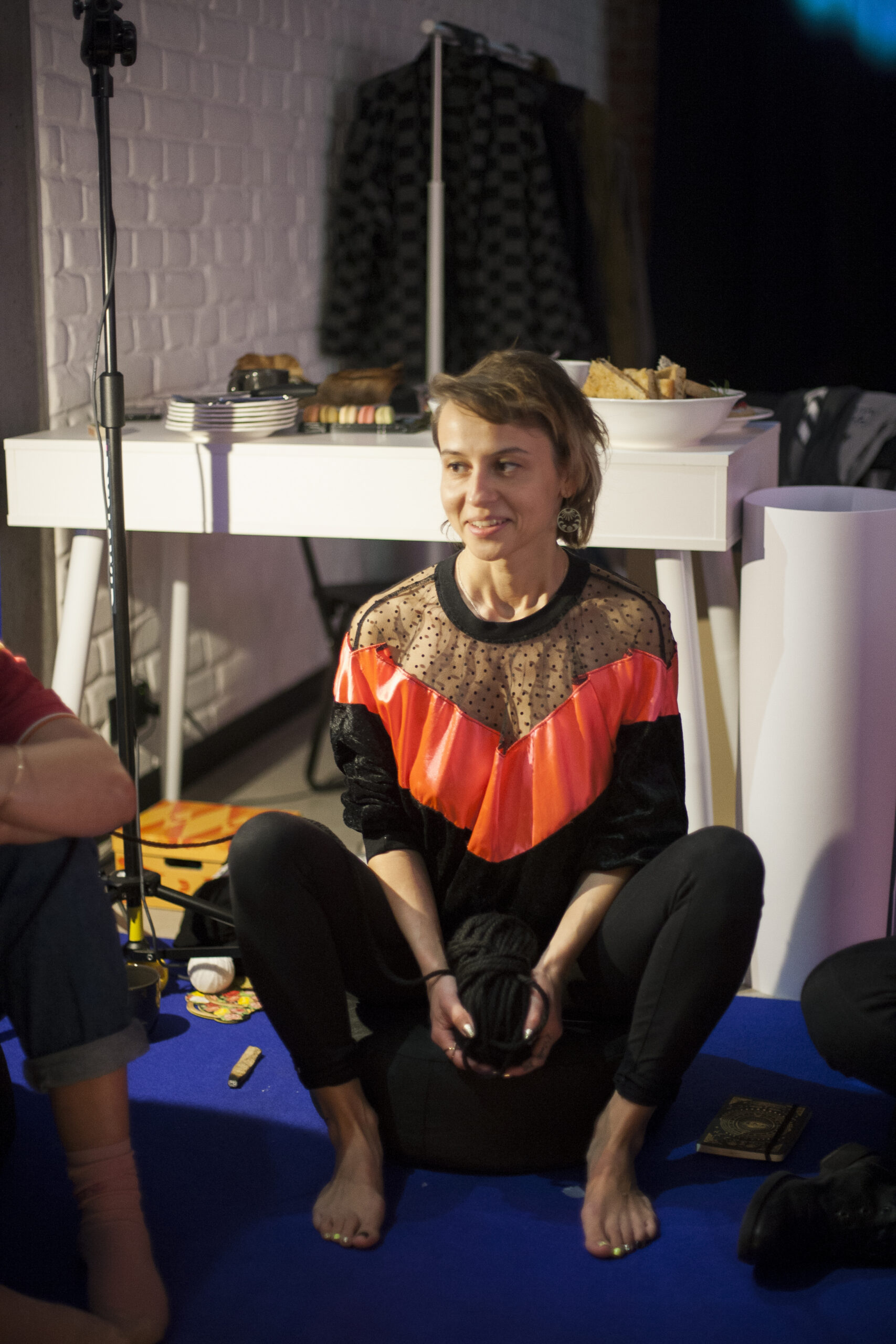
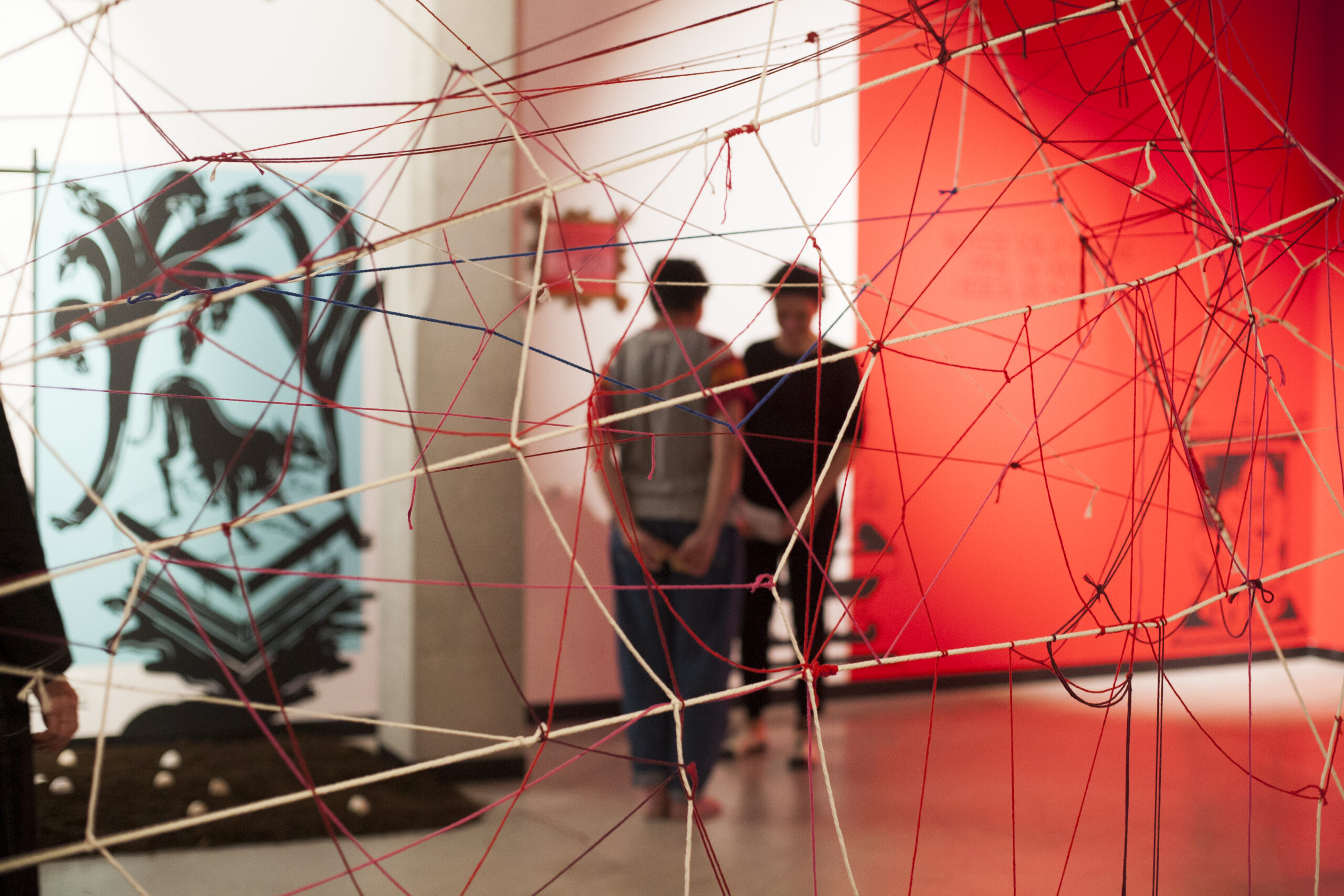
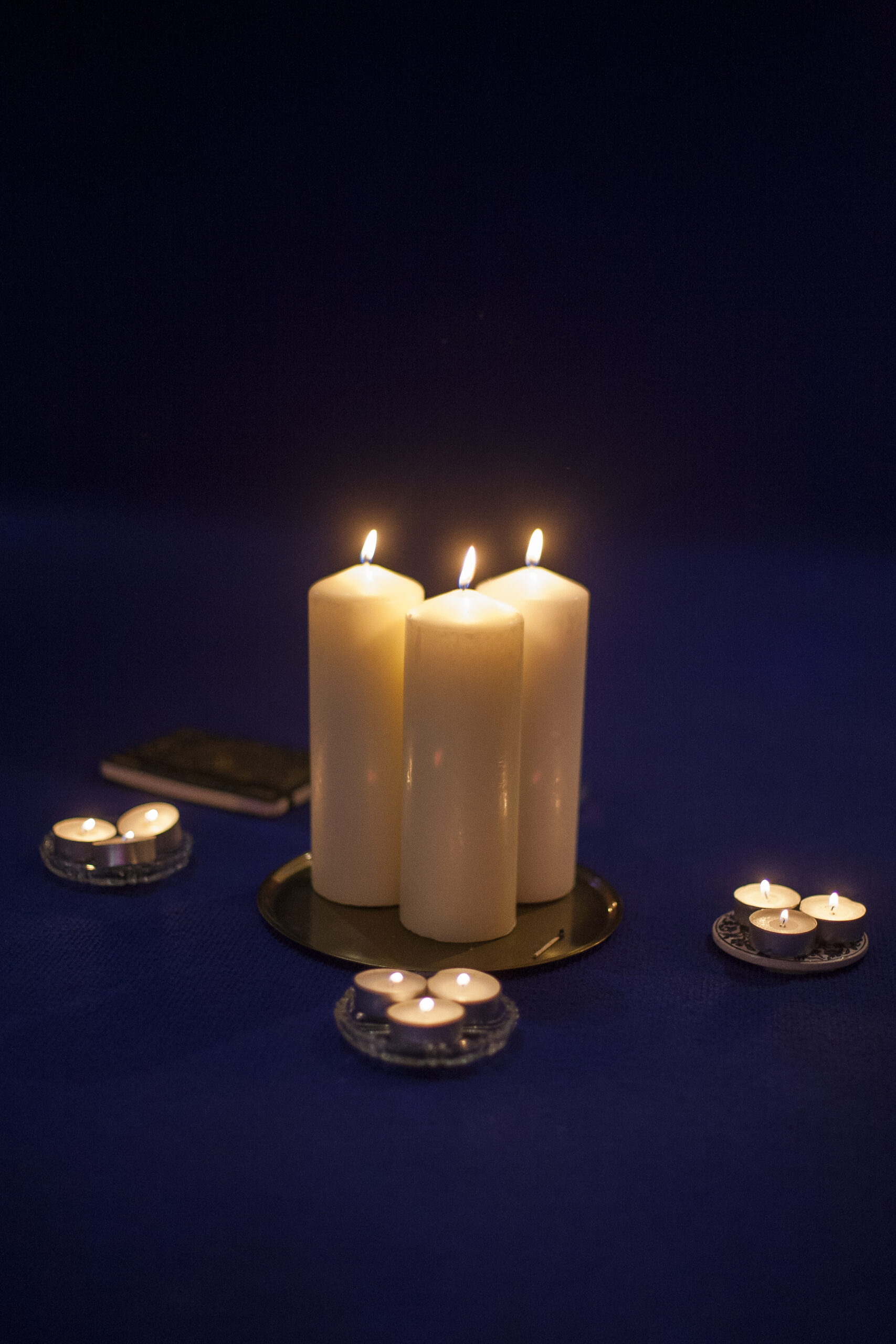
Candles are burning and a ball of wool is passed from hand to hand, drawing an increasingly complicated pattern on the floor. The threads connect and interweave – art talks about life, life inspires art. The subject of abortion appears in it because it needs to be told – by a polyphony of women’s voices, in hundreds of different ways.
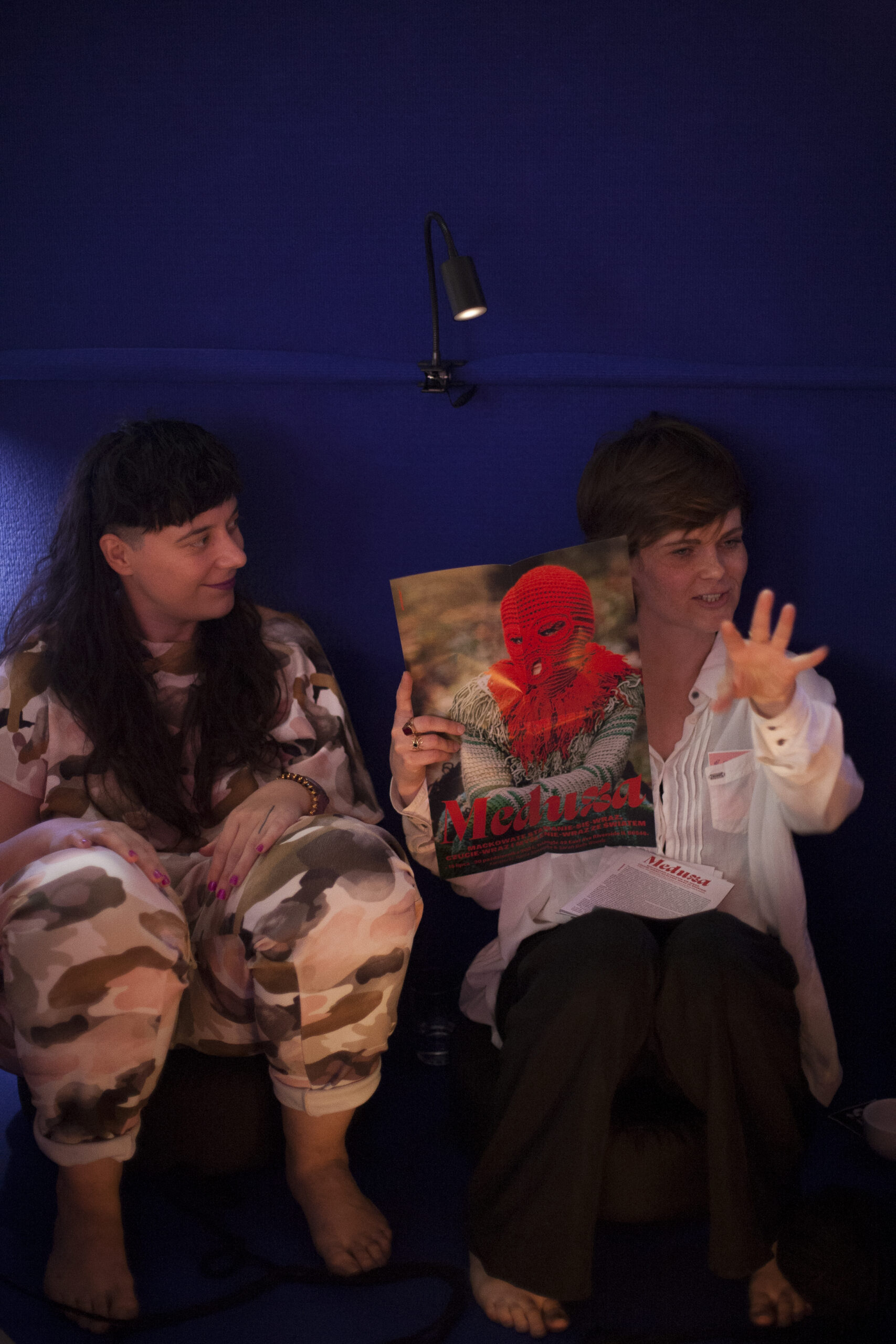
Małgorzata Markiewicz says the Medusa was already sitting in her head in 2004, when she was working on her graduation work, but it came into being after the anti-abortion law was tightened. She spent seven months knitting it from natural fibres before she was finally able to embody the mythological creature – cover her face with a red yarn mask and move her several-meter long tentacles. As the artist explains, “The Medusa was supposed to reflect the dark part of the psyche, aggressive and loud, to show the repressed aspects of femininity, those that come from the forest, from between the sexes. When I look at her, I don’t know if she is a man, a woman or perhaps an animal. And I wonder if, when cuddled, she can become a source of creativity.”
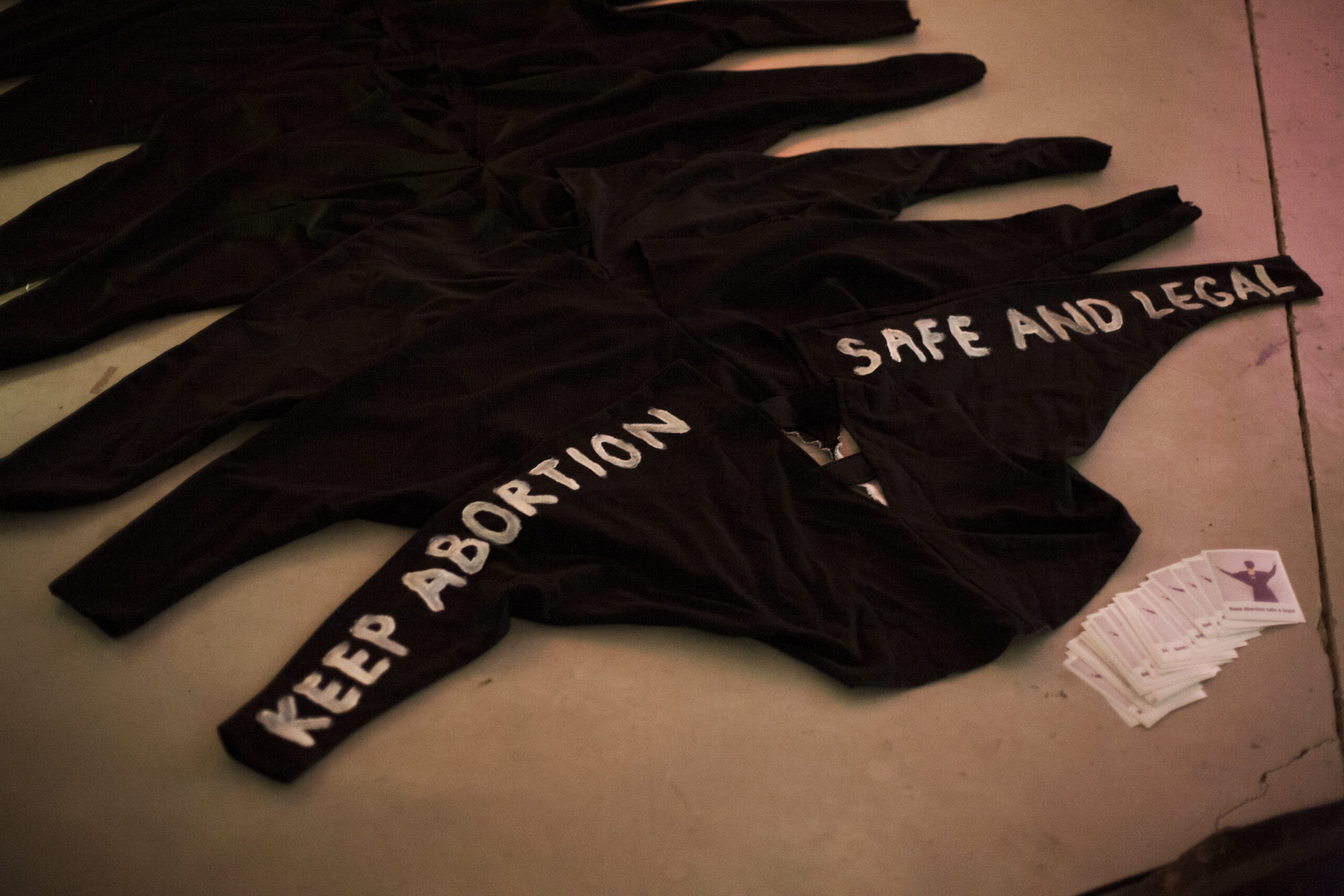
Małgorzata Markiewicz has two children – a 21-year-old son and a 13-year-old daughter. “And I had the unpleasantness of being treated badly by doctors,” she says. “After the tightening of the law, I don’t really know whether being pregnant in Poland is an expression of courage or madness. In any case, I wouldn’t like to go through it anymore. When I talk abroad about what is happening here, nobody believes me. That’s why I handwrote the slogan ‘Keep abortion safe and legal’ in white paint on a black protest sweatshirt. And I took it to an international symposium.”
When Jagoda Dobecka found out about the tightening of the law, she created two paintings. The first one, triggering associations with a 19th-century engraving of plants, depicts a collection of herbs with abortifacient effects – coquatula, verticillium, mugwort, rue, common dill. “I painted the second painting all night, in pure rage,” she recalls. “Both are and will be expressions of fury.”
In one of the works making up the Herstory of Art project Anna Kuśpiel had to refer to a selected earlier piece by a male artist. She chose John Everett Millais’s Ophelia. “But I focused on women who do not receive medical help,” she says. “So I showed a woman dying alone, in a bathtub, with a towel between her legs to stop the bleeding. I posed for this painting myself.”
Katarzyna Pawelec also added her own chapter to Herstory of Art. Her work referred to Sun Yuan and Peng Yu’s famous installation entitled Can’t Help Myself, shown at the Venice Biennale in 2019 and consisting of a robot scraping up the red liquid oozing out of itself. “I thought it paradoxical: the Biennale audience were terrified of a machine cleaning up after itself, while in Poland there are women who have been left alone. So for three hours I spun around in circles and swept up this liquid.”
“These works express our collective outrage,” says Anna Karolina Kaczmarczyk. Her first work on abortion was the banner “Life Is Us.” When she was carrying it in her hometown of Oświęcim, she felt it was a big deal. Then she began to express her opposition through art – that’s how she came up with the cover of the women’s comic book Wolność [Freedom], in which a little girl in a lightning bolt dress is throwing a stone. “My model for the painting was five-year-old Helena. I was at her birth, I cut the umbilical cord, she’s like my half-daughter, family of choice,” she recalls. “In her hand I drew a stone of girlish insolent rage, which I personally lacked. On 22 October 2020, I thought I should do something more – after all, art is a form of communication. So the cover of our multi-voice comic on abortion features my painting of a woman telling something to another while covering her face with a hand with a lightning bolt.”
Anna Kaczmarczyk would like to live in Poland. However, she has a child and does not want to bring her up in an atmosphere of oppression created by politicians.
“In a way, I feel forced to emigrate, and part of my sacrifice is longing, detachment from my roots. I’m like a cut flower. I went to Germany to study, but over time this decision became political, a mother’s choice for her child. Together with Marta Falkowska and a number of female drawers and illustrators, I am now preparing an anthology on abortion entitled Własnym głosem. Herstorie aborcyjne [With My Own Voice. Abortion Herstories] – I drew a comic about a friend from Ukraine who experienced tremendous trauma as a teenager, and abortion was just one element of the violence around her. I drew her portraits, but she drew her part. And then she had a baby and she says that getting rid of that story allowed her to somehow open her body to pregnancy. My main need was to give her a space to express herself without trying to influence the end result. This story couldn’t be what I wanted it to be – it was supposed to be for her, about her, she was supposed to make it about her.”
Reclaiming the language
Each of us has had some kind of “abortion episode” – through art, personal experience, stories of loved ones. When we give vent to them, we start talking – the dialogue flows so fast that the ball of wool can no longer keep up.
Marta Falkowska stresses that the story of pregnancy and motherhood is really a story of disappearance. And she recalls 2018, when she went on a trip to Albania. While visiting the local castles, she heard stories about women’s heroic sacrifice. One heroine, Rozafa, agreed to be half-immured so that her husband and brothers-in-law could finish building a castle. She only requested to leave a hole for the other half of the body to be able to use it to soothe and feed her baby. Another woman, fleeing from invaders, threw herself off a rock, shielding her child with her own breast; she died, but her love was so strong that milk gushed from the surrounding rocks to nourish her son.
“These stories invariably end in the same way – there is no woman, there is only a child, as if her role came down to giving birth and feeding him,” she concludes. “It’s the same today. Let us finally stop saying that this radical law is any kind of compromise – it isn’t. The anthology gives voice to the women who were affected by it. Interestingly, when news of our project first broke, we were met with enthusiasm and support from all sides. The only voices of indignation concerned the word ‘herstories’ in the subtitle, and they were exclusively male. It was as if, by replacing the prefix his- with her-, men felt the fear of disappearance – the same fear that women have felt every day for centuries. Watching this was amazing. Some reactions verged on panic, as if giving space to one group meant taking away the rights of another.”
Beata Rojek recalls that she asked a male friend, a brilliant writer with a real talent, to write the blurb for her comic. And she heard in response, “I have a problem. There are no men in this book.”
The anthology, co-created by Anna and Marta, was originally intended to be an inclusive project. However, at some point it was collectively decided that men should not be involved in its preparation. “In a world that is so unequal, we need a kind of positive discrimination,” explains Anna Kaczmarczyk. “The comic is coming out at a time when inclusivity in Poland means inviting women to the debate on abortion. That is why I’m in favour of such discrimination. We need to seize what is not ours.”
“We are taking part in the creation of herstory, a herstoric vocabulary,” adds Aleka Polis. “When I found out about the lethal defect during a prenatal check-up, I felt that the medical vocabulary did not help me to find myself in this situation. Neither foetus nor baby felt adequate, so I came up with the word narodka [‘birthling’]. The vocabulary connected with abortion is poor. We have medical terms that do not express what happens to us during such heroic acts as pregnancy. We need words that would allow us to feel safe in our emotions.”
“That’s why it’s also important to reclaim language,” Anna Kaczmarczyk adds. “What used to be called abortion is now called ‘killing babies.’ The winner is the one who controls the vocabulary.”
As Aleka responds, “We need an equalisation of masculine and feminine energies, a linguistic expansion to include expressions describing emotions connected with women’s experiences. Judgmental words often inhibit progress and cause backlash in parts of society. Maybe we don’t need to say whether something is good or bad, but simply that it is. That abortion is.”
Magda Piekarska, © 66P Subjective Institution of Culture