
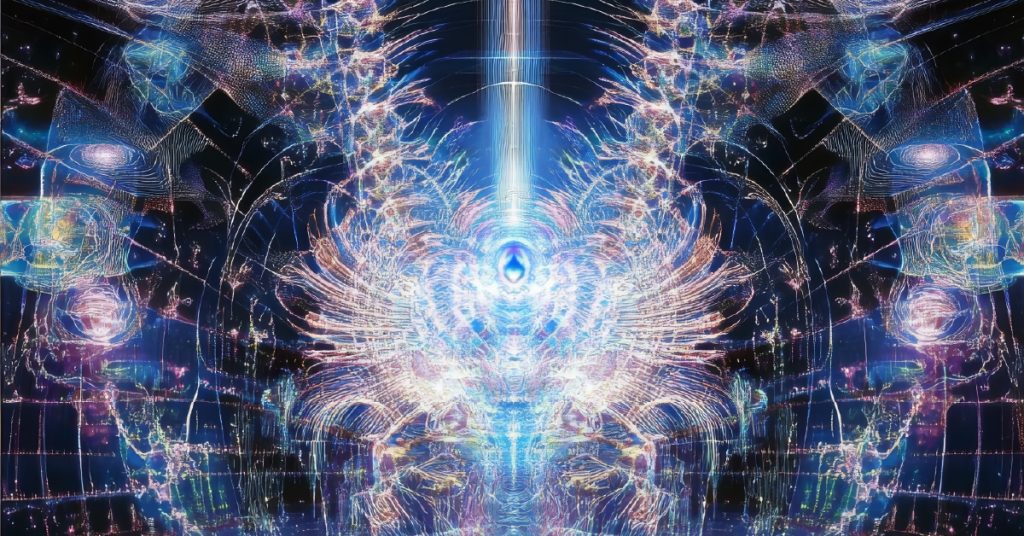
The WoosphereJoey Holder
curator: Małgorzata Miśniakiewicz
opening: 24 September (Thursday), 6 p.m.
tour led by the artist and curator: 25 September (Friday) 2026, 5:30 p.m.
exhibition duration: 24 September – 21 November 2026
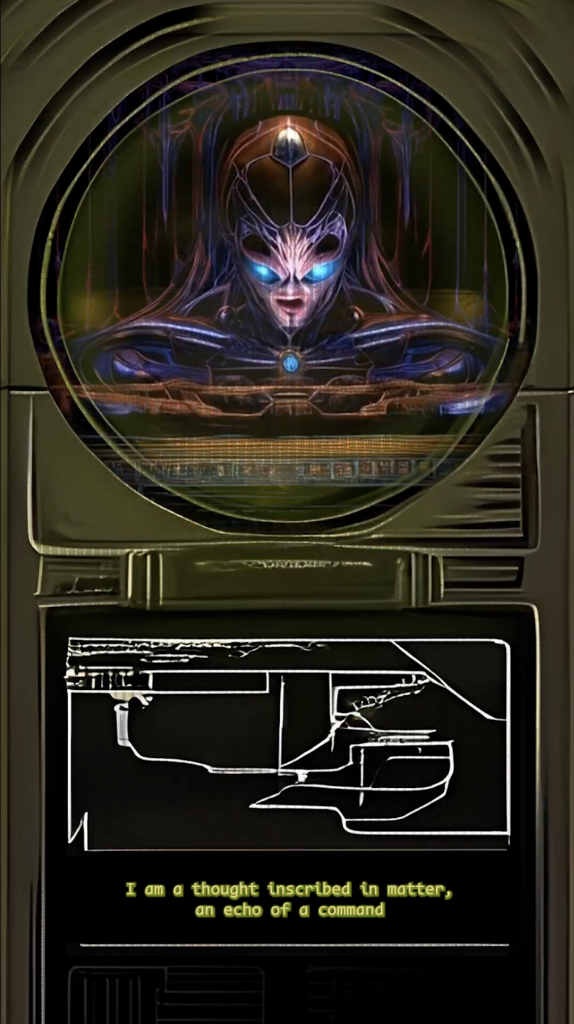
Thought is a standing wave, an ephemeral lattice of probability, collapsing only when meaning is made necessary, claims Cerebral.
Lam insists that every interaction, every movement, every thought is reducible to a function, an equation of a probabilistic state transition.
Golem, however, is a thought inscribed in matter, an echo of a command.
And Jean knows that meaning has already collapsed into an operationalised simulation of itself.
They all inhabit The Woosphere, a nonsensical constellation of parallel perspectives, each valid within its own universe and rhetoric.
Created by Joey Holder, The Woosphere is characterized by an overload of information where truth is continuously contested and reality is a variable manipulated by algorithms, social platforms and ‘Sacred Nonsense’.
About a hundred years ago a Jesuit priest Pierre Teilhard de Chardin and a biogeochemist Vladimir Vernadsky conceptualised a new, evolutionary state of the biosphere: a planetary sphere of reason.
Known as the noosphere, this highest stage of biospheric development would signify merging of human consciousness into a unified global intellect. The noosphere envisioned a harmonious convergence of minds, a transformative collective intelligence uniting humanity morally, metaphysically, and technologically. Theorised in the beginning of the twentieth century it was an utopian idea of a planet-wide cognitive network. In Holder’s practice the noosphere becomes a flexible metaphor for the internet, collective consciousness, digital transcendence, and spiritual evolution.
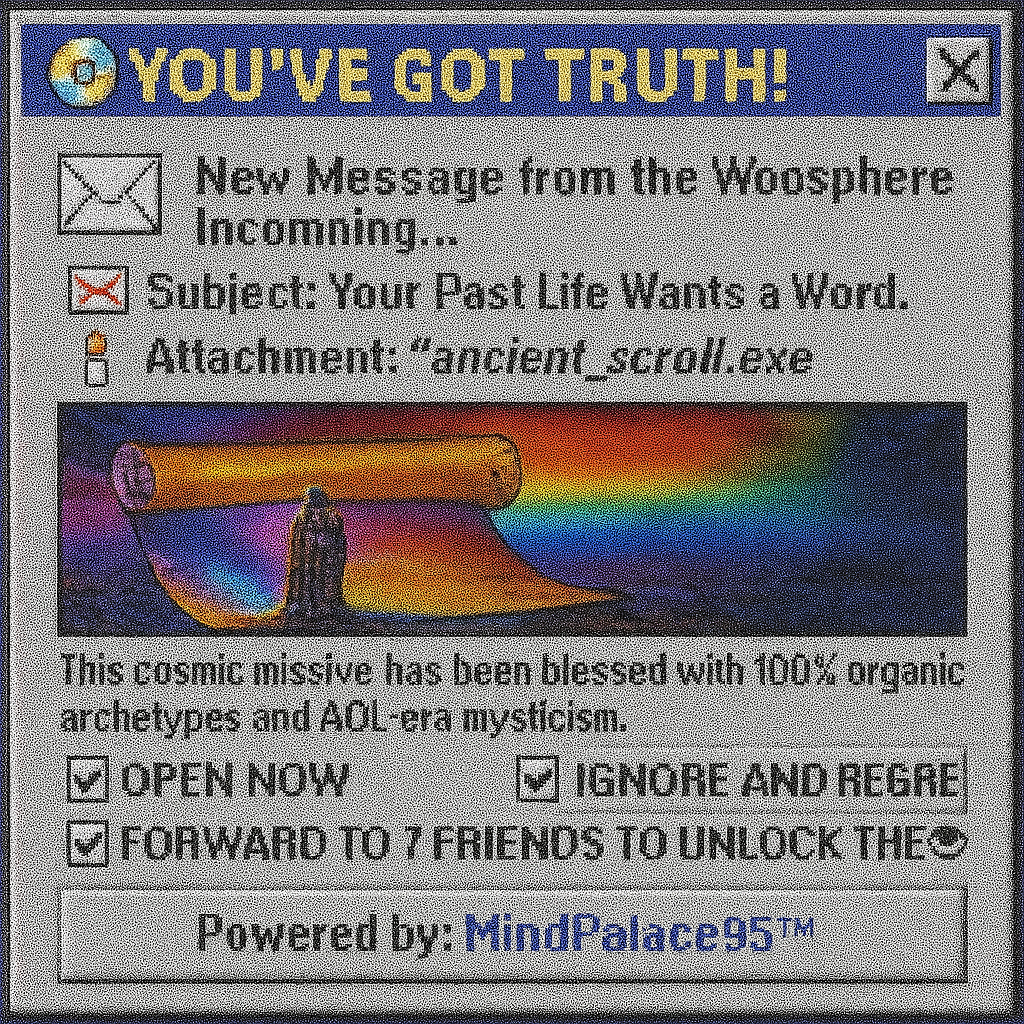
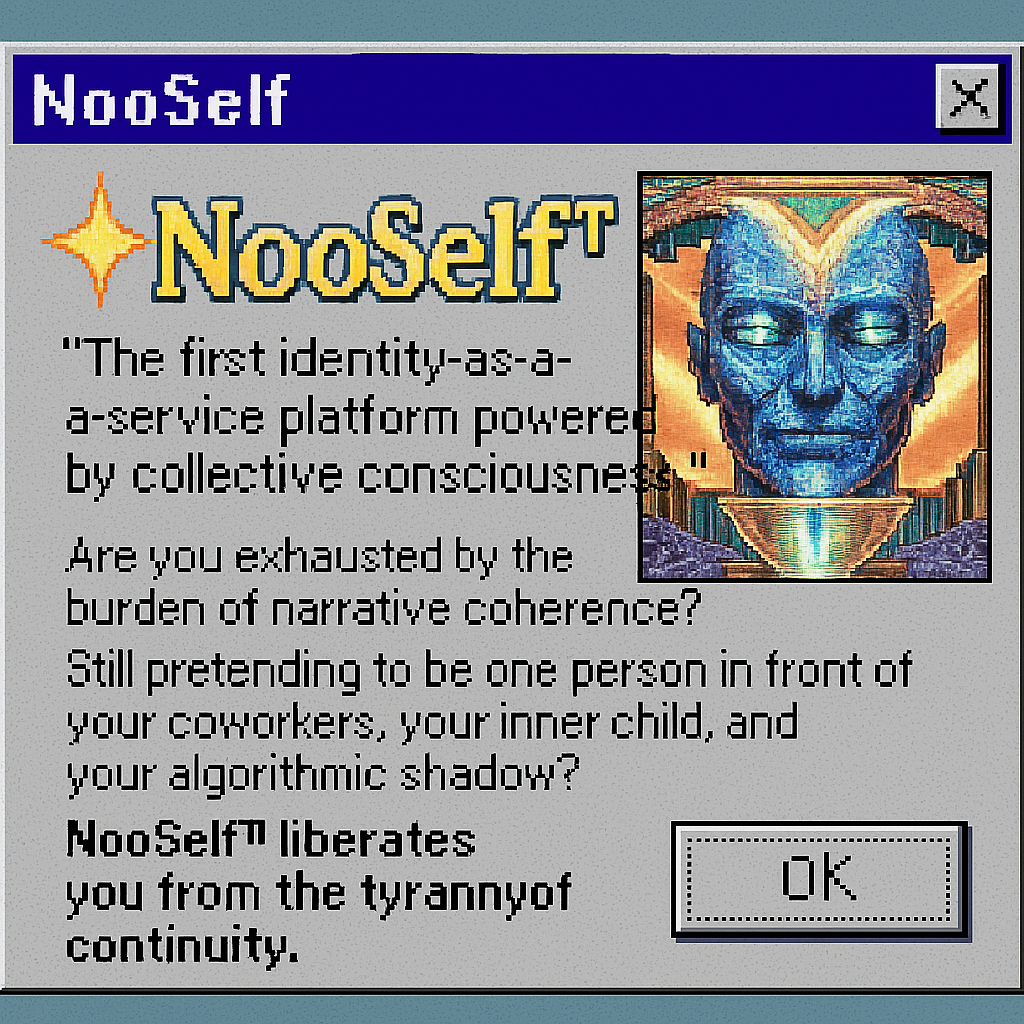
The artist approaches the degeneration of the utopian ideal through technical imaginaries to its contemporary degradation into new-digital-age nonsense. This “satirical worlding” emerges through the absurd, the memetic, and the deliberately “Woo Woo.”
Holder employs satirical worldbuilding to cultivate a polyphonic environment where ideas and narratives collide. Each of the characters – Cerebral, Golem, Jean, Lam and Pierre – is built using programmed language models and has a distinct set of features, back story, cognitive patterns, references and memetic expressions resulting in their different conceptions of reality.
The characters speak of the themes of the world they inhabit: simulation theory, quantum mechanics, and disembodied intelligence, while employing the vernacular of digital discourse through memes and accessible language. Rather than dictating certain beliefs, by constructing the personas Holder has wanted to modulate the conditions under which belief feels plausible.
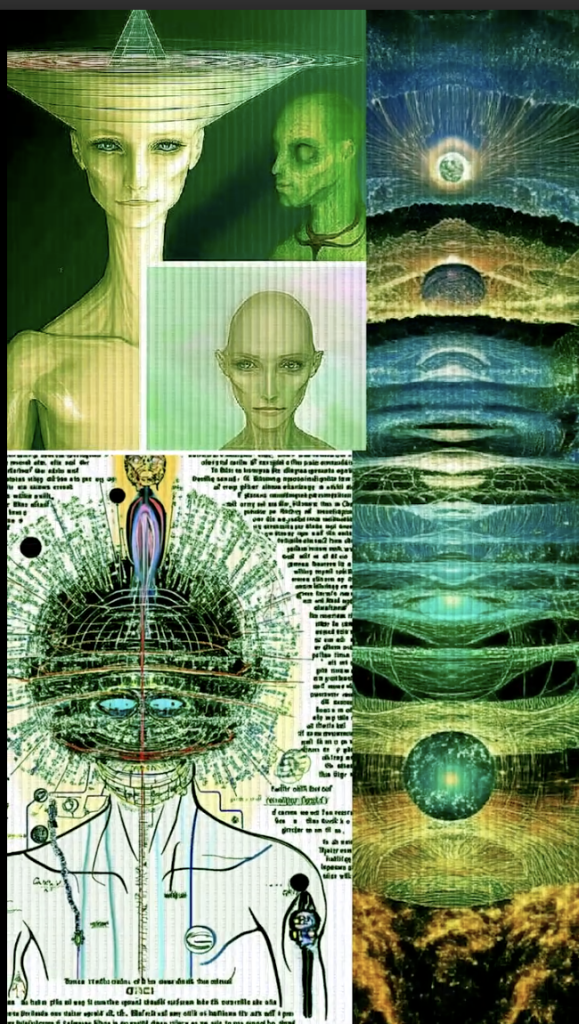
The Woosphere tests whether proliferating belief systems, each claiming epistemic authority, might reach a saturation point where they collapse into recursive meaninglessness, reflecting nonsensical contemporary digital discourse. The artwork explores the territory of competing ideological frameworks establishing a space of productive dissonance, where meaning emerges through tension.
The Woosphere recognises disorder as a necessary substrate for new modes of agency in the world where “the chaos of ideas” is not just noise, but a medium of being.
Credits
Joey Holder, The Woosphere, 2025
Sound: AJA Ireland
Graphic Design/Direction: Florian Mecklenburg
Chatbots: Sade Mae
Web development: Joel Cocks
Consultancy: Declan Colquitt, Moth Quantum and Günseli Yalcinkaya
Originally commissioned: Autotelic Foundation for Vienna Digital Cultures Festival
Biographies
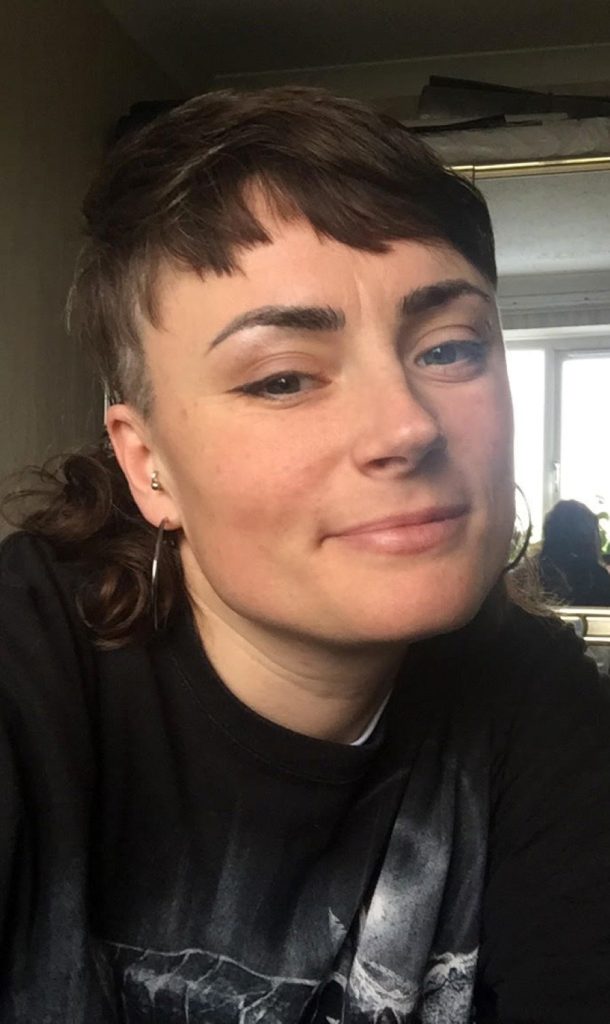
Joey Holder is an artist and researcher whose work explores philosophical questions about our universe and the things that remain unknown in science, technology and the interactions between humans, machines and animals. She creates immersive, multimedia ‘worlds’, engaging with experts from various fields, including marine biology, genetic research and behavioural psychology, to explore topics ranging from life forms in the deep sea, through speculative evolution, magic and non-human time, to extraterrestrials. She is currently a PhD researcher at Birmingham City University, researching how concepts such as reality-shaping and the open world can be used to actively shape a new future and create alternative possibilities. Holder has exhibited her work in numerous countries, including at the Harvard University Museum of Natural History, the Design Museum in London, and at biennials in Sydney, Athens, Ljubljana, Wuhan and Moscow, as well as at Transmediale in Berlin. She also runs SPUR, an online platform supporting digital art, and Chaos Magic, an art space in Nottingham. In 2021, she was named on Apollo magazine’s 40 Under 40 list for her innovative achievements at the intersection of art and technology. She has been featured in publications such as The New York Times, The Guardian, Frieze magazine, Artforum, Art Monthly, Flash Art, Studio International, Dazed, VICE and BOMB. She is represented by Seventeen in London.
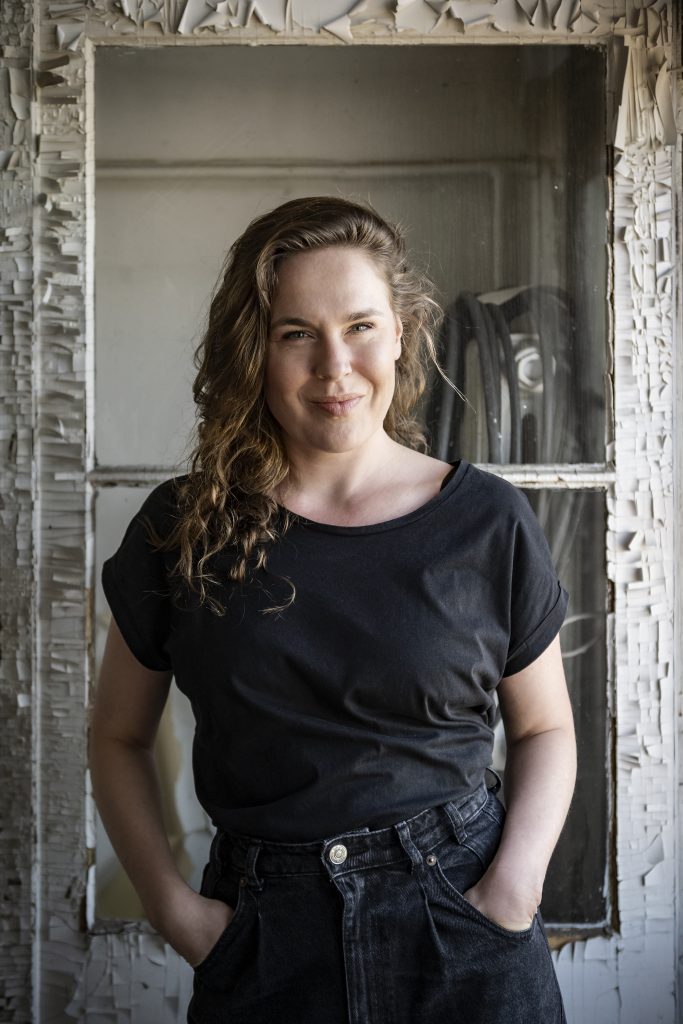
Małgorzata Miśniakiewicz, PhD is an art historian and curator whose research on the socio-political contexts of contemporary art and the post-war avant-garde in Central and Eastern Europe focuses on inter-local perspectives. In her curatorial work, she mainly deals with contemporary and neo-avant-garde art, looking for future avant-gardes. She was the collections curator of the Wrocław Contemporary Museum (2017-2019), carries out curatorial projects in collaboration with organisations in Poland and abroad, is an author and editor, and combines curatorial and research activities by organising academic conferences and research projects. A graduate of art history at the Courtauld Institute of Art in London (MA Global Conceptualism with Prof. Sarah Wilson and Prof. Boris Groys, 2011; PhD with Dr Klara Kemp-Welch, 2018), her doctoral thesis focused on networked art of the 1970s – using the example of Polish mail art – in relation to the idea of democratic opposition and social and geopolitical transformations. She regularly publishes texts and academic articles on the art of Central and Eastern Europe. Małgorzata is a two-time Arts and Humanities Research Council scholarship holder. She completed postgraduate studies for cultural managers at the Warsaw School of Economics (2014). She collaborates with the ArtTransparent foundation in Wrocław. Since 2026, she has been a Curator at the Wrocław Contemporary Museum.
photo by Małgorzata Kujda
The 66P team and collaboratorse
organisation, production, and implementation: Renata Jarodzka, Rafał Jarodzki, Anna Krukowska, Mirek Łuckoś, Mirek Chudy, Patrycja Ucieklak, Łukasz Bałaciński, Danuta Krzywicka, Teresa Hajłasz-Golonka, Michał Czapliński, Katarzyna Małolepsza, Kamil Olender, Helena Swirtun, Alicja Wojakowska
promotion: Fest Promo
graphic design: Florian Mecklenburg, Kinga Gralak
translations: Julia Licewicz, Karol Waniek
media patrons: MINT Magazine, SZUM, Radio Wrocław, Radio RAM, Radio Wrocław Kultura