BoomIza Tarasewicz
curator: Piotr Lisowski
opening: 16 May (Saturday), 6.00 PM
artist and curator-led tour: 16 May (Saturday), 6.30 PM
exhibition dates: 16 May – 4 July
opening hours during the Night of Museum 2026: 16 May (Saturday): 4.00 PM–11.00 PM
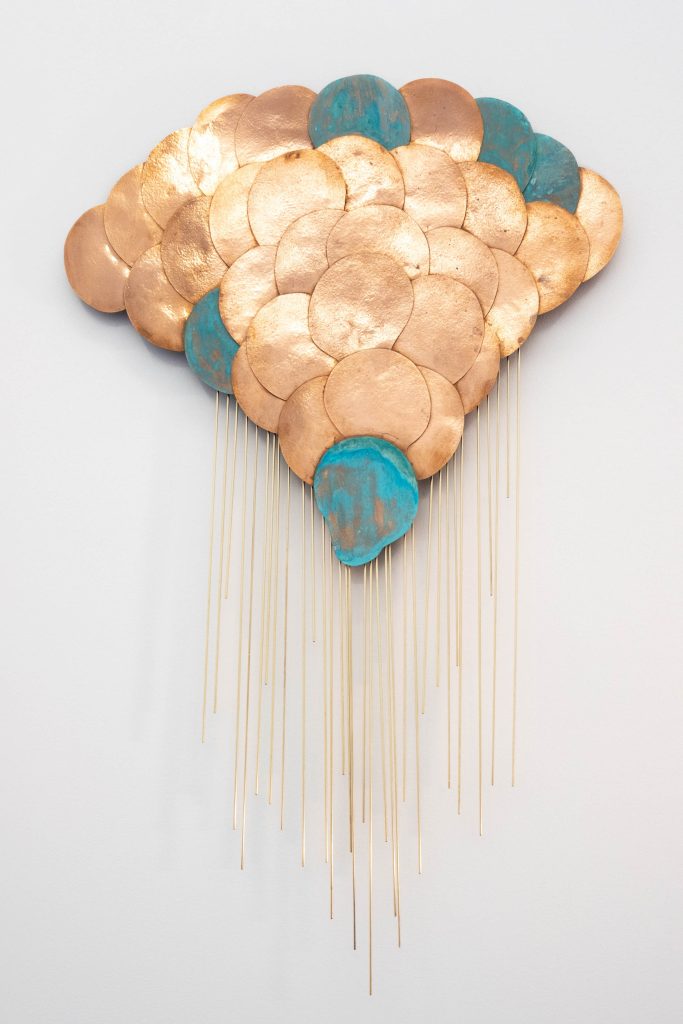
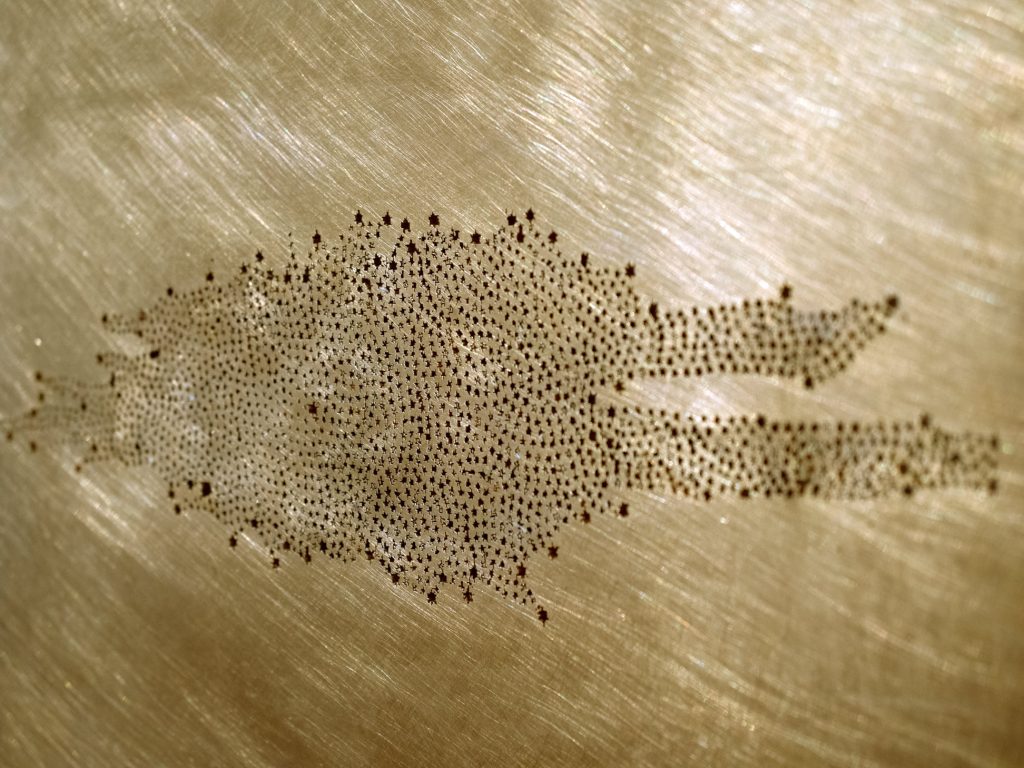
The title of Iza Tarasewicz’s exhibition Boom is derived from one of the featured works, itself inspired by a miniature from the fifteenth-century manuscript Miraj Nameh, rooted in Persian culture.
It portrays an angel encircled by a halo composed of multiple, repeating heads. Tarasewicz abstracts and distils this motif, reconfiguring it into a sign of dynamic, almost explosive form.
This “explosion” may be understood as the release of latent potential – the activation of energies and possibilities embedded within community, memory and inherited experience. It functions both as the generative impulse that sets the exhibition’s narrative in motion and as the cohesive force that interlaces its constituent elements into a meditation on shared vitality and perpetual transformation.
Tarasewicz approaches her works as cognitive instruments – models that not so much represent reality as facilitate the tracing of flows, tensions, and interdependencies that structure both material and biological domains.
Central to her practice is process: the continual transmutation of forms, the metamorphosis of matter, and the disclosure of latent structures that organise what initially appears as chaos. The exhibition thus proposes an interpretation of her oeuvre as a system for mapping the relations between matter, energy and the body.
Simultaneously, it probes the interplay between chaos and order. Drawing upon the notion of cartography – understood both as a method of map-making and as a philosophical framework for apprehending the world’s structure – the artist articulates a concept of community not as a static aggregation of individuals, but as a dynamic, pulsating network of relations and flows.
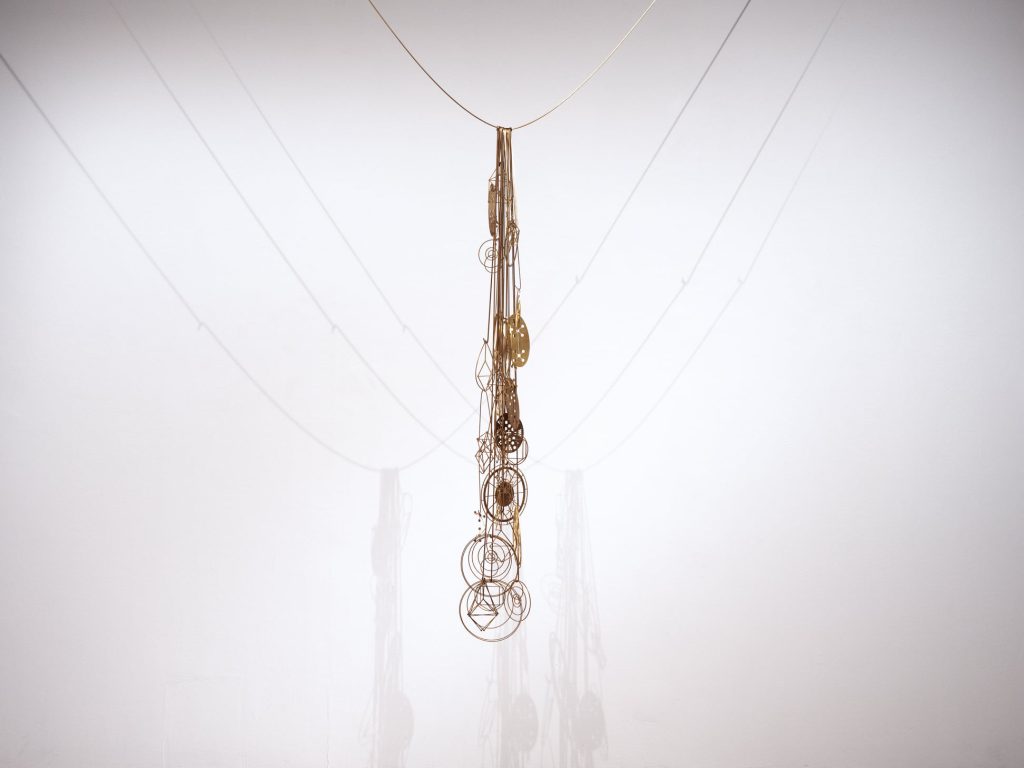
Tarasewicz challenges the stable categories through which reality is conventionally organized – such as the individual, the boundary, property or species. Her installations operate as pulsating organisms: assemblages of elements subjected to the rhythms of labour, corrosion, entropy and biological transformation. Within these dense constellations, a logic of interdependence emerges, prompting a reconsideration of the relations between the human and the non-human, the local and the planetary.
The exhibition raises the question of how to re-establish a connection with the surrounding world and how to reformulate the relations between the individual, the collective and the environment. Tarasewicz’s works show the possible trajectories for such reflection, functioning as processual maps that stimulate the imagination of future modes of coexistence.
In this context, one might invoke Bruno Latour’s notion of “cartographic philosophy,” wherein the map is no longer treated as a static, mimetic representation of reality but as a tool for navigating complex networks of interdependence. Latour redefines the map’s function by emphasising its orientational capacity: instead of questioning its fidelity to an “external” world, he examines how it enables the identification of connections and relational structures within a given system.
In an era marked by environmental crises, the conditions of the Anthropocene, and the increasing entanglement of humans, technologies and natural processes, cartographic thinking emerges as a useful tool for understanding the world and a vital interpretative framework for Tarasewicz’s practice.
The artist approaches the creative process as a means of generating, transforming and recirculating knowledge. Drawing on atomistic philosophy, quantum physics, astrology, astronomy and chaos theory, her practice has, from its inception, been grounded in material experimentation.
Her early works employed substances such as leather, bones, animal fat, wax, salt dough, and plasticine; over time, this material lexicon has expanded to encompass synthetic media, including silicone, alongside natural materials such as stone, clay, ash, rubber, and plant fibres. Her installations are modular and adaptable, responsive to spatial conditions. They combine elements inspired by natural processes, scientific experimentation and visualisation techniques, including diagrams and charts.
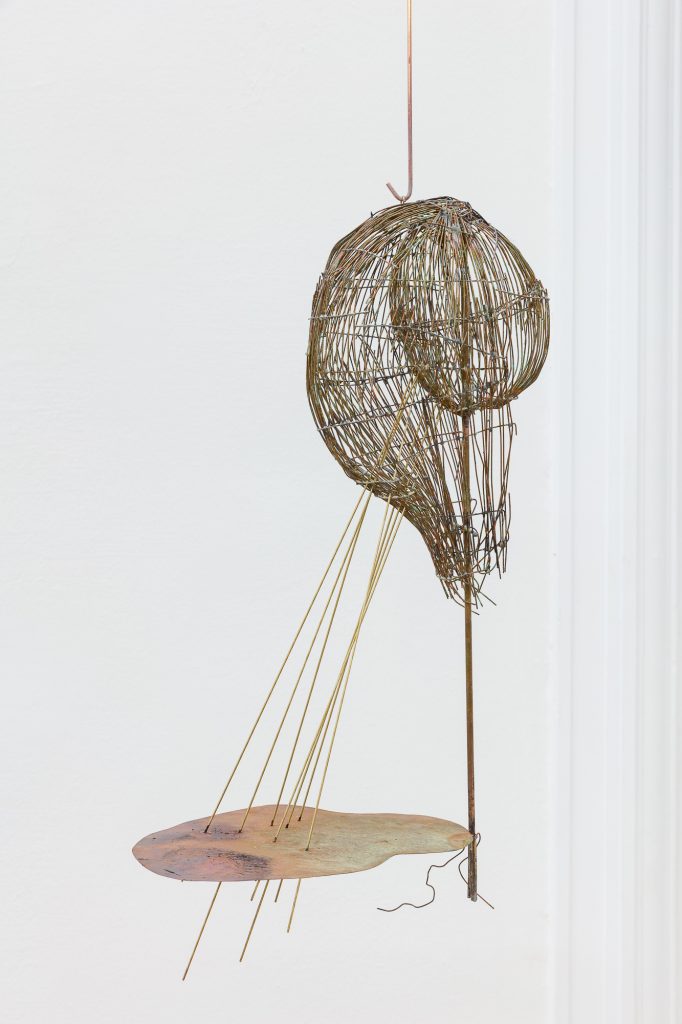
Within the exhibition, the resulting systems evoke organisms or stellar formations in continuous motion. They resist closure, instead constituting dynamic configurations in which meaning emerges relationally, through the interactions of their components. Tarasewicz proposes an alternative mode of conceptualising community: not as a collection of individuals, but as a “tribe of matter” – a field of interdependent entities entangled within rhythms and processes that exceed the human scale.
This perspective advances a renewed sensibility that apprehends the world not as a domain fragmented by physical and conceptual boundaries, but as a dynamic, interconnected system of relations.
Biographies
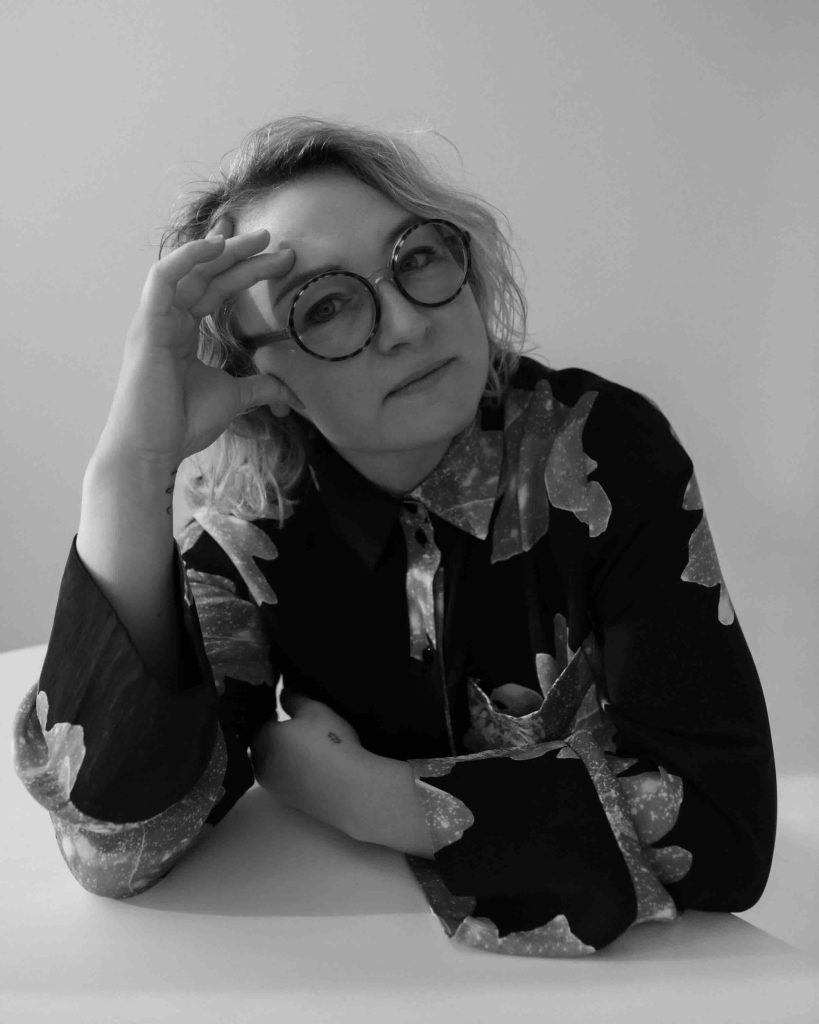
Iza Tarasewicz (born 1981 in Białystok) graduated from the Faculty of Sculpture and Spatial Arts at the Academy of Fine Arts in Poznań in 2008. She lives and works in Kolonia Koplany, a small village near Białystok, where she grew up. Working in sculpture, installation, drawing, and performance, her work has gained recognition both nationally and internationally. She has participated in numerous solo and group exhibitions worldwide.
She is a recipient of the Bayerischen Kunstförderpreise for Fine Arts in 2019 and the Deutsche Bank Foundation “Spojrzenia” Award in 2015, the most important award for young art in Poland, co-organized with the Zachęta National Gallery of Art in Warsaw. In 2016, she participated in the 32nd São Paulo Biennale, the 5th International Young Art Biennale in Moscow, and the 11th Gwangju Biennale. In 2018, she represented Poland at the 16th Venice Architecture Biennale in collaboration with Centrala. She recently participated in the 40th EVA International Biennale of Contemporary Art in Limerick. In 2013, she was nominated for the Polityka Passport Award in the visual arts category. In December 2026, she will be the first Polish artist to present a solo project – a large-scale installation – at the prestigious Secession in Vienna.
photo by Aleksandra Modrzejewska
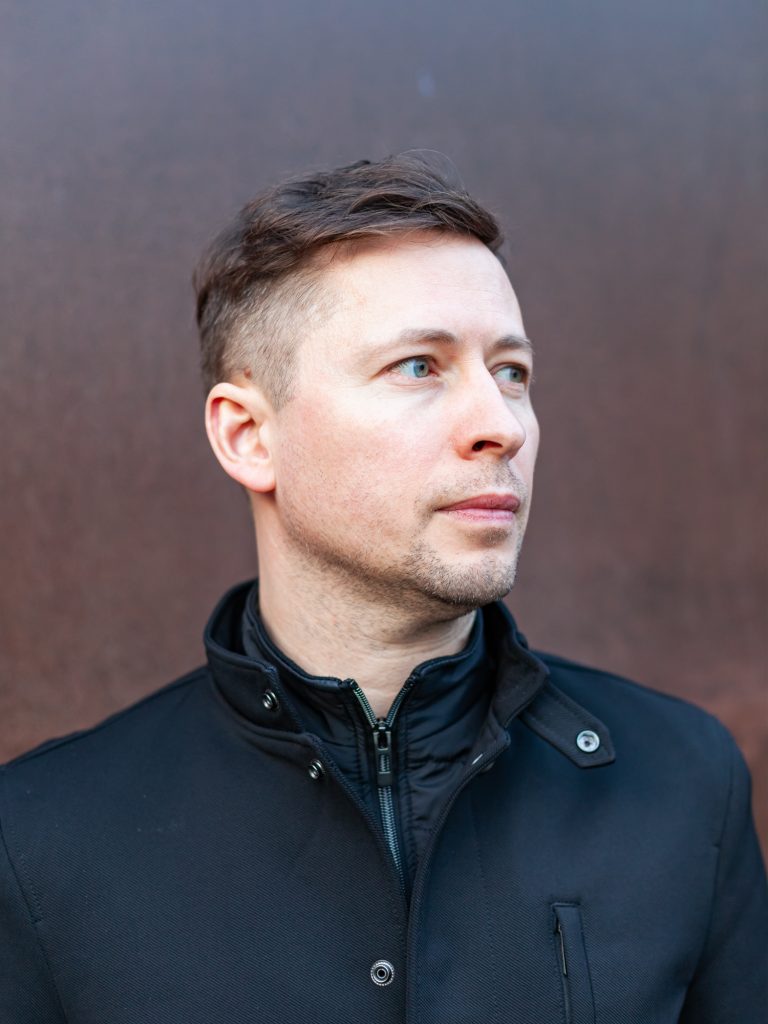
Piotr Lisowski is a curator and art historian, author of exhibitions and texts, editor of publications and an independent researcher of contemporary art. From 2023 to 2026, he served as artistic director of 66P Subjective Institution of Culture. He currently holds the position of director of Wrocław Contemporary Museum, with which he was affiliated between 2017 and 2022, and which he directed from 2020 to 2021. Previously, from 2007 to 2016, he worked as a curator and collection manager at the Centre of Contemporary Art in Toruń and was a co-founder of the independent Miłość Gallery (2014–2017). He also lectures on the Art Mediation course at the Academy of Fine Arts in Wrocław.
photo by Piotr Blajerski
The 66P team and collaborators
organisation, production, and implementation: Renata Jarodzka, Rafał Jarodzki, Anna Krukowska, Mirek Łuckoś, Mirek Chudy, Patrycja Ucieklak, Łukasz Bałaciński, Danuta Krzywicka, Teresa Hajłasz-Golonka, Michał Czapliński, Katarzyna Małolepsza, Kamil Olender, Helena Swirtun, Alicja Wojakowska
promotion: Fest Promo
graphic design: Kinga Gralak
translations: Iuliia Lytsevych, Karol Waniek
media patrons: Contemporary Lynx, MINT Magazine, Miej Miejsce, Notes na 6 Tygodni
Co-financed by the Minister of Culture and National Heritage from the Culture Promotion Fund – a state earmarked fund.