
What Can We Not Think?Dominika Łabądź
curator: Joanna Synowiec
opening: 5 March (Thursday), 6 p.m.
tour led by the artist and curator: 7 March 2026 (Saturday), 3 p.m.
exhibition duration: 5 March – 30 April
What Can We Not Think? is an exhibition on sensitivity to the world of capitalist ruins – both ecological and social. It resembles a ruderal garden: a site where disturbances wrought by human activity give rise to new ecosystems. Here, plants, animals, organisms, and matter coalesce into dynamic networks of relations that operate beyond the limits of human perception.
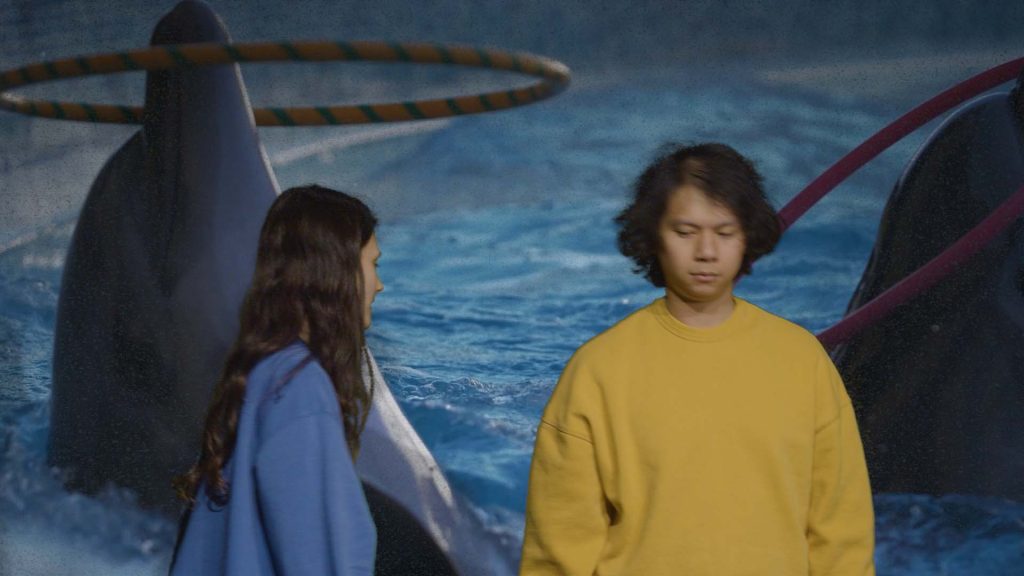
Known for her conceptual and visual practice, Dominika Łabądź ventures boldly into a new territory of artistic expression: directing. She does so on her own terms, drawing exclusively on tools and materials already in circulation. Nothing is discarded. As in a metabolic process, what exists is transformed, reconfigured, and reintroduced in altered form. To paraphrase the philosopher Michel Foucault, the artist labours to “think differently”: to disarm words whose established meanings sanction violence and the exploitation of animals and the environment, and to return them to the sources from which those meanings once emerged. This confrontation is not easy; it lingers like the aftertaste of a false word. It wanders, doubles back, repeats, and persists – much like the great epics once forged through encounter and collective narration.
In A History of the World in Seven Cheap Things, Raj Patel and Jason W. Moore propose examining how shifts in the meanings of words such as “savage” enabled colonisers not only to seize land but to enslave its indigenous inhabitants. As they note, as late as 1330 the word “savage” signified “fearless, unyielding, fierce”. By the end of the fifteenth century, in the wake of colonial expansion, it had come to denote the peoples of conquered territories – aligned with nature rather than society. Society, elevated as a superior value, thus legitimised its position as the exploiter of nature.
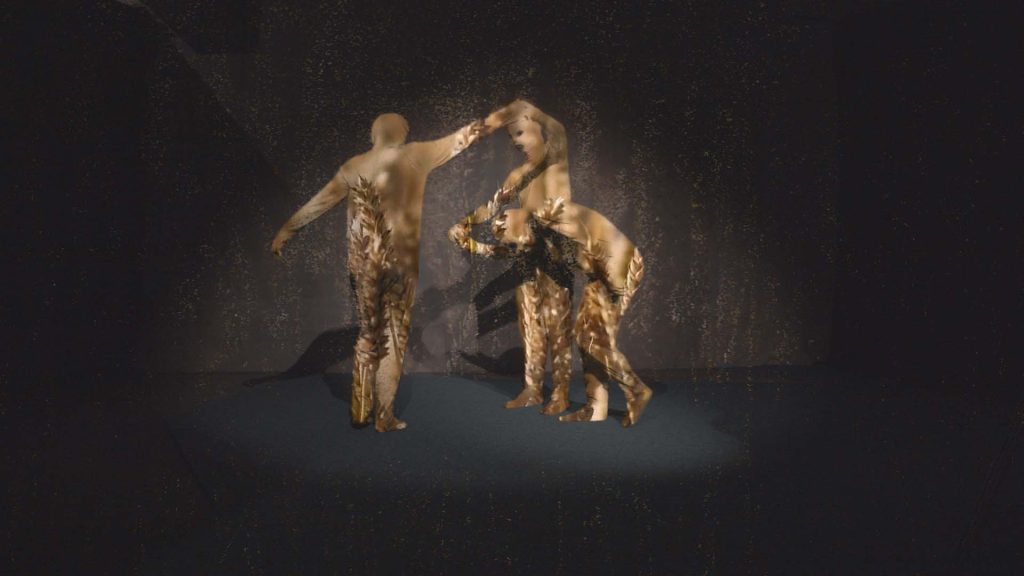
Upon entering the exhibition, the viewer’s gaze is drawn to objects composed of heterogeneous materials. They evoke haystacks, chochoł, or the costumes of Kumpo dancers. Kumpo – a traditional figure in the culture of the Diola people of Senegal and Gambia – is clad in grass and leaves; he dances during festivals, embodying the spirit of the forest or the community. The dancer himself remains unseen, dissolved within the costume. In Polish tradition, a similar shape appears as chochoł – the straw cover placed over living plants during the winter vegetation period. In their material presence, such covers harbour a secret: they conceal what continues to live inside them. Kumpo is also a protective spirit – an emblem of unity and communal support. Within the exhibition, these objects assume the character of hybrid constructions, assembled from disparate materials and emanating the spirits of contemporary hope. They exist in tension between the gesture of the human hand and the autonomy of matter. Mediating between former utilitarian functions and symbolic meanings activated in new contexts, they operate as traces of past practices and possible futures.
A central component of the exhibition – the two-channel video What Can We Not Think? – takes the form of an experimental television theatre. In an aesthetic inflected by 1990s camp, the artist interweaves objects, words, and meanings. Reinterpreted cultural texts, music by Arnold de Boer, recurring motifs and phrases function as mantras or ritual refrains. They generate the sensation of overlapping circles and gradual transformation. Words – spoken, repeated, rocked – acquire material density with its own agency.
The viewer is invited into a space that discloses what transpires at the thresholds of perception: within matter, affects, fermentation, the movement of things, and within dreams and bodies that attempt to narrate the world while fully aware of their incapacity to do so.
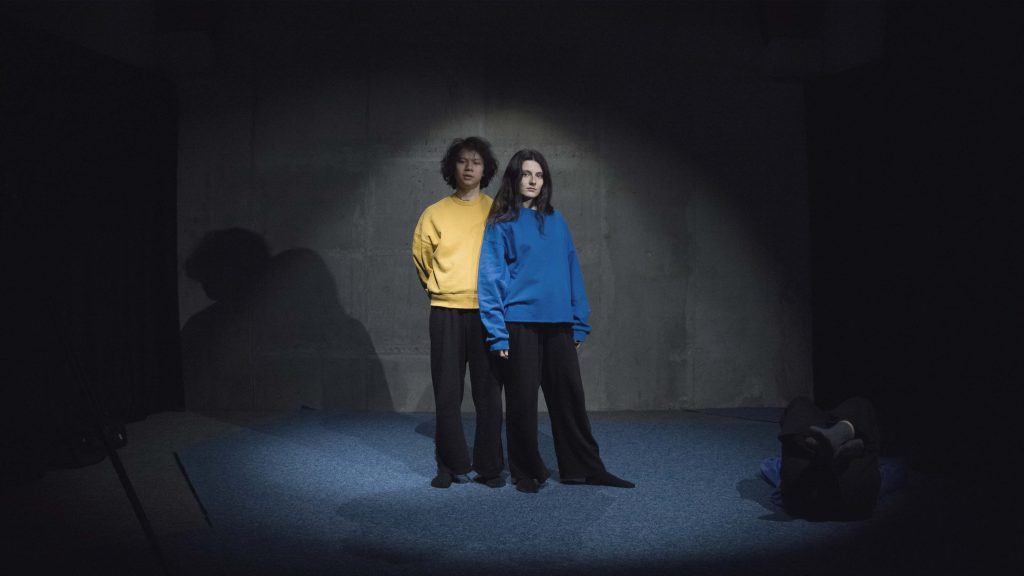
The artist weaves stories of a dense “now” – a temporality in which traces of past and future interpenetrate. She seeks a language for new narratives suited to catastrophic times – a respite from established patterns, genres, and typologies. In such moments, fissures appear, revealing a world that has been patched together. Within these fissures lies the hope that the capitalist order of human productivity is not monolithic.
The world that emerges here resists containment within simple divisions. It is a heterogeneous environment of beings and processes, entangled rhythms and encounters that exceed what can be named, conceived, or clearly classified. The “unthinkable” does not recede; on the contrary, it acts, circulates, binds disparate elements together, and demands attention.
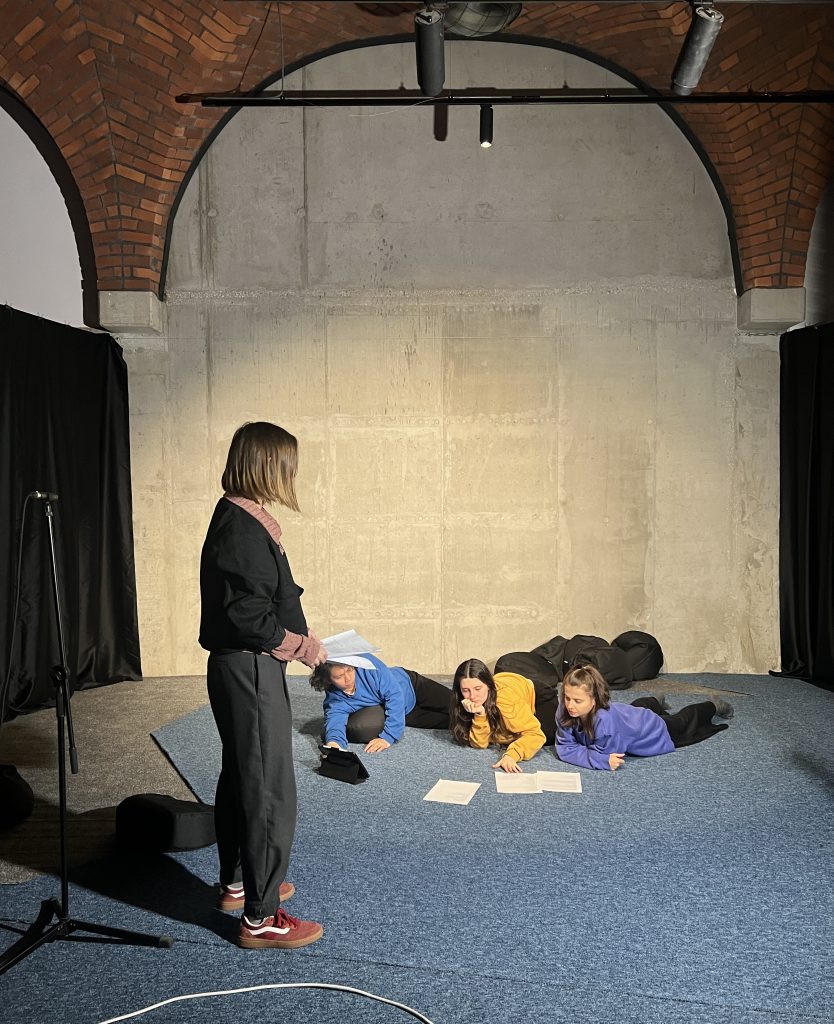
The collaboration with the actresses and actor in the two-channel video was based on a script interwoven with improvisation – what Dominika Łabądź termed “exercise scores”: linguistic, auditory, and rhythmic games involving continuous speech, repetition, amplification, and the pursuit of etymological and phonetic affinities. During rehearsals, the script provided a structural core, yet attunement to one another proved equally vital. This demanded collective labour akin to ritual practice which, through repetition, constitutes the fabric of social relations. Such practices resonate with the intuition of researcher Anna Lowenhaupt Tsing, author of The Mushroom at the End of the World, who describes them as exercises in “response-ability”: a readiness to be transformed through confrontation.
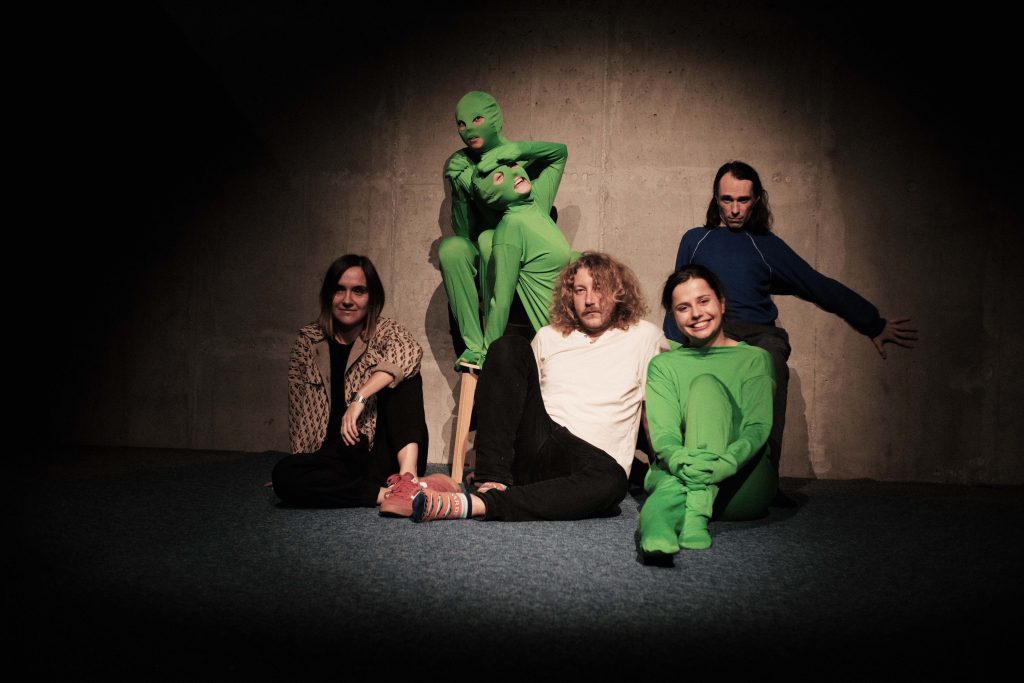
The artist assembles fragments of the world drawn from capitalist ruins – ecological, social, linguistic – revealing that although the system appears monolithic, it is in fact provisional, riddled with cracks, discontinuities, and sites of resistance. This logic is mirrored in her video work, narrated by Bożena Grzyb-Jarodzka: a story of baboons drawn from Fear of the Animal Planet: The Hidden History of Animal Resistance by Jason Hribal. Regarded by humans as ridiculous or clownish, these animals nevertheless exhibit loyalty and devotion to their young so fierce that they pursue a train carrying a child abducted by humans. They attack trains in order to reclaim their offspring.
It is within such fissures that the possibility of another form of life comes into view. The stories that emerge here offer no facile consolation; instead, they invite endurance within complexity, uncertainty, and ambivalence.
Film crew
Screenplay and direction: Dominika Łabądź
Cast: Aleksandra Kołtuniak, Aleksandra Klocek, Viet Anh Do
Voice-over: Bożena Grzyb-Jarodzka
Camera: Dominika Łabądź and Jakub Majchrzak
Editing: Dominika Łabądź and Jakub Majchrzak
Sound engineering: Filip Zakrzewski
Music: Arnold de Boer
Post-production: Jakub Majchrzak
Financial support: Academy of Art in Szczecin
Biographies
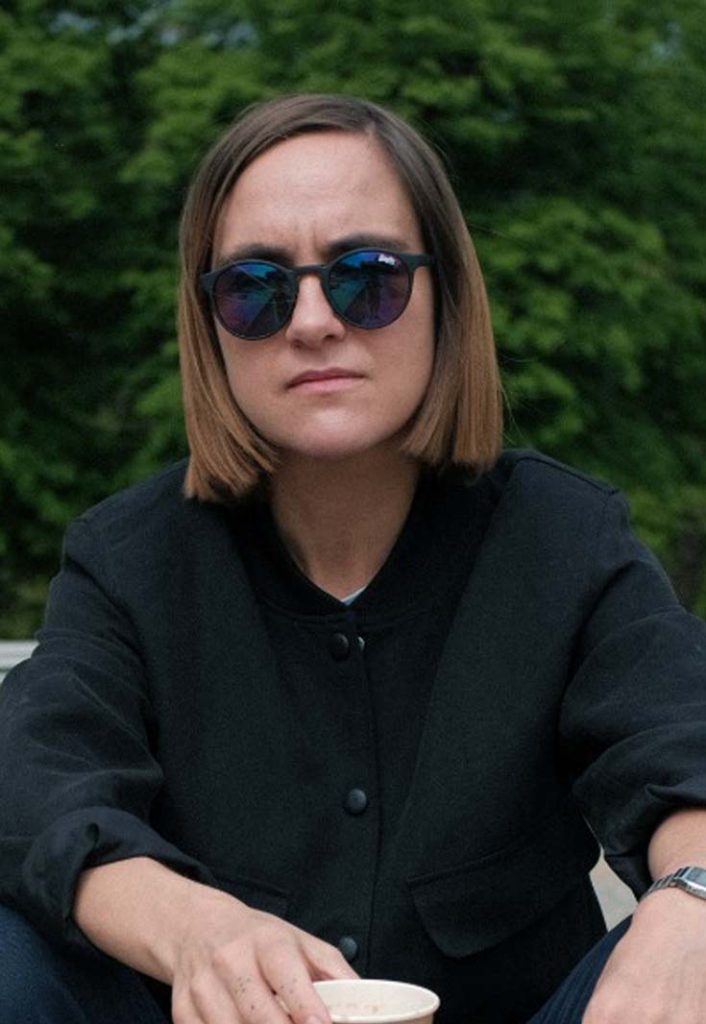
Dominika Łabądź is an artist and Doctor of Visual Arts. She lives and works in Wrocław. Her practice is interdisciplinary, situated at the intersection of art and social space. She creates installations, video works, objects, and performative and participatory projects, drawing on the methodologies of documentary theatre and engaging in artistic research. She is particularly interested in the relationships between image, language, and experience, and in their capacity to construct meaning and shared narratives. She often works collaboratively, testing alternative models of cooperative action.
She is a co-founder and active participant in numerous collectives and artistic initiatives, including Galeria U (2009–2015), 69 sekund na ucieczkę (69 Seconds to Escape, 2012–2013), Część wspólna – Archiwum Społeczne (Common Part – Social Archive, 2016–2017), and Galeria ArtBrut (2020–2022). Since 2018, together with Joanna Synowiec, she has co-run the Dzikie Przyjemności publishing house. She lectures at the Faculty of Media Art, Photography and Experimental Film at the Art Academy in Szczecin, in the Studio of Affective Artistic Practices. She is the author of numerous exhibitions and artistic projects. Her works and activities have been presented, among others, at BWA Awangarda; BWA Zielona Góra; CSW Kronika; Galeria Studio; Wrocław Contemporary Museum; Zachęta – National Gallery of Art; Museu Nacional de Arte Contemporânea (Portugal); Galerie výtvarného umění in Ostrava (Czech Republic); Ján Koniarka Gallery in Trnava (Slovakia); the National Forum of Music in Wrocław; Galeria Entropia in Wrocław; Kunsthaus Dresden; CAN Centre d’art Neuchâtel (Switzerland); Studio BWA; and BWA Dizajn.
photo by Jakub Derbisz
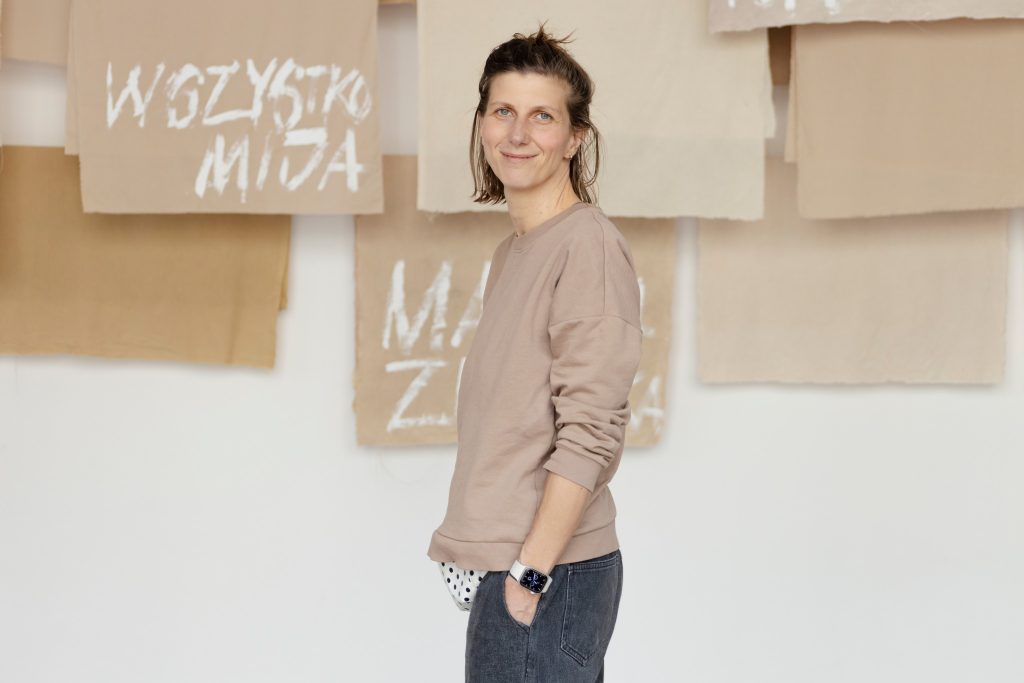
Joanna Synowiec is a curator of exhibitions and public programmes, artist, and editor. She has initiated and co-created collective cultural spaces, including Falanster in Wrocław. She previously collaborated with the Nomada Association, an organisation supporting refugees. She currently works at BWA Galerie Sztuki Współczesnej in Wrocław. Together with Dominika Łabądź, she runs the studio and publishing house Dzikie Przyjemności, where they produce artistic and literary publications. She has collaborated with galleries including BWA Wrocław, BWA Tarnów, and Wrocław Contemporary Museum. She co-curated the exhibition Tajsa (with Katarzyna Roj), addressing the situation of Roma communities in Europe, and Część Wspólna – Archiwum Społeczne (Common Part – Social Archive, with Dominika Łabądź), devoted to independent cultural initiatives in Wrocław over the past two decades. She is a recipient of scholarships from the Ministry of Culture and National Heritage (2015, 2020). She curated the collective exhibition Mother Earth, presented at Dizajn BWA Wrocław Gallery in 2022, and Atlas of Tangled Stories, presented at Studio BWA in 2024.
photo by Alicja Kielan
66P team and collaborators
organisation, production and implementation: Renata Jarodzka, Rafał Jarodzki, Piotr Lisowski, Anna Krukowska, Mirek Łuckoś, Mirek Chudy, Patrycja Ucieklak, Łukasz Bałaciński, Marcel Oleszczak, Danuta Krzywicka, Teresa Hajłasz-Golonka, Michał Czapliński, Katarzyna Małolepsza, Kamil Olender, Helena Swirtun
promotion: Fest Promo
graphic design: Ewa Głowacka
translation: Iuliia Lytsevych, Karol Waniek